
Natural Stone · Care and maintenance
How to Clean Natural Stone Floors Without Etching or Staining Them
First confirm that the floor is natural stone: porcelain, ceramic, terrazzo, concrete, and stone-look resilient flooring can resemble it but have different care rules. Then match the cleaner to the stone, finish, sealer, grout, and exact soil.
The short answer
Remove loose grit with a clean untreated dust mop or a vacuum setup that will not scratch. For routine washing, use a pH-neutral cleaner specifically approved for the identified natural stone, finish, sealer, and grout; dilute it exactly as directed, avoid flooding, rinse if instructed, and dry the floor. Blot spills instead of wiping them outward. Do not use vinegar, lemon, acidic bathroom or grout cleaner, abrasive powder, or an improvised chemical mixture. Acid-sensitive stones such as many marbles, limestones, and travertines can etch even when sealed.
What matters most
- Identify the actual surface before choosing a cleaner; a stone visual does not prove the floor is stone.
- Dry grit is abrasive, so frequent gentle soil removal is the foundation of stone care.
- A penetrating sealer can improve stain resistance but does not make stone stain-proof, scratch-proof, or etch-proof.
- Etching is chemical damage to the surface; a stain is material absorbed into or left on the stone. They need different remedies.
Do not clean by appearance
Confirm the material, finish, sealer, and prior products
Natural stone includes different geological materials with different sensitivities. Marble, limestone, travertine, slate, granite, and quartzite are not one uniform cleaning category. Polished, honed, brushed, tumbled, and cleft finishes also show wear and hold soil differently, and the grout or setting system may have separate restrictions.
Start with invoices, leftover pieces, product records, installer notes, or a knowledgeable stone professional. Ask whether a penetrating or topical treatment was applied and which cleaners or polishes have been used. Do not conduct an acid test on the installed floor; even a small test can intentionally etch acid-sensitive material.
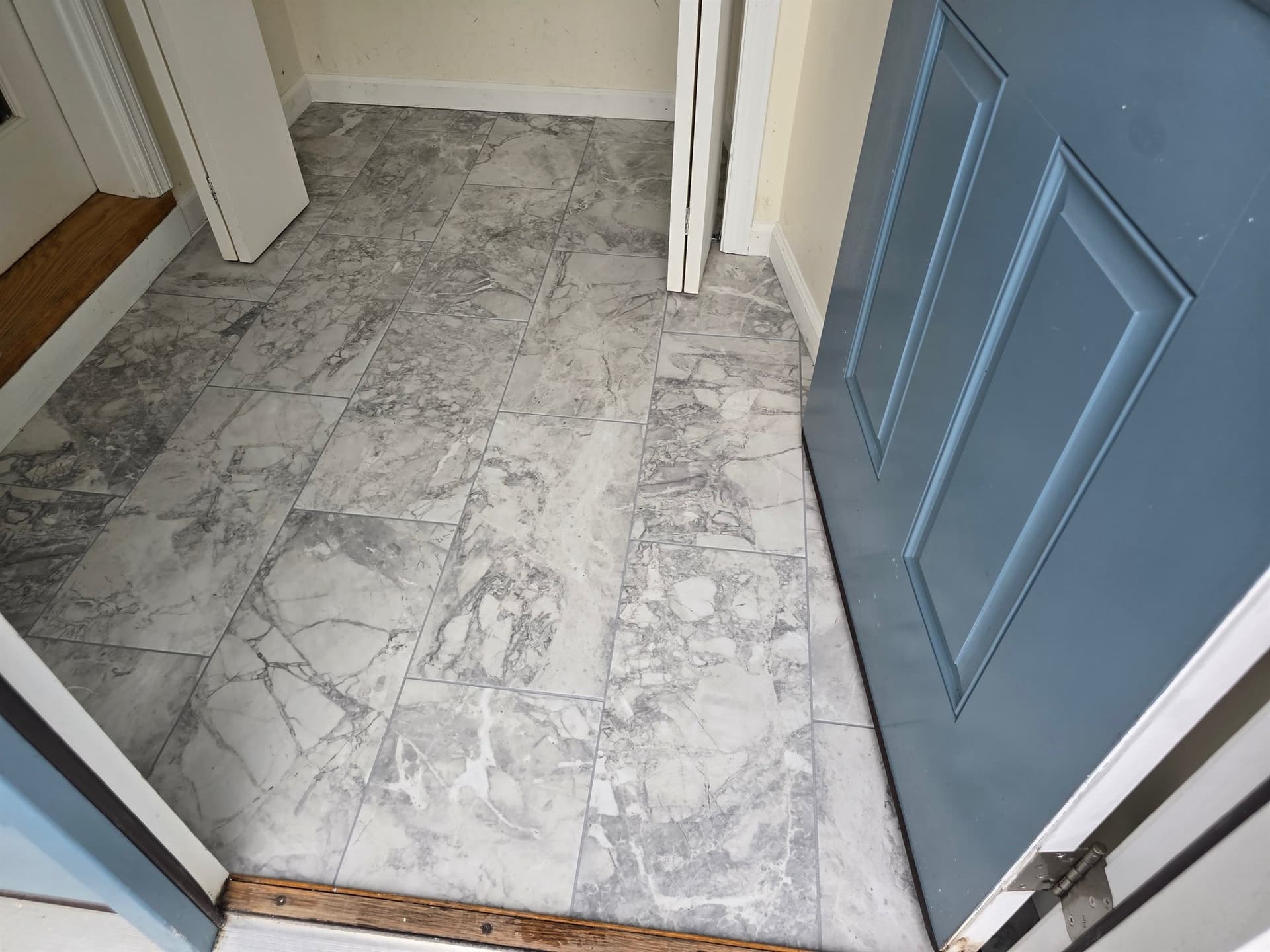
The hero photograph on this article is a real West Hartford project, but the installed surface is glazed porcelain—not natural stone. That is deliberate: convincing stone-look surfaces are common, and applying natural-stone assumptions or harsh ceramic-tile methods before identification can produce the wrong care plan.
Gentle and repeatable
Remove abrasive soil before introducing liquid
Sand, grit, and tracked-in debris can scratch stone or wear a polished finish. Use clean walk-off mats with safe backings at entrances, then dust mop with a clean untreated tool. If you vacuum, check that wheels, metal edges, and hard plastic attachments cannot drag across the surface.
Mix only a cleaner labeled and approved for the stone and finish, following its exact dilution and safety instructions. Over-concentrated soap can leave film and attract soil. Work with clean water and tools, change dirty solution rather than spreading it, rinse when directed, and dry with a soft tool. Limit standing liquid, especially around grout, cracks, open joints, and porous stone.
| Step | Action | Reason |
|---|---|---|
| 1. Identify | Confirm stone, finish, sealer, grout, and prior coatings | Cleaner compatibility depends on the complete surface |
| 2. Dry clean | Lift loose grit with a clean nonabrasive method | Wet grit can become abrasive slurry |
| 3. Spot test | Test the proposed product in an inconspicuous area as its maker directs | Stone, finish, and sealer can react differently |
| 4. Dilute and clean | Use the labeled amount and a clean soft mop or pad | Extra chemical can leave residue or damage |
| 5. Rinse and dry | Follow the label; remove dirty solution and dry promptly | Residue, puddles, and slippery wet stone are avoidable |
Name the problem correctly
A dull etch mark is not the same as a stain
When a spill occurs, blot it promptly with absorbent material so it does not spread. Follow the approved stone-cleaner instructions, rinse as required, and dry. Record what spilled because the material helps a restoration professional choose a response if a mark remains.
An etch is a chemical change to the stone surface, often seen as a dull or lighter patch on polished calcareous stone after contact with acid. It may also feel different. A penetrating sealer does not stop that reaction. Restoring the finish generally requires controlled polishing or honing matched to the surrounding surface, not more cleaner.
A stain is discoloration from material that entered pores or remained in the surface. Oil, food, metal, ink, and organic material call for different chemistry. The Natural Stone Institute describes stain identification and poultice methods, but an incorrect solvent, bleach, acid, or mixture can create damage or hazardous fumes. Use stone-specific guidance or a restoration professional for anything beyond the approved routine.
Never mix cleaning chemicals
Follow every product label, provide ventilation and personal protection as required, and keep incompatible chemicals separate. In particular, mixing bleach with ammonia can create lethal gas.
Protection is not armor
Understand what a stone sealer can—and cannot—do
Many products called stone sealers are penetrating repellents designed to slow absorption and create more time to clean a spill. They do not form an invisible shield against every stain, and they generally do not prevent acidic material from etching marble, limestone, or travertine. Some dense stones may not need the same treatment as more absorbent ones.
Do not reseal by calendar alone or stack a new product over an unknown treatment. Identify the stone and existing sealer, test performance using the sealer manufacturer's approved method, and check appearance, slip, vapor, cure, ventilation, and maintenance requirements. A topical coating can alter sheen and care and should not be confused with a penetrating treatment.
Common sources of avoidable damage
Keep acids, abrasives, and guesswork off the floor
Vinegar, lemon, acidic toilet-bowl or grout cleaners, some rust removers, and acidic descalers can attack stone. Scouring powders, rough pads, worn vacuum parts, and gritty mop water can scratch it. Bleach, ammonia, solvents, alkaline degreasers, and peroxide are not universal routine cleaners simply because one source lists them for a specific stain and stone under controlled instructions.
Steam is also not a default solution. Heat, moisture, sealer, grout, repairs, and stone type all need consideration, and equipment makers cannot approve the exact floor unless their instructions address it. Use the stone supplier, sealer, grout, and cleaning-product documents together.
For daily dust
Use a clean untreated dry mop or a scratch-safe vacuum setup.
For routine soil
Use a correctly diluted, stone-approved neutral cleaner and clean tools.
For a mystery mark
Stop, identify whether it is residue, an etch, a stain, a scratch, or moisture before applying chemistry.
For deep damage
Use a qualified stone restoration professional rather than experimenting on the visible floor.
Protect the original surface
Know when routine care has reached its limit
Seek professional help for widespread etching, deep scratches, cracks, loose stone, hollow or moving areas, repeated efflorescence, unknown coatings, lippage concerns, strong discoloration, slippery residue, or a stain that requires chemistry you cannot confidently match to the stone. Moisture coming from below or behind the installation needs its source addressed, not just surface cleaning.
Before the visit, photograph the floor in even and side lighting, list every product applied, save labels, note what caused the problem, and identify any previous sealing or restoration. Do not polish a small spot in the middle of a large honed or polished field unless the method is designed to blend the complete finish.
Plain-language answers
Common questions
Can I use vinegar to clean natural stone floors?
No as a general cleaning method. Vinegar is acidic and can etch calcium-carbonate stones such as many marbles, limestones, and travertines. Even more acid-resistant stone may contain sensitive minerals, grout, or sealer. Use a cleaner approved for the exact surface.
Does sealing natural stone prevent etching?
Usually not. A penetrating sealer is intended mainly to slow absorption and improve stain resistance. Acid can still react with acid-sensitive stone itself and leave a dull etch. Topical coatings behave differently and can alter appearance, slip, and maintenance.
How can I tell whether a dull spot is etching or cleaner residue?
Residue may smear, streak, or respond to the approved routine cleaner, while an etch is a physical change in surface finish and often looks different in side light. Do not keep scrubbing. Identify recent spills and products and ask a stone professional when the cause is uncertain.
Can I use a cleaner labeled for tile on natural stone?
Only if its current label expressly approves your identified stone, finish, sealer, and grout and you follow dilution and use instructions. Some cleaners intended for ceramic tile or grout contain acids or other chemistry that can damage natural stone.
How often should a natural stone floor be sealed?
There is no universal calendar. Stone type, porosity, finish, existing treatment, location, use, cleaner, sealer chemistry, and manufacturer guidance all matter. Have the surface identified and evaluate the existing treatment before applying more product.
Checked, not guessed
Sources and technical review
Reviewed on September 11, 2026 by Floors Now! flooring team, Connecticut flooring sales and installation team. The sources below support the general guidance. The instructions, room approvals, cleaner list, installation guide, and warranty for the exact product you buy always take priority.
- Natural Stone Institute: Care and Cleaning of Natural Stone
Explains stone identification, neutral cleaning, spill response, sealing limits, stains, etching, scratches, and when restoration is appropriate.
- Daltile: Natural Stone Care and Maintenance
A stone supplier's guidance on neutral cleaners, dilution, rinsing, drying, spot testing, and how stone care differs from ceramic tile care.
- LATICRETE: Stone Cleaning Tips
Explains routine floor care and why acidic spills can etch marble, limestone, and travertine even when the stone is sealed.
Keep planning
Natural Stone Product Guide
Compare marble, slate, travertine, granite, finish, variation, sealing, and room considerations.
productTile Product Guide
Distinguish manufactured ceramic and porcelain tile from genuine natural stone before choosing care.
projectWest Hartford Porcelain Entry Project
See the verified manufactured porcelain surface pictured above and why visual identification is unreliable.