01
Describe the room
Note traffic paths, stairs, pets, spills, sunlight, furniture, and how often you can vacuum. Include the route through a room, not just its name.
Newington showroom • Serving Connecticut

Carpet product guide
Start with how the room is used. Learn how traffic, fibers, pile, cushion and installation work together, then compare samples with our Newington showroom team.
Request a free carpet estimate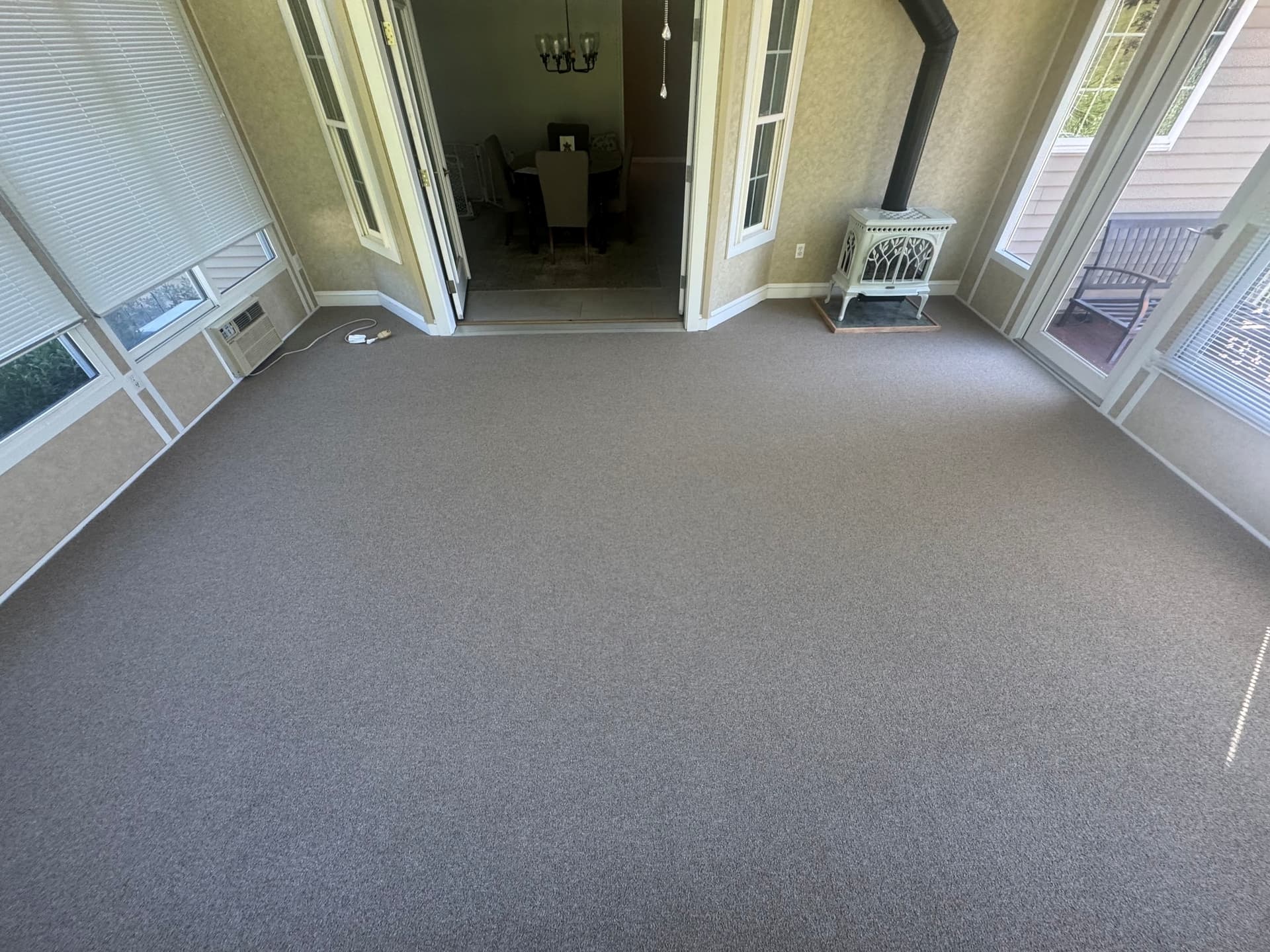
A quiet bedroom, the turn at the bottom of a staircase, and a family room with a dog ask different things of carpet. Start with those demands, then compare the fiber, pile construction, support underneath, and care requirements. The softest sample or the largest face-weight number cannot make that decision for you.
01
Note traffic paths, stairs, pets, spills, sunlight, furniture, and how often you can vacuum. Include the route through a room, not just its name.
02
Look at fiber, pile style, density, twist, backing, approved cushion, and the actual warranty together. Bring samples home to compare their appearance.
03
A measured layout, seam plan, floor preparation, installation method, and realistic cleaning routine belong in the selection from the start.
Start below the surface
Carpet is a floor covering supported by a backing and an installation system. Many home installations also include separate cushion. Understanding those pieces makes the specifications easier to compare.
A typical tufted carpet over cushion
The surface you walk on. Fiber, yarn twist, height, and how closely the tufts are packed influence feel and appearance retention.
In tufted carpet, yarn is inserted through this base. It helps position the tufts during manufacture.
These help secure the tufts and stabilize many tufted carpets. The complete backing determines compatible installation methods.
When specified, this separate layer supports the carpet and changes comfort. Its thickness and firmness must match the carpet and use.
The structural surface underneath must be sound, dry, and suitable. New carpet cannot repair moisture problems, movement, or damaged stairs.
Tufting inserts yarn into a backing; weaving interlaces yarns to form the carpet structure. Neither term identifies the fiber or automatically proves a quality level. Woven products can require different cutting, seaming, stretching, and edge finishing, so the installer needs the exact construction details.
Broadloom arrives in rolls cut to a measured layout. Carpet tile uses individual modules with their own backing and fitting instructions. A broadloom style may also be made into a bound rug or runner when suitable. A format changes layout, seams, repair options, and cost; it does not determine the fiber.
For modular flooring, compare our Carpet Tile guide. For a finished piece over an existing floor, see Area Rugs.
Material matters
Fiber influences resilience, staining, cleaning, feel, and price. Use these differences to narrow your choices, then compare the construction and written performance terms of the actual samples.
Scroll across the table to compare every column.
| Fiber | What it is | Useful strengths | Tradeoffs | What to verify |
|---|---|---|---|---|
| Nylon | A synthetic fiber commonly selected for resilience: the ability of the yarn to recover after compression. It appears in everything from soft bedroom carpet to demanding commercial constructions. | A useful starting point for busy family rooms, halls, and stairs when the product also has suitable density, twist, and backing. | Often costs more than entry-level polyester. Stain performance depends on the nylon, dye method, protective treatments, and maintenance; the fiber name alone does not promise stain protection. | Compare texture-retention coverage, stain exclusions, and written approval for stairs or other intended uses. |
| Polyester / PET | A synthetic fiber offered in many soft textures and vivid colors. Some products contain recycled material; the percentage and certification belong to the specific product. | Often offers accessible pricing, a comfortable feel, and resistance to many water-based stains. It is worth comparing for bedrooms and other rooms where comfort is a priority. | Oil-based soil can be difficult to remove. Appearance retention varies with construction, so a tall, loose pile deserves careful scrutiny for concentrated traffic. | Check the exact traffic recommendation and texture-retention terms rather than ruling a carpet in or out because it is polyester. |
| Triexta / PTT | A distinct generic fiber classification associated with polytrimethylene terephthalate, or PTT. Compare it separately from conventional PET polyester even though the materials are chemically related. | Many products combine a soft feel with built-in stain resistance, making them candidates for active households when construction and warranty match the room. | Performance is not identical across brands or collections. Stain resistance does not guarantee resistance to oily soil, matting, claw damage, or odor beneath the carpet. | Confirm fiber content, any blend, approved cleaning instructions, texture coverage, and the exact scope of pet protection. |
| Polypropylene / Olefin | Two names used for the same carpet fiber. It absorbs little moisture and is commonly used in solution-dyed loop constructions, rugs, and selected indoor/outdoor products. | Can provide a practical value option where a low, stable construction and its approved application match the project. | Resilience and oil-based soiling deserve attention. A moisture-resistant fiber does not protect backing, cushion, adhesives, or the building from moisture problems. | Check traffic suitability and cleaning limits. Basement or outdoor use must be explicitly approved for the whole product; it cannot be inferred from the fiber. |
| Wool | A natural fiber valued for its feel, visual depth, and resilience. Available as pure wool or a blend, in both understated textures and decorative woven designs. | An appealing choice when natural material, comfort, and a rich surface character are priorities. A suitable construction can serve regularly used rooms as well as formal spaces. | Usually a larger material investment. Spill response, moisture management, and compatible cleaning chemistry require attention; natural fiber does not mean stain-proof or maintenance-free. | Ask about fiber percentages, shedding expectations, approved vacuum settings, professional cleaning methods, and any product-specific stain treatment. |
A fiber name is a starting point. Two carpets made from the same fiber can have very different pile heights, tuft density, yarn construction, and intended uses. A blend also needs its percentages identified; the word “wool” on a sample does not necessarily mean 100% wool. Compare the exact style and color, not just the collection name.
Further reading: CRI guidance on selecting carpet.
Texture & appearance
Cut pile has yarn ends at the surface. Loop pile keeps the loops intact. Textures, twists, and combinations create the styles below; each still needs an appropriate fiber and construction for the room.
Scroll across the table to compare every column.
| Style | Construction | Appearance in use | Selection considerations |
|---|---|---|---|
| Loop pile | Yarn loops remain uncut. Level loops create an even surface; loops of different heights add texture or pattern. | Often gives a tailored, relatively firm surface. Berber commonly describes a looped or flecked look, not a particular fiber or quality grade. | Evaluate loop size, tightness, snag exposure, and vacuum compatibility. Some products suit busy paths well, but every loop carpet is not automatically approved for heavy traffic or pets. |
| Plush / Saxony | Cut yarn creates a smooth, upright surface. Product names vary, so view the actual sample rather than relying on a style label. | A soft, orderly look that suits rooms where an even carpet surface is part of the design. | Footprints, vacuum tracks, and changes in pile direction are more apparent. These visual effects differ from fiber loss or permanent damage; decide whether you enjoy the look before choosing it. |
| Textured cut pile | Cut yarns are arranged or finished to produce a less uniform surface than smooth plush. | Texture breaks up light reflection and can make ordinary footprints and vacuum marks less noticeable. | A versatile option for bedrooms and shared living spaces. Fiber, density, twist, and approved use still determine performance; a forgiving visual does not prevent soil accumulation or crushing. |
| Frieze | A cut-pile style with tightly twisted yarns that bend or curl, creating a relaxed surface. | The varied yarn direction helps disguise footprints and creates a casual, textured look. Pile height differs among products. | Compare samples for cleaning access, vacuum effort, and suitability around doors or rolling furniture. High twist helps yarn retain its character, but it does not establish a universal traffic rating. |
| Cut-and-loop / Sculpted pattern | Combines cut yarn and intact loops to form patterns or changes in surface level. | Adds visual interest without requiring a strong color contrast. Patterns can change noticeably when viewed across an entire room. | Review loop snag exposure, pattern repeat, seam locations, and alignment on stairs. Pattern matching can increase ordered material and installation time; sample size alone may not show the full design. |
A pattern describes the look, not one construction. It can come from cut-and-loop texture, different loop heights, weaving, colored yarn, or printing. Confirm how the selected design is made and what that means for seams, traffic, and cleaning.
The term often describes a flecked appearance or a loop style. It does not name a fiber, a traffic rating, or a promise of durability. Look at the actual loops, fiber content, density, and use instructions. A small tight loop and a large sculpted loop can behave differently with claws, vacuum brushes, and furniture.
Read the sample label
Use specifications to ask better questions. A single impressive number cannot establish carpet quality, and numbers are most useful when the products being compared have similar fibers and construction.
Scroll across the table to compare every column.
| Specification | What it means | How to compare it |
|---|---|---|
| Fiber content and yarn construction | Identifies the fiber or blend and whether the yarn uses bulk continuous filament (BCF) or shorter staple fibers. | Compare exact composition and care needs. Staple constructions may shed loose fibers initially; BCF is not a standalone durability grade. Ask about unusual or persistent shedding. |
| Face weight versus total weight | Face weight measures surface pile yarn, commonly in ounces per square yard. Total weight also includes backing and other components. | Compare like measurements among similar fibers and constructions. More weight does not automatically mean better traffic performance, especially when added weight comes from taller pile or backing. |
| Pile density | Describes how closely the pile yarn is packed. Density figures relate yarn mass to pile dimensions rather than simply reporting total carpet weight. | Use consistently measured manufacturer specifications alongside fiber and construction. A tall carpet can have substantial face weight without tightly supported yarn. There is no single density cutoff for every room and style. |
| Pile height versus total thickness | Pile height concerns the surface yarn. Total carpet thickness includes the backing; finished floor height also depends on cushion and installation. | Compare comfort, maintenance, door clearance, and transitions using the correct measurement. Extra pile height does not by itself establish quality or suitability for concentrated traffic. |
| Yarn twist / TPI | Turns per inch describes how tightly a yarn is twisted. It is especially relevant when comparing cut-pile constructions. | Well-set twist helps yarn maintain its shape. Evaluate it with fiber, pile height, and density; a single TPI value cannot rank all carpets, particularly across cut and loop styles. |
| Gauge and stitch rate | In tufted carpet, gauge describes the spacing between tufting needles. Stitch rate describes stitches along the carpet's length. | Both help describe construction, but neither measures overall quality alone. Yarn size, pile height, fiber, and finishing also affect how the finished surface feels and performs. |
| Tuft bind | A measure of how securely a tuft is held in the carpet construction, determined by a specified test. | Compare results only when the test and product context match. Tuft security matters, especially around loops, but a test result does not promise that claws or sharp objects cannot damage the surface. |
| Backing and installation system | Backing supports the carpet structure and influences handling, dimensional behavior, and compatibility with cushion or adhesive. | Verify stretch-in, direct-glue, or double-glue approval for the exact product. Spill-resistant backing claims describe specific performance; they do not mean every seam and perimeter forms a waterproof assembly. |
| Dye method and protective treatments | Dyeing determines how color is introduced; stain and soil treatments address different aspects of maintenance. Solution dyeing colors the material before fiber formation. | Check product-specific colorfastness and protection claims. Solution-dyed does not automatically mean bleach-cleanable, and stain treatment does not prevent texture changes, dirt accumulation, or every spill. |
| Roll width and pattern repeat | Broadloom comes in specified roll widths. A pattern repeat gives the distance before the design repeats along or across the carpet. | These dimensions affect seam layout and ordered quantity. Compare an installer-measured layout rather than assuming the room area equals the amount of carpet needed, particularly for patterned rooms and stairs. |
| Use classification and warranty | The approved application and written coverage define where the product belongs and which conditions or failures qualify for a claim. | Separate abrasive wear, texture retention, stains, soil, fading, and pet coverage. Confirm installation and cleaning requirements, exclusions, prorating, and labor coverage rather than comparing warranty years alone. |
Imagine two samples with the same fiber and face weight. One spreads that yarn through a taller pile; the other packs it into a shorter pile. Their feel, density, and response to traffic may differ. Comparing a 60-ounce plush with a 40-ounce loop by face weight alone misses those differences.
Average pile yarn density is commonly expressed as 36 × pile yarn weight in ounces per square yard ÷ measured pile thickness in inches. The result is ounces per cubic yard. Use manufacturer measurements; total carpet thickness includes backing, and a casual ruler measurement is too imprecise for a useful rating. There is no universal density number that approves every carpet for stairs.
Bulked continuous filament (BCF) uses long continuous filaments. Staple yarn is spun from shorter fibers and may release loose fibers, especially early in use. This distinction does not by itself rank durability. Compare its shedding expectations and maintenance demands before choosing.
Handle the sample, part the pile, and feel the support under it. That helps explain the construction, but bending a sample to see backing is not a standardized performance test. Compare the specification sheet, intended room use, and texture-retention terms before drawing a conclusion.
Further reading: CRI explanation of average pile yarn density and measurement.
Look beyond a small swatch
A sample can look different under showroom lighting, beside your wall color, or across a full room. Compare a larger piece at home in daylight and evening light, including from the room entrance.
A uniform surface can reveal shading, lint, footprints, or tracking more clearly. Flecks and texture may disguise everyday soil, but that soil still needs to be removed. Compare light and dark samples against your furniture, pet hair, and the dirt actually brought into the house. Pattern scale also changes between a small sample and a full hallway.
In solution-dyed synthetic fiber, color is incorporated before the filament is formed. Other methods color fiber, yarn, or finished carpet at later stages; printing can add a surface pattern. Solution dyeing can offer useful colorfastness, but does not prove stain immunity, crush resistance, or permission to use bleach.
Yarn can reflect light differently when viewed from opposite directions. Brush a sample both ways and walk around it before selecting a color. The layout should account for pile direction and strong light across seams. A change with viewing angle may be a pile effect rather than a different dye color. For sunny rooms, also ask about fade coverage and recommended window treatments.
Confirm the style, color number, and manufacturing or dye lot for the order. Adjacent pieces need a coordinated layout; a later order may not be an exact visual match. A patch may still show because the installed carpet has aged and received traffic.
Start with actual use
Count the repeated routes, sharp turns, stairs, shoes, grit, pets, and wheeled loads. A bedroom used as an office can work harder than a larger living room. These four categories are planning descriptions, not standardized manufacturer grades.
Scroll across the table to compare every column.
| Planning category | Typical examples | What to prioritize | What to confirm |
|---|---|---|---|
| Low traffic | Occasional-use guest rooms, quiet formal rooms, and spaces with little through traffic. | Balance softness, design, and budget while allowing for future changes in use. Appropriate cushion still matters in a quiet room. | Confirm that a home office does not introduce rolling-chair demands. These traffic bands are planning descriptions, not standardized carpet grades. |
| Moderate traffic | Daily-use bedrooms and living areas without heavily concentrated routes or substantial tracked-in grit. | Look for balanced construction, comfortable approved cushion, and a surface you can maintain. Compare the path beside the bed or between doors separately from the rest of the room. | Check the manufacturer's intended application and appearance-retention coverage for the exact product. |
| High traffic | Busy family rooms, halls, stairs, play areas, and repeated pet or household routes. | Prioritize supported, stable construction, useful texture retention, and a realistic cleaning plan. Entry soil, pivoting feet, and repeated pressure make a narrow route demanding even in a small household. | Confirm stair approval where relevant and evaluate cushion firmness, backing, seam placement, and use-specific exclusions together. |
| Extra-heavy or commercial use | Busy shared corridors, public rooms, some rental common areas, and repeated rolling loads. | Specify a product and installation system for the actual traffic, equipment, and maintenance schedule. Commercial broadloom or carpet tile may offer useful options. | Obtain written use approval. A premium residential carpet or a long residential warranty does not automatically qualify for commercial, rental, or wheeled use. |
Mark the doorway, bed-to-bathroom path, sofa corner, stair landing, and desk chair on a rough room sketch. Tell us where people turn or walk in the same narrow line. A manufacturer's residential, light-commercial, or commercial approval and warranty must match the actual use; a dense carpet sold for a bedroom is not automatically a commercial floor.
Bring the room into the decision
These are starting directions for a showroom comparison. Moisture conditions, household habits, mobility needs, cleaning equipment, and the specific product can change which carpet is appropriate.
Scroll across the table to compare every column.
| Room or use | Useful starting direction | Details to verify |
|---|---|---|
| Guest and primary bedrooms | Start with the feel and appearance you enjoy, then assess the daily route around the bed. Plush, textured cut pile, and other constructions can work when matched to actual use. | Test the sample over the proposed cushion. Check door clearance, vacuum compatibility, and whether pets or an adjoining office change the traffic demand. |
| Living and family rooms | Compare comfortable constructions with suitable appearance retention. Textured or multicolored surfaces can make ordinary marks less conspicuous in a room used throughout the day. | Identify routes between seats and doors, food and drink exposure, furniture pressure, and access to the outdoors before comparing products. |
| Hallways and connecting spaces | Repeated footsteps follow the same narrow paths, so construction and support matter more than a room's square footage. Include turning points in the traffic assessment. | Review density, cut-pile twist where applicable, approved cushion, transition heights, and seam locations. Coordinate adjoining rooms without sacrificing the hall's use requirements. |
| Stairs and landings | Choose a carpet specifically suited to concentrated stair use, with a profile and backing appropriate for the tread edges and installation method. | Confirm stair warranty terms, firm compatible cushion, full-width versus runner layout, edge finishing, pattern alignment, and how the installer will fit the stair noses. |
| Pet and play spaces | Evaluate stains, odors, claws, tracked-in soil, and traffic separately. A stain-resistant fiber addresses only part of the room's demands. | Read pet coverage and exclusions, assess loop snag exposure, compare backing and cushion options, and inspect existing materials for contamination before covering the floor. |
| Finished basements | First establish that the space and substrate meet the selected carpet system's moisture requirements. A dry, controlled basement offers different choices from one with recurring dampness. | Confirm below-grade approval, substrate evaluation, cushion or adhesive compatibility, and a plan for water incidents. Moisture-resistant yarn cannot correct leaks or slab moisture. |
| Home offices and wheeled use | Assess chair movement and other rolling equipment independently of foot traffic. A stable, lower-profile product may suit the task better than a deep, soft construction. | Confirm product and installation suitability for the wheels involved, including any approved chair mat. For mobility equipment, try a representative sample assembly and review transitions. |
| Rentals and shared spaces | Balance installed cost with cleaning demands, expected occupancy, repair options, and replacement planning. A low purchase price may not produce the lowest cost over repeated turnovers. | Check rental or commercial eligibility, maintenance obligations, material availability, and any replacement stock needed for repairs. Owner-occupied residential coverage may not apply. |
Support beneath the pile
Cushion changes how the floor feels and how well the carpet is supported. Too much movement underneath can work against the carpet. Confirm the permitted type, thickness, density, and firmness for the exact style and installation.
Rebond combines pieces of foam and is commonly considered for value and support in residential rooms. Prime polyurethane is a continuous foam that offers a uniform cushioning feel. Very soft or lightweight versions may not provide the support needed for concentrated use. Compare the actual grade, thickness, firmness, price, and carpet approval; the material name alone does not establish performance.
Memory foam offers slow-recovery comfort, but extra softness may be unsuitable where a firm, stable floor is needed. Frothed or densified polyurethane can provide compact support at a lower profile, often at a higher price than basic rebond. Neither a premium name nor a soft sample approves a pad for stairs or rolling loads. Check the exact cushion and carpet combination.
Rubber can offer resilient support with a firmer feel, while dense fiber or felt can provide relatively low-flex support for compatible woven or low-profile carpets. Their feel and price differ from a plush foam, and approval is still product-specific. Compare density within each material category; rubber, fiber, and polyurethane density numbers are not interchangeable quality scores.
Some carpet systems include a cushion attached to the backing. Others use a separate pad or no pad at all. Adding another layer under an attached system can change its stability and warranty. Confirm the whole assembly, including approved adhesive when the system is glued.
CRI describes a general residential range of ¼ to 7/16 inch with at least 6 lb/ft³ density, and no more than ⅜ inch with 8 lb/ft³ for Berber or other low-profile styles. These are not universal specifications for every pad material or carpet. The chosen product's requirements govern, especially on stairs and over radiant heat.
Further reading: CRI carpet and cushion selection.
Replace compressed, contaminated, or incompatible old cushion as part of the plan. A spill-resistant film on a cushion may help with liquid arriving from above when used as directed; it does not fix moisture rising from concrete or make the seams and perimeter watertight. Backing that separates, crumbles, or no longer holds the carpet needs professional assessment before reuse.
Concentrated wear
A staircase concentrates footsteps at its edges and landings. The carpet must be suitable for the turns, stair shape, fitting method, and cushion. Ask for explicit stair coverage in the warranty.
Look at the pile as it bends over a rounded edge and consider how visible the backing or pattern becomes. A suitable compact construction can be easier to fit than a very tall pile, but density or fiber alone does not approve a carpet for stairs. Include the landings and the turn at the bottom in the traffic discussion.
Full-width carpet covers the stair surface; a runner leaves part of the stair visible. Confirm finished width, centering, exposed sides, landing joins, and pattern direction. Binding or serging finishes a runner's edges. Fabrication, pattern matching, and detailed fitting mean a narrower runner is not automatically the less expensive option.
A waterfall installation drops from the stair nose toward the next tread; a contoured or upholstered fit follows the nose more closely. Terms such as Hollywood can vary by installer, so review a photo of the intended result. Product construction and stair geometry determine which methods are appropriate.
Loose treads, damaged noses, open sides, winding steps, door clearances, and transitions need attention before fitting. Confirm an approved firm cushion and installation details for the stair. Carpet can change the feel underfoot, but cannot repair an unsafe structure or guarantee against slips and falls.
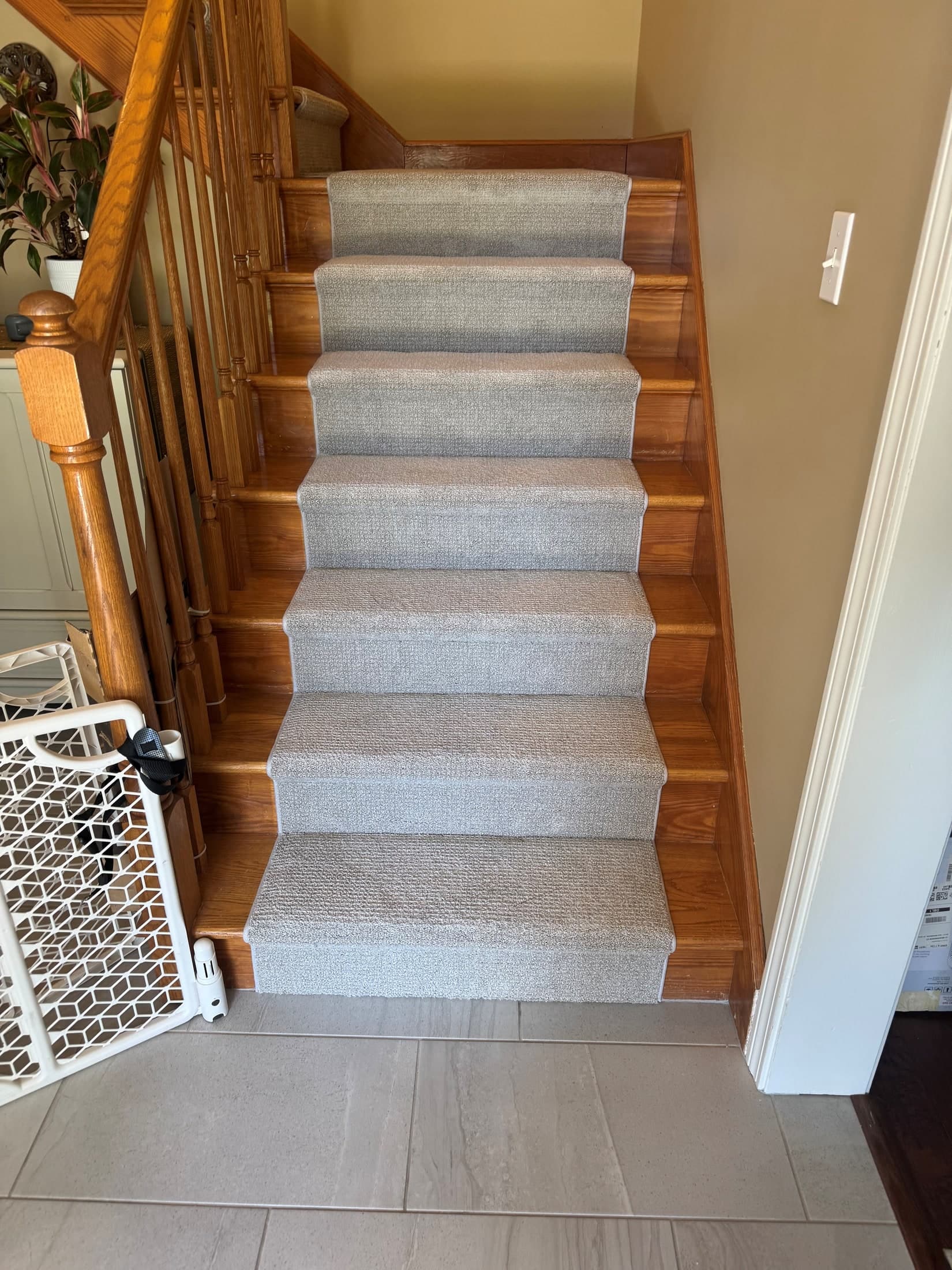
Our Newington sunroom, hallway, and stair project shows a bound runner fitted on 13 stairs with the wood left visible at both sides.
For the installation scope and preparation, see our Stairs & Runners service.
Spills, claws & real life
Pet-friendly is a useful conversation starter, but it is not one universal performance rating. A surface stain, an odor, a snag, and liquid reaching the cushion are different problems and may have different coverage.
Staining changes the fiber's visible color. Soiling is material that accumulates on or around it, including oily residue that holds more dirt. A stain-resistant fiber or finish can still collect soil. Ask about both protections and about the approved cleaning method, rather than assuming one treatment handles everything.
Liquid can reach seams, edges, cushion, or the subfloor; removing the surface spot may not remove contamination below. Check whether a pet warranty covers odor, labor, cushion, and the type of accident.
A pet that scratches or catches claws can pull loops or damage edges. Cut pile removes that particular loop structure but is not claw-proof. Consider your pet's behavior, the loop size and construction, and the maker's restrictions. Damage from scratching or chewing should not be assumed to fall under a pet-stain promise.
Moisture-resistant synthetic fiber does not make the complete floor waterproof. Leaks, condensation, damp concrete, and flooding can affect the backing, cushion, adhesives, and building materials. Resolve the source and confirm site conditions before choosing carpet. A basement that stays dry is a different application from one with repeated water entry.
A stain-resistant face addresses discoloration of the yarn. Specialized backing may slow liquid from reaching the cushion or subfloor under the product's stated conditions. Neither feature automatically seals cut edges, seams, or the room perimeter, and neither establishes odor protection. Ask exactly which liquids, exposure conditions, installation details, and affected layers the protection and warranty address.
Further reading: CRI guidance on pet urine and carpet.
How the room feels
Softness is one part of living with carpet. Consider how the complete floor works with furniture, mobility equipment, heat, ventilation, and the household's cleaning routine.
Try the carpet with its proposed cushion rather than judging a loose swatch alone. Deep, soft pile can make chairs, walkers, or wheels harder to move. Confirm a suitable stable assembly and smooth transitions when mobility matters; a plush feel is not the right priority for every household.
Carpet and cushion can soften footsteps and room sound, but a building's acoustic requirements apply to the complete floor assembly. Request the relevant test documentation if required. Over radiant heat, confirm approved carpet and cushion, combined thermal resistance, operating limits, and installation details with both manufacturers.
If emissions matter to your selection, check certifications for the actual carpet, cushion, and adhesive. CRI Green Label Plus evaluates low chemical emissions; it is not a zero-emissions or allergy-free guarantee. Installation ventilation is a separate requirement.
Wool, recycled content, and take-back programs describe different attributes. Ask for the fiber percentages and documentation behind a claim, along with realistic local disposal options. A natural fiber is not automatically appropriate for every sensitivity, and recycled content does not by itself establish durability or end-of-life recyclability.
Further reading: CRI Green Label Plus emissions program.
Plan the work with our Carpet Installation service. Review installation methods and scope, then use the room preparation checklist before installation day.
Compare the complete project
Two quotes are comparable when they cover the same rooms, material, cushion, preparation, and finishing work. A lower price per square foot can still produce a higher total if important items are missing.
Ask for the exact style, color, roll width, quantity, and layout allowance. Net room area is not the same as order quantity: roll widths, cuts, closets, stairs, and pattern repeats affect material use. Carpet may be quoted by the square yard or square foot; one square yard equals nine square feet. Confirm units before comparing prices.
Identify the pad by product, thickness, and density where applicable. Separate removal and disposal, subfloor repair, moisture or odor correction, old adhesive work, and any tack-strip replacement. Ask what is included and how conditions discovered after removal will be documented and priced before additional work proceeds.
Include labor, pattern matching, seams, stair fitting, runner binding or serging, landings, thresholds, transitions, and door adjustments. Furniture moving and resetting need a clear scope, particularly for heavy, fragile, or connected items. Confirm delivery, taxes, and any access or scheduling charges.
Consider the care required, suitability for the busiest areas, likely repair options, and replacement access alongside the initial price. A very long warranty does not guarantee an equally long useful life. A carpet matched to the room and properly maintained can be a better choice than a heavier or softer option selected on one feature.
Bring a rough sketch and photos for the first discussion. Final quantities and installation scope should follow a professional measure. Request a carpet estimate.
Cleaning, protection, and upkeep guidance is in our dedicated Carpet Care & Maintenance guide.
Read what is actually covered
Warranty names can sound similar while covering different failures. Review the document attached to the exact carpet and cushion before buying, including stairs, pets, rental use, cleaning requirements, and what a claim would pay for.
Scroll across the table to compare every column.
| Coverage or term | What to look for | Question to ask |
|---|---|---|
| Abrasive wear | Usually addresses a defined amount of fiber loss under stated conditions; appearance change can be treated separately. | What amount of fiber loss qualifies, and are crushing or matting excluded? |
| Texture retention | Addresses changes to the carpet's original texture under the warranty's rating, use, and maintenance conditions. | What appearance change is covered, how is it evaluated, and are stairs included? |
| Stain, soil, and pet coverage | Substances, odor, repeated accidents, cleaning attempts, backing protection, and damage exclusions can differ. | Which incidents and affected layers are covered, and what must I do after an accident? |
| Manufacturing and installation | A product defect and a workmanship issue can fall under different agreements and responsible parties. | Who handles each concern, and what are the reporting deadlines and inspection steps? |
| Term, exclusions, and remedy | Coverage may be prorated, limited to the original buyer or residence, and restricted by application or cushion choice. | Would a valid claim pay for material, labor, removal, cushion, and furniture moving, or only some of those costs? |
Confirm the exact carpet, cushion, installation scope, and applicable warranty version in your purchase documents.
Further reading: Shaw example distinguishing wear and texture-retention coverage.
Further reading: Engineered Floors warranty and claim documentation.
Take this to the showroom
Bring room photos, a rough sketch, and the samples you like. These questions turn a soft swatch into a practical plan.
Discuss your carpet projectConnect the guide to real rooms
These documented Floors Now projects show how product choice, cushion, stair finishing, and repair scope come together. Each links to the actual project details and photos.
Newington · Carpet and a stair runner
Philadelphia Profusion in the sunroom, Engineered Floors Pinpoint in the hallway and on 13 stairs, and new cushion. The project includes a bound runner with wood visible along both sides.
View project details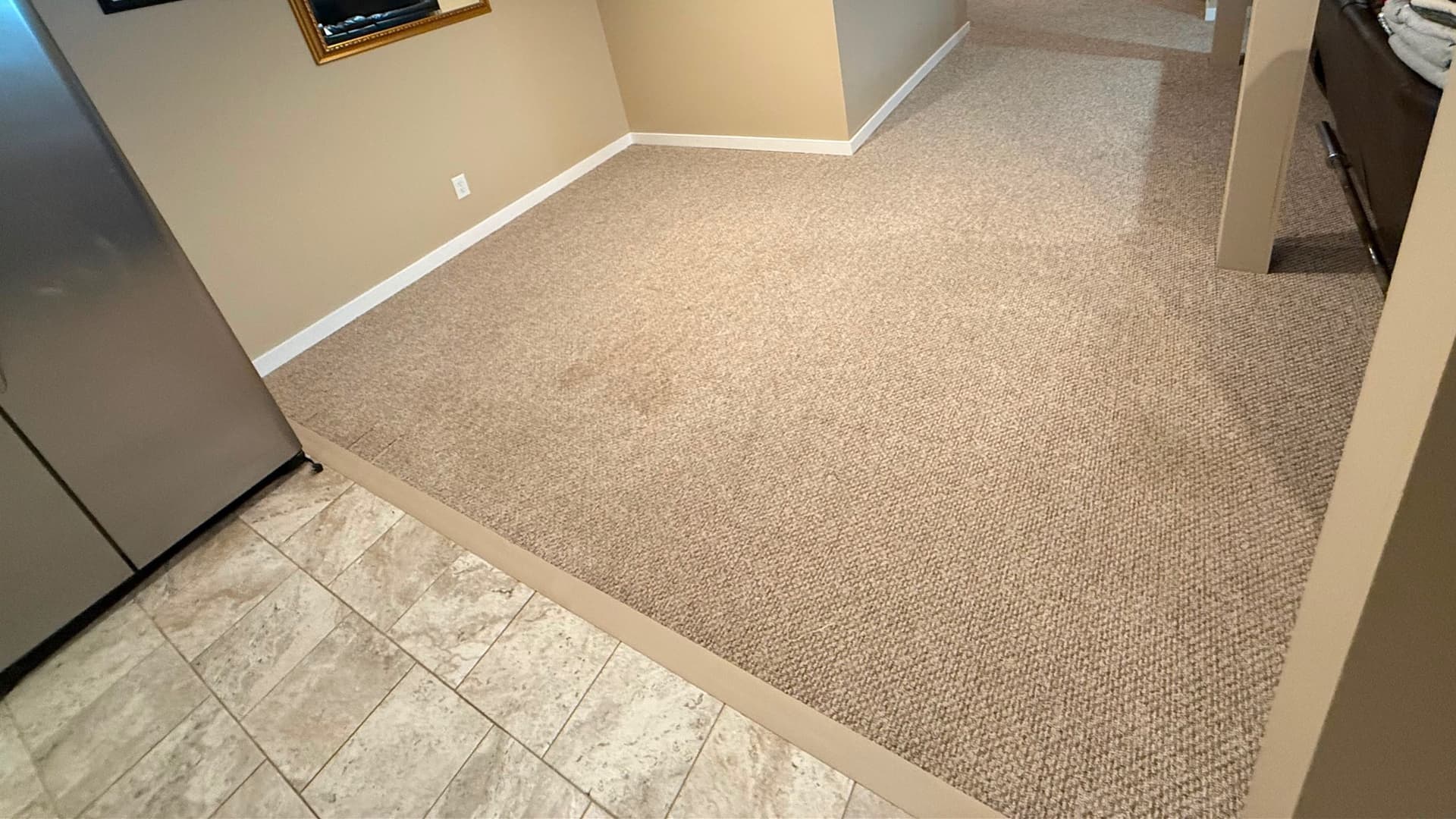
Kensington · Cushion and carpet repair
New cushion, corrected tack strip, restretching, and a finished transition addressed the approved repair scope. The project record also explains the limits of the result where carpet edges already had pulls.
View project detailsCommon buying questions
Open a question for a quick answer, then use the sections above to compare the specific products under consideration.
Start with the busiest routes, spill exposure, pets, and cleaning routine. Compare products with appropriate residential use approval, supported construction, and useful texture-retention and stain coverage. Nylon, triexta, and other fibers can be candidates depending on the exact product. Choose the carpet, cushion, and installation together rather than selecting by fiber name or softness alone.
Face weight tells you how much surface yarn is present, not how well the entire carpet will perform. A heavier carpet can simply have taller pile. Compare face weight among similar fibers and styles, then consider density, twist, backing, and approved use. Make sure one label is not reporting total weight while another reports face weight.
Neither. Berber commonly describes a looped or flecked appearance, and products sold under that name can use different fibers and constructions. Ask what the carpet is made from, how its loops are constructed, and where it is approved for use. Compare snag exposure, cushion requirements, and cleaning instructions rather than treating the name as a durability promise.
For cushion described this way, the number refers to density in pounds per cubic foot, not thickness. Density, thickness, firmness, and material are separate characteristics. An eight-pound label alone does not establish compatibility or performance across different cushion materials. Use the carpet manufacturer's cushion requirements and compare samples as a carpet-and-cushion assembly.
Choose a cushion that meets the carpet's requirements and suits the room. Excessive thickness or softness can allow too much movement, particularly under low-profile carpet or concentrated traffic. Premium comfort features may be worthwhile, but price and plushness do not establish support. Confirm approved material, thickness, and density before deciding which feel you prefer.
Look for written stair suitability, construction that handles concentrated wear, and compatible firm cushion. The installer should assess tread edges, open sides, landings, pattern direction, and attachment. A fiber name or heavy face weight alone cannot establish suitability. Read stair-specific warranty terms and view the sample bent over an edge to understand its appearance.
Not necessarily. A runner may cover less area, but custom cutting, edge finishing, pattern placement, exposed stair preparation, and detailed installation can offset material savings. Stair shape also affects labor. Compare complete measured quotes for the same staircase, with fabrication and installation included, rather than comparing carpet area or material price alone.
A well-planned installation aims for secure, unobtrusive seams, but complete invisibility cannot be guaranteed. Texture, pattern, lighting, pile direction, and seam location influence what you see. Review the proposed layout before ordering. A visible line does not automatically indicate a defect; gaps, loose edges, pronounced ridges, or changes after installation deserve an installer assessment.
Those are separate concerns and may have separate coverage or exclusions. A pet-stain warranty may cover certain visible stains without covering odor, scratched yarn, damaged loops, contaminated cushion, or subfloor work. Read the selected product's written terms, including cleaning obligations and labor coverage. Match the construction to your pet's behavior as well as accident exposure.
Only if the odor source is addressed. Contamination may extend into cushion, subfloor, or nearby materials, so replacing the visible carpet alone can leave the problem behind. Have affected layers inspected during removal and include any needed treatment or replacement in the project scope.
No. A fiber that absorbs little water does not make the backing, cushion, seams, or building waterproof. Establish that leaks, dampness, and substrate moisture are controlled before selecting a system. Confirm below-grade approval and installation requirements for the exact carpet, cushion, and adhesive where applicable. Recurring water problems need resolution before carpet installation.
Yarn lying in different directions reflects light differently, especially in smooth cut pile. Footprints, vacuum tracks, and shading can therefore appear without material being worn away. Persistent flattening, matting, and actual fiber loss are different issues. Compare a larger sample under your lighting and choose texture based partly on how much visible marking you are comfortable with.
They address different changes. Stains involve discoloration that remains after appropriate cleaning; soiling involves dirt, oils, or residue; texture loss changes the yarn's appearance or shape. A carpet can resist a beverage stain yet still collect oily soil or flatten along a busy path. Compare the separate product claims, warranties, and maintenance requirements.
Compare the full measured project: carpet quantity, cushion, removal, disposal, preparation, transitions, stairs, furniture handling, and installation. Ask whether pattern matching or roll layout changes ordered material. Confirm exact product names, scope, and warranty responsibilities in writing. A lower carpet price per square foot may not result in a lower completed-project price.
Your next step
Explore carpet styles, compare larger samples in our Newington showroom, and discuss the traffic, cushion, and fitting details with our team. A measured project plan turns your shortlist into a complete estimate.
Reviewed by Floors Now
Our carpet selection material is supported by the Carpet and Rug Institute, WoolSafe, and product-specific manufacturer information. Sources are linked beside the relevant sections. Local examples come from the linked Floors Now project records.
For examples of manufacturer fiber and dye information, see Engineered Floors PureColor and Mohawk product and fiber information. Features described by a manufacturer apply to its identified products; they are not universal promises for every carpet made with the same fiber.
Use this guide to prepare questions and compare choices. Confirm the current specification sheet, installation instructions, care guide, and warranty for the exact carpet and cushion before purchase. Site conditions and a professional measure complete the plan.
Back to topFlooring Advice
Focused answers for the questions that need more room than a buyer's guide.
Care and maintenance · 6 min read
Use a practical carpet-care routine for vacuuming, spills, traffic lanes, and deep cleaning without risking the carpet or its warranty.
Read the guideChoosing a floor · 7 min read
Choose carpet for busy rooms by comparing construction, fiber, stain and soil coverage, cushion, color, installation, and care.
Read the guideRooms and moisture · 6 min read
Learn how carpet and cushion change surface warmth, footsteps, echo, and sound below—and why they are not whole-room insulation or soundproofing.
Read the guideProblems and repairs · 6 min read
Learn why fitted carpet ripples, what professional power stretching involves, what should be inspected first, and when replacement is safer.
Read the guideYour carpet project
Share the rooms, stairs, pets, traffic paths, and carpet styles you like. Photos and approximate measurements help, but you don't need a finished plan to get started.