Vinyl flooring supplied in wide rolls

Sheet Vinyl Flooring: One Continuous Floor, Planned Around Your Room.

Sheet vinyl comes from a wide roll that is cut to fit the room. When the roll width and room layout work together, it can cover the open floor with few seams—or none. The backing, surface, installation method, room approval, and care rules still depend on the exact product.

  • Roll width + seams
  • What is inside
  • Real Windsor project
Mannington Penny Lane Quartzite Granite-Gold sheet vinyl installed across a Windsor primary-bathroom floor
A real one-piece sheet-vinyl installationFloors Now's completed flooring scope in a Windsor primary bathroom · August 2026

The fast answer

The width of the roll and the shape of the room come first.

Sheet vinyl can create a broad, uninterrupted look because it is fitted as a large piece instead of assembled from individual planks or tiles. That advantage only works when the room is measured and the roll layout, printed pattern, seams, floor preparation, and installation method are planned together.

Often worth exploring when

  • You want fewer visible joints than a floor made from separate planks or tiles.
  • The maker approves the exact product for the kitchen, bathroom, laundry room, or other space you are planning.
  • You want a printed wood, stone, concrete, or decorative look with straightforward routine care.
  • You are ready to plan the floor below, the sheet layout, and the installation system—not just choose a pattern.

Pause and solve another issue first when

  • The floor underneath is damp, loose, rough, damaged, or uneven.
  • You need a modular floor where an individual plank or tile may be simpler to replace.
  • Sharp objects, heavy furniture legs, rolling equipment, heat, or sunlight exceed the product's written limits.
  • You expect the floor covering by itself to make a bathroom, shower, or building watertight.

Use the right name

Sheet vinyl, Luxury Vinyl pieces, and linoleum are different floors.

The names are often mixed together, but the format and material change how a floor is planned, fitted, installed, repaired, and maintained.

This guide

Sheet vinyl

A wide roll cut and fitted to the room. A carefully planned layout may reduce or eliminate seams across the open floor. Many residential designs use several layers and a printed surface.

Separate pieces

LVP and LVT

Individual planks or tiles. Depending on the product, the pieces may click together, be glued down, or use an approved loose-lay system. Replacing one piece may be more practical than repairing a broad sheet.

Read the Luxury Vinyl guide

A separate material

Linoleum

Linoleum is not a generic name for vinyl. RFCI describes it as a resilient floor made with ingredients such as linseed oil, wood flour, limestone, resin, and often a jute backing.

Plan before ordering

A room measurement is not yet a sheet layout.

RFCI says sheet vinyl is commonly available in 6-foot and 12-foot widths, with some wider products. The usable width of the exact selection, the room's widest points, closets and alcoves, pattern direction, and matching all affect whether one piece will work.

One-piece possibility

Room fits the usable width

No seam through the room

A one-piece layout is possible only after the full room shape and the exact product width are confirmed.

Planned-seam layout

Room exceeds one usable width

Seam required

A seam should be placed, matched, cut, joined, and treated according to the exact product instructions—not treated as an afterthought.

These diagrams explain the planning idea; they are not measurements or a material order calculation. A professional layout also accounts for fitting space, pattern direction, pattern matching, doorways, fixtures, and the manufacturer's seam rules.

See what is inside

The product layers and the floor below do different jobs.

This is a common multilayer residential example—not a promise that every product has the same recipe or number of layers. Read the construction details for the exact sheet you are considering.

  1. Factory treatment and protective top layer

    These upper parts help protect the printed look. The exact finish, thickness, stain resistance, and care rules vary by product.

  2. Printed design

    This creates the wood, stone, concrete, or decorative appearance. Pattern scale and direction also affect the room layout.

  3. Body and backing

    This provides the flexible sheet itself. Residential products may use fiberglass, felt, foam, or another maker-defined construction.

  4. Materials below the sheet

    Flooring glue, patching material, a thin smoothing panel (underlayment), and the supporting floor are part of the installation plan. They are not factory product layers.

Common order of layers in a printed residential sheet-vinyl product, with the installation materials below shown separately.

Start with the room

Room approval is product-specific—not a category promise.

A sheet format can be useful in spill-prone rooms because it may reduce joints across the open floor. The edges, fixture openings, adhesive, surface below, and written room approval still matter.

Swipe horizontally to compare every column.

Rooms where sheet vinyl may be considered and what to verify
Room or useStarting pointWhat to check before choosing
Bathroom or laundry roomOften worth comparingExact room approval, planned seams, cuts around fixtures, wet-slip conditions, leak response, and whether moisture can affect the floor below.
KitchenBroad design choiceAppliance and cabinet sequence, heavy or rolling appliances, direct sun and heat, pattern direction, doorway details, and the maker's care rules.
Basement or concrete floorOnly after checking the slabActive water, required moisture tests, the concrete's chemical condition (commonly measured as pH), cracks, smoothness, patching materials, flooring-glue compatibility, and approval for a basement or other below-ground room.
Bedroom or living areaMany residential choicesFeel underfoot, furniture protection, direct sun, transitions to nearby rooms, maintenance, and how a future repair would be handled.
Business or rolling trafficUse a product made for the jobCommercial-use approval, foot traffic, carts or chairs with wheels, how easily heavy items can leave dents, chemical exposure, seam treatment, cleaning, flooring glue, and warranty.
Inside a showerDo not assume approvalOrdinary sheet flooring is not automatically an approved shower floor, wall covering, waterproof membrane, or complete shower system.

Before the sheet is fitted

A smooth-looking floor begins below the pattern.

Flexible flooring follows the surface below closely. Joints, texture, adhesive ridges, and uneven repairs can show through the finished floor, so preparation is part of the visible result.

Wood below

The structure must be stable, clean, dry, and smooth. The selected system may require a thin approved smoothing panel, often called underlayment, with carefully prepared panel joints rather than direct installation over rough plywood.

Explore floor preparation

Concrete below

The concrete needs the moisture tests and chemical-condition check required by the flooring and glue makers; that chemical condition is commonly measured as pH. Active water, cracks, contamination, and uneven areas must be diagnosed instead of hidden.

Explore moisture testing

An old floor below

Covering an existing floor is allowed only when the exact instructions and site conditions permit it. Removing it often gives a clearer view of what must be repaired before the new floor goes in.

Explore flooring removal

How it stays in place

Three possible approaches—not three choices for every sheet.

Current sheet products may use a permanent full bond, a releasable bond, or an approved loose-lay method. The exact product, room, traffic, layout, surface below, and written instructions determine which methods are allowed.

Fully glued

The named adhesive is spread across the prepared floor below and the sheet is placed into it. Adhesive choice, spread, working time, rolling, seams, and traffic restrictions must follow the complete system instructions.

Removable glue method (releasable bond)

Some products allow an approved flooring glue to become tacky before the sheet is placed. That method is product- and condition-specific; it is not a substitute for checking preparation, traffic, seams, or heavy items that roll across the floor.

Approved loose lay

Some fiberglass-backed products may rest without glue spread beneath the entire sheet. The room shape, size, edge space, seams, cabinets, fixtures, appliances, and places that could trap the floor must meet the exact loose-lay instructions.

Local proof · Windsor, Connecticut

A 62-square-foot floor planned from a 90-square-foot sheet.

This August 2026 Floors Now project makes the relationship between room area, supplied sheet size, preparation, and the completed floor unusually clear.

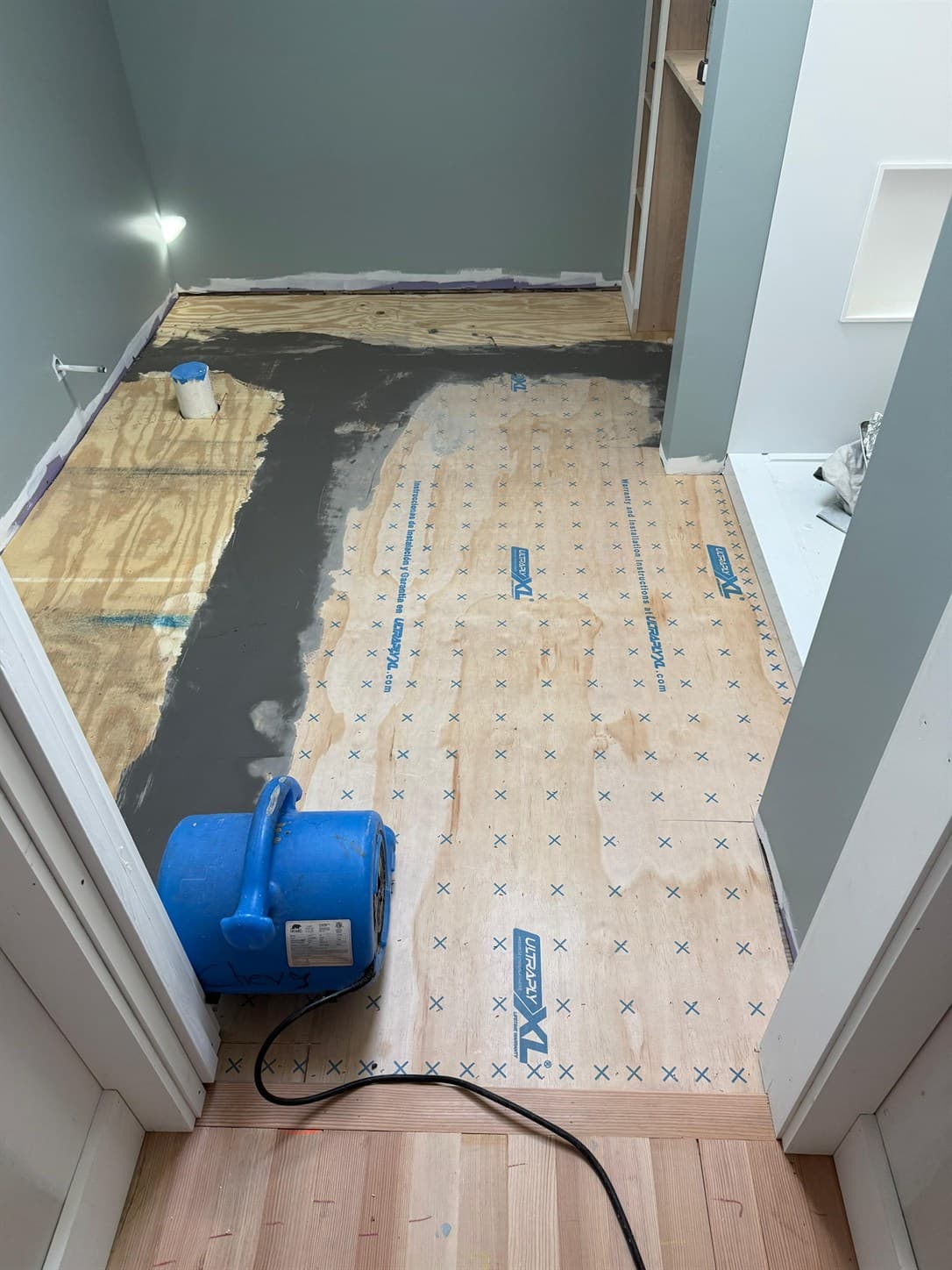
One-quarter-inch Ultraply panels with prepared seams in a Windsor primary bathroom before sheet-vinyl installation
Ultraply underlayment and prepared panel seams before the finished floor.
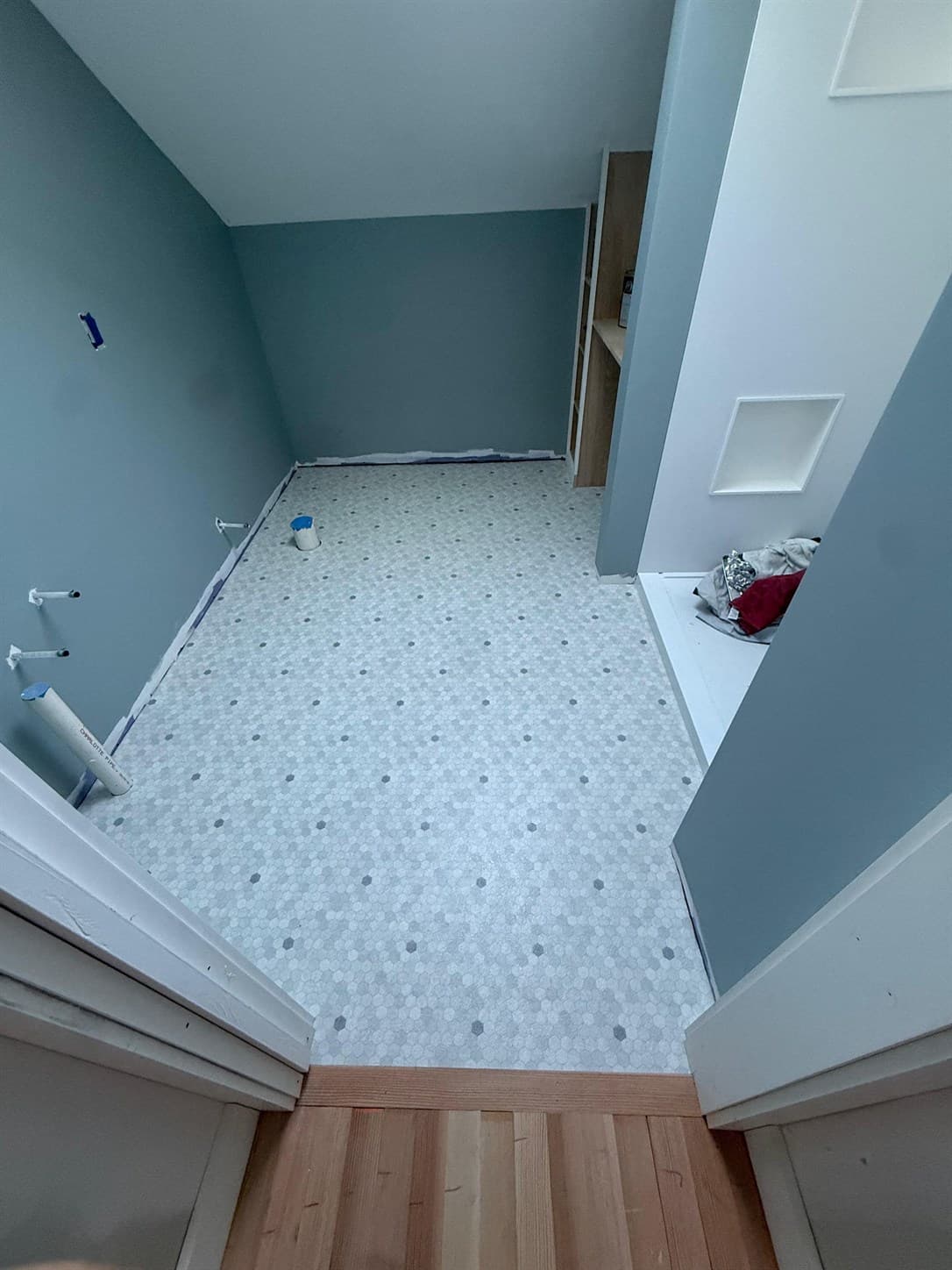
Completed one-piece Mannington Penny Lane sheet-vinyl flooring scope in a Windsor primary bathroom
The completed flooring scope: one seamless piece across the 62-square-foot room.

Mannington Penny Lane · Quartzite Granite-Gold

The preparation and the cut were both part of the finished appearance.

The documented scope began with exposed plywood; flooring removal was not part of this job. Floors Now installed 62 square feet of 1/4-inch Ultraply underlayment and prepared its panel seams with MAPEI Planiprep SC. A 12-by-7.5-foot cut of Mannington Penny Lane—90 square feet of supplied material—was then fully adhered with Mannington M-GRIP as one seamless piece.

Finished floor
62 sq. ft.
Supplied sheet
12 ft. × 7.5 ft. · 90 sq. ft.
Layout
One seamless piece
Documented duration
One half day
See the complete Windsor project

This is one documented project—not a universal installation method, supplied quantity, or timeline. The surrounding bathroom work was outside the photographed flooring scope.

Take this to the sample rack

Compare the complete product and plan.

Record the answer and where it came from: the product details, installation guide, warranty, care guide, or a written manufacturer answer.

  1. Exact brand, collection, color, and product number
  2. Available roll width and the direction of the printed pattern
  3. Product construction, backing, surface treatment, and clear top surface
  4. Rooms and home or business uses the maker approves
  5. Allowed installation method and named adhesive, when one is required
  6. Rules for seams, room edges, fixtures, cabinets, and appliances
  7. Requirements for wood, concrete, or an existing floor below
  8. Required moisture and concrete chemical-condition tests, temperature, sunlight, and heated-floor limits
  9. Dents, furniture, carts or chairs with wheels, cleaning, and repair guidance
  10. Warranty coverage, exclusions, proof needed, and spare material to save

Bring the room into the conversation

  • A rough room sketch and every widest measurement
  • Photos of doorways, closets, fixtures, and adjoining floors
  • What is on the floor now and what may be below it
  • Any leak, dampness, or concrete-moisture history
  • Appliances, cabinets, furniture, pets, and rolling traffic
  • The pattern direction you prefer and any project deadlines

Common questions

Sheet Vinyl questions, answered plainly.

Is sheet vinyl the same as Luxury Vinyl Plank or Tile?

No. Sheet vinyl is supplied in a wide roll and cut to fit the room. Luxury Vinyl Plank and Luxury Vinyl Tile are separate pieces. Both are types of vinyl flooring, but their layout, seams, installation, and repair options are different.

Can sheet vinyl be installed without a seam?

Sometimes. A one-piece floor is possible only when the available roll width, the room's widest dimensions, closets or alcoves, pattern direction, and fitting plan work together. Larger or irregular spaces may need a carefully planned seam.

Is sheet vinyl waterproof?

Some manufacturers describe specific sheet-vinyl products as waterproof. That claim does not automatically include every seam, room edge, pipe opening, adhesive, wall, or the floor below. It also does not turn an ordinary bathroom floor into a waterproof shower system.

Does sheet vinyl always need to be glued down?

No. Depending on the exact product and room, the maker may require glue beneath the whole sheet, allow a removable type of flooring glue, or approve installation without glue spread across the entire floor. A product should never be installed loose simply because it comes in a sheet.

Can sheet vinyl be installed over an existing floor?

Sometimes, when the exact instructions allow it and the old floor is secure, smooth, clean, dry, and compatible. Removing the old floor can reveal conditions that otherwise remain hidden. Do not scrape, sand, or drill into unidentified older sheet or tile flooring—or black flooring glue—before it has been evaluated.

Will bumps or seams underneath show through?

They can. Flexible sheet flooring can reveal panel joints, texture, glue ridges, and other uneven areas below it. Careful smoothing and, when required, a thin approved panel called underlayment are part of the finished appearance.

Is sheet vinyl a good bathroom floor?

It can be a useful bathroom option when the exact product is approved for the room and the layout can limit seams. Room edges, fixture openings, slip conditions, the surface below, and the response to a plumbing leak still need a plan.

Why might I buy more square footage than the room measures?

Sheet flooring is cut from fixed roll widths. The cut must accommodate the room's longest and widest points, offsets, pattern direction, matching, and fitting space. A quote should distinguish supplied material from the finished floor area.

How should sheet vinyl be cleaned?

Follow the care guide for the exact product. In general, remove loose dirt, clean spills promptly, use non-staining mats and furniture protectors, and move heavy appliances with the protection the maker requires. Do not borrow cleaning directions from a different vinyl product.

Plan before selecting a sheet

Let's see whether the room and the roll work together.

Share room photos, a rough sketch, the existing floor, and any patterns you like. We can help identify the questions to answer before a product or installation method is chosen.

Sources & review

Published September 12, 2026; last reviewed September 15, 2026. Reviewed by the Floors Now! flooring team.

Category explanations come from the Resilient Floor Covering Institute's overviews of sheet vinyl, flexible LVP and LVT, and linoleum. Product-specific examples of full-spread, releasable-bond, and loose-lay requirements come from Mannington's 2026 Luxury Vinyl Sheet installation guide (PDF), its current sheet-vinyl overview, and its care guidance. Local project facts come from Floors Now's Windsor installation and Bristol repair records; the project photography displayed in this guide comes from the Windsor installation.

The warning about unidentified older flooring follows the U.S. Environmental Protection Agency's asbestos guidance for homeowners. Do not sand, scrape, drill, or try to level a material that may contain asbestos. Have it evaluated before anyone disturbs it.

This guide helps with comparison and planning. It does not replace the current product details, installation instructions, warranty, care guide, safety data, or an in-person evaluation of the room and existing floor.

Your Sheet Vinyl project

Start with the room—not a promise from a sample label.

Tell us where the floor is going, what is there now, and what you like. Rough photos and measurements are enough to begin the conversation.

Step 1 of 4

About 60 seconds

What are you shopping for?
What type of project is it?
Who will handle installation?