General repair request
Start with the existing condition.
Share the material, room, affected area, timing, known cause, and any saved matching flooring so the request can be assessed.
Request an assessment →Newington showroom • Serving Connecticut
Call Now
Existing floors, carefully assessed
Request a floor repair assessment anywhere in Connecticut. We review the material, cause, affected area, access, and matching options before approving work.
Condition before conclusion
A useful repair plan starts with the existing floor, what changed, and whether the cause has been corrected. Product construction, installation method, connected areas, access, retained material, and realistic appearance expectations all affect whether a focused repair is practical.
A request begins the review; it does not guarantee that a particular repair, material match, schedule, or result is available for the floor.
Start in the right lane
Tell us whether Floors Now installed the floor and whether an active FloorGuard plan may apply. We will use those details to identify the appropriate review before any repair scope is approved.
General repair request
Share the material, room, affected area, timing, known cause, and any saved matching flooring so the request can be assessed.
Request an assessment →Floors Now workmanship
A condition involving Floors Now installation work is reviewed under the written workmanship process before it is treated as a general repair.
View the warranty process →Active FloorGuard plan
Floor Rescue eligibility, labor limits, material, and annual benefits are governed by the active FloorGuard level and its full rules.
Explore FloorGuard →Documented Connecticut repair work
These records show the verified scope and limitations of the work completed. They do not promise that the same approach is appropriate for another floor.
Simsbury hardwood repair
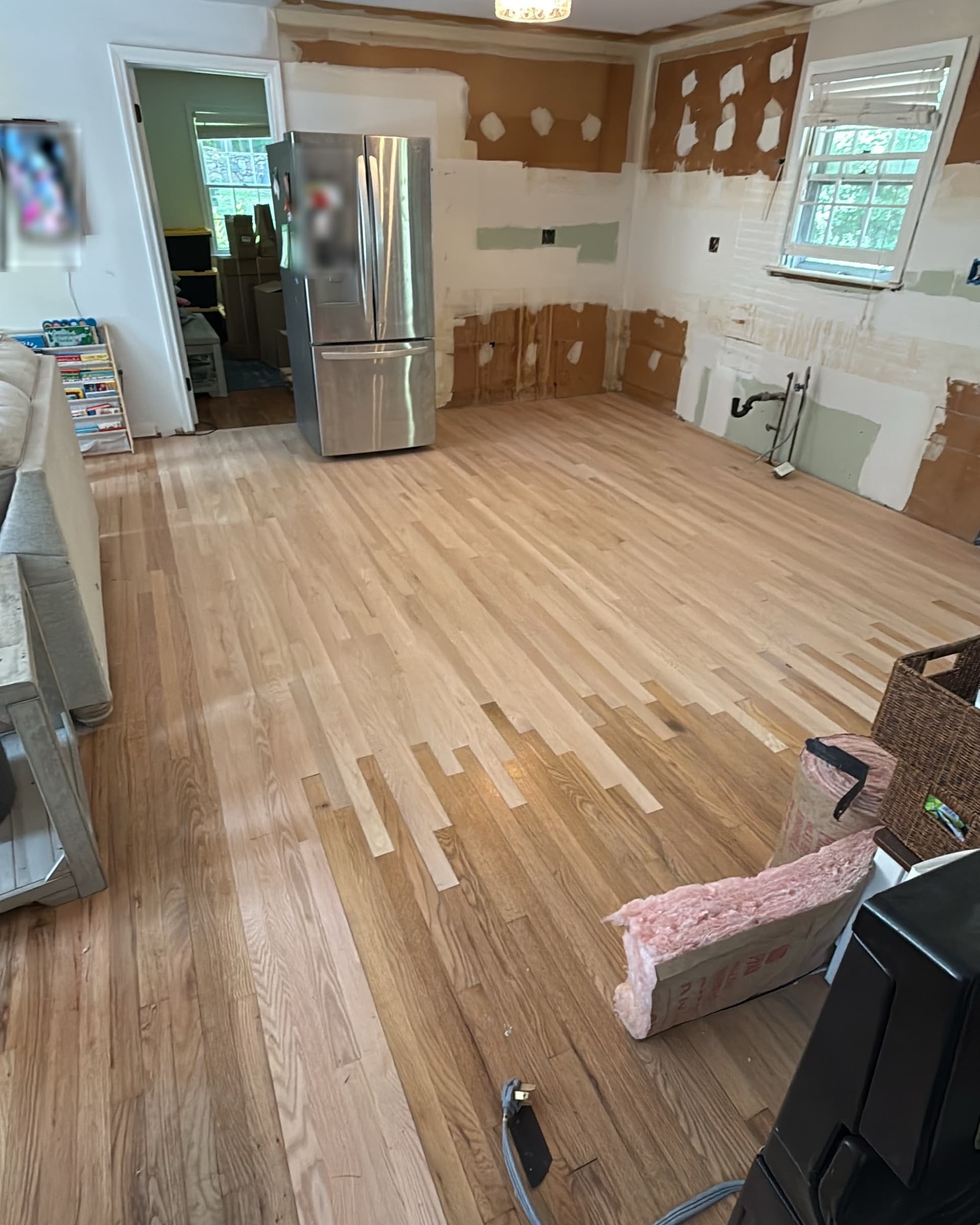
Floors Now removed 101 square feet of flood-damaged hardwood, preserved the intact adjoining floor, and nail-down installed 271 square feet of unfinished 2 1/4-inch Select & Better red oak with staggered weave-in connections. The one-day record covers removal and installation before later sanding and refinishing.
View the project record →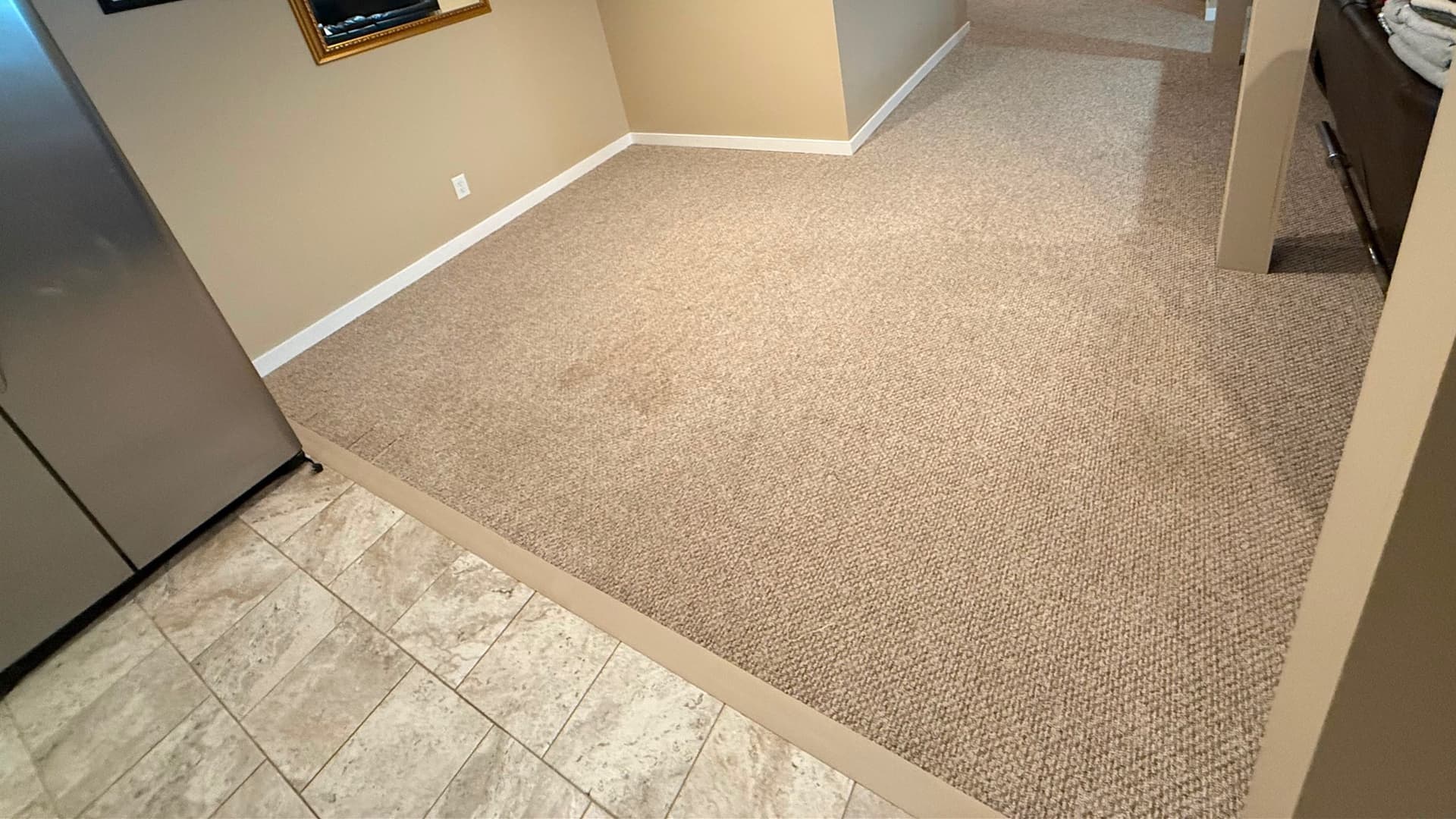
Kensington carpet repair
Floors Now retained the existing carpet, installed 300 square feet of cushion, corrected 60 linear feet of tack strip, restretched approximately 272 square feet, and installed a 15-linear-foot transition. The documented work took a few hours and preserved the known limitations of the existing carpet.
View the project record →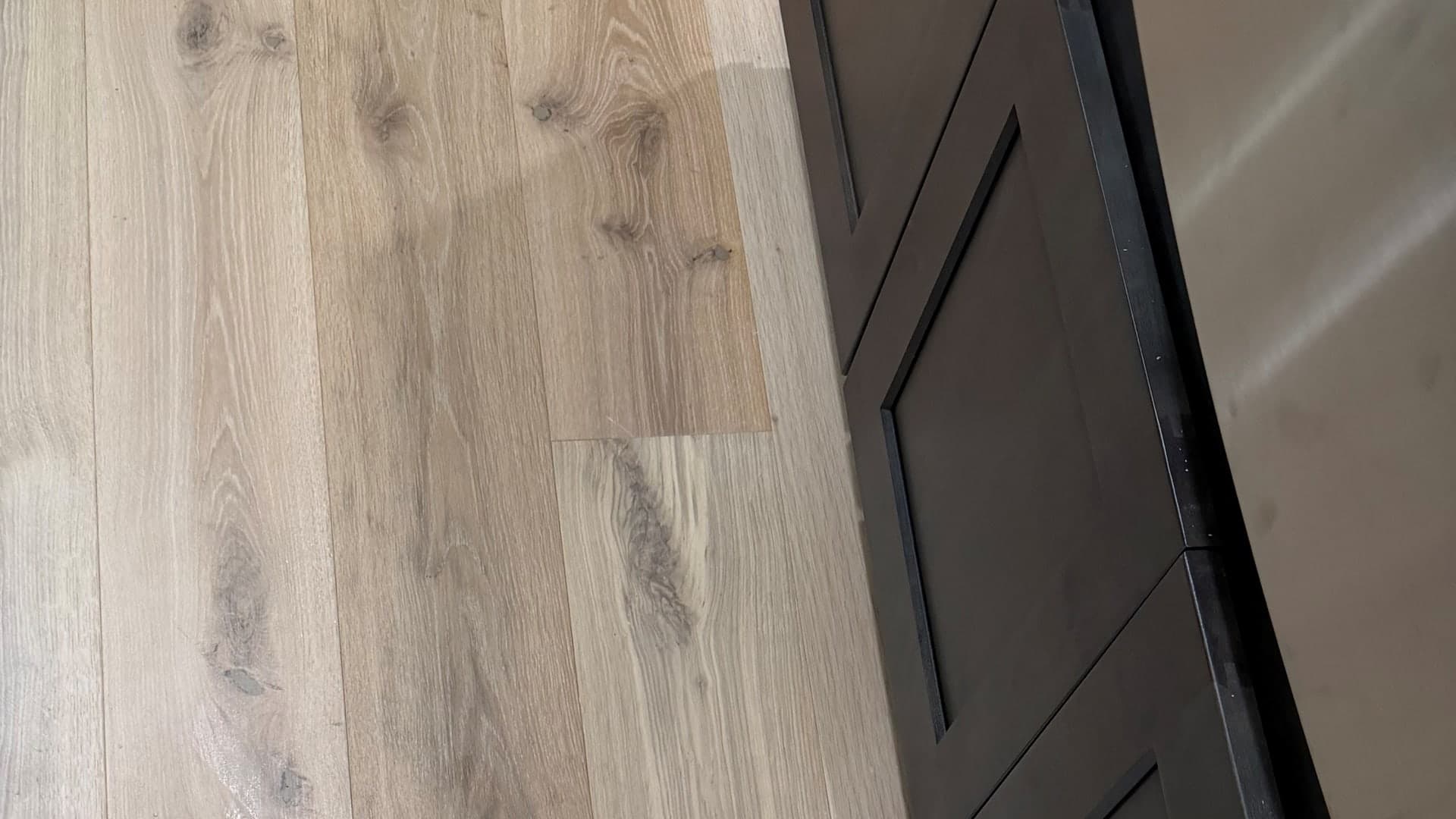
Colchester engineered hardwood repair
After an electrician removed a former kitchen floor receptacle near the island, Floors Now replaced one complete engineered-hardwood board using homeowner-supplied leftover flooring and adhesive. The focused repair was completed in a few hours.
View the project record →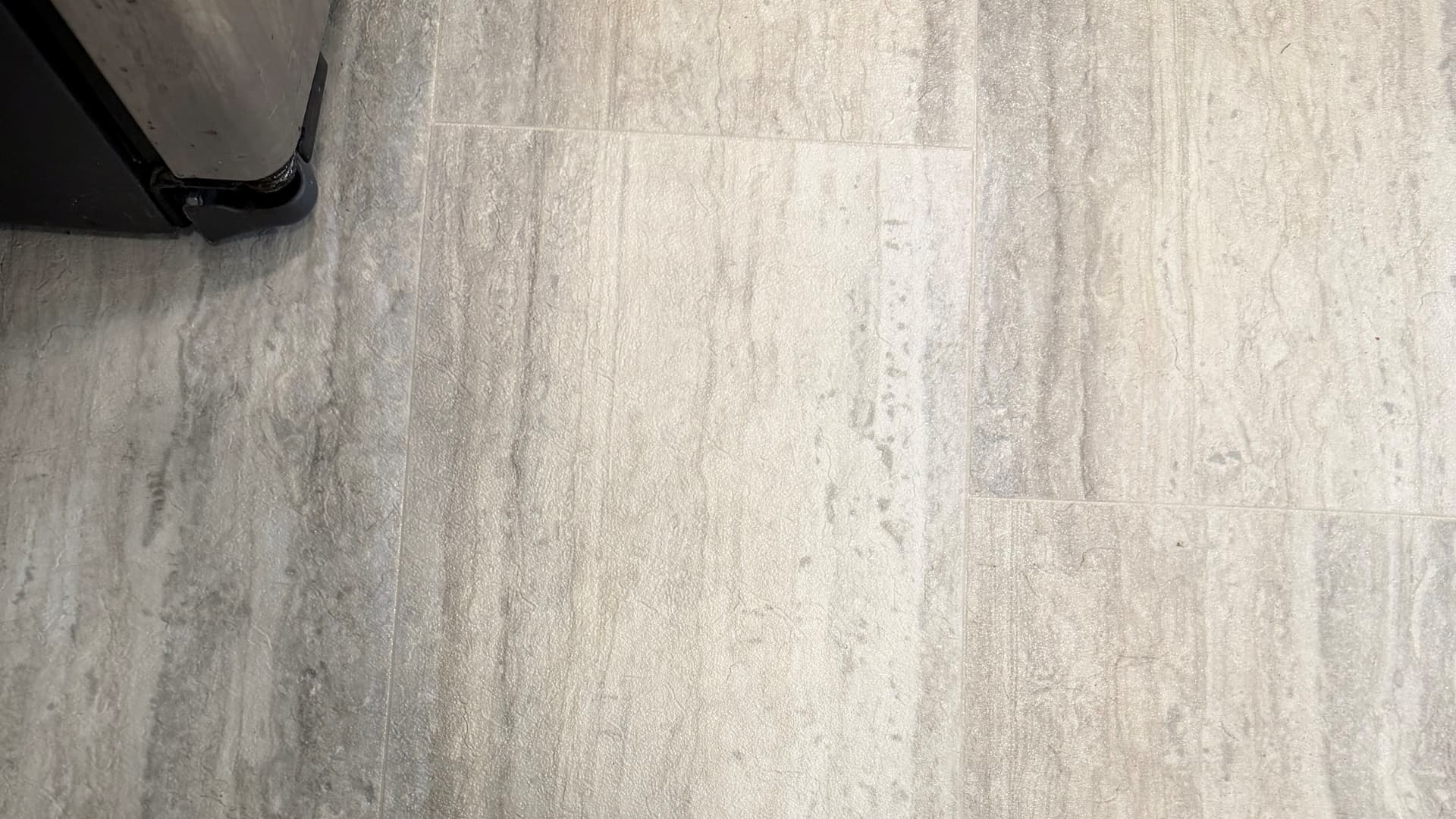
Bristol sheet vinyl repair
After a refrigerator was moved during electrical work, three tears and several divots were confined to one printed tile repeat in a glued Mannington kitchen floor Floors Now had installed about two years earlier. The section was precisely removed and replaced with homeowner-saved material, adhesive, and seam sealer. The subfloor was sound, and the repair took about two hours; Floors Now performed no appliance or electrical work.
View the project record →Core scope
We begin with the room, visible condition, timing, known cause, installation history, and product information you can provide.
The material, construction, installation method, connected areas, edges, transitions, and accessible supporting conditions are reviewed.
We look beyond the visible symptom so an unresolved source, unsafe condition, or broader flooring issue is not hidden by a cosmetic repair.
We compare a focused repair with broader correction or replacement and explain what the observed conditions support.
Saved flooring, current availability, dimensions, color, texture, age, and finish are considered without promising an exact or invisible match.
When a repair is appropriate, the agreed work, material, access, limitations, and finishing details are confirmed before work begins and reviewed afterward.
How it works
Share the location, flooring type, condition, timing, known cause, and any product or installation records you have.
We distinguish a general repair request from a possible Floors Now workmanship concern or FloorGuard request before defining the next step.
The affected area, connected flooring, access, material availability, and unresolved conditions are reviewed before a scope is approved.
Approved repair work follows the documented scope, followed by cleanup, a walkthrough, and care guidance relevant to the result.
Before the assessment
Keep wide room views and close details available, and note when the change first appeared and whether it is spreading or moving.
Active water, unsafe movement, and other unresolved causes need to be corrected before a flooring repair can be approved.
Locate invoices, product names, installation dates, warranty information, care products, and details of earlier work when available.
Keep leftover planks, boards, carpet remnants, tile, trim, or finish information available for review; do not cut or alter it.
Do not remove flooring, trim, transitions, or large furniture solely for an evaluation unless the agreed next step calls for it.
Flooring Advice
Understand carpet ripples, professional power stretching, inspection needs, and the limits of a restretch.
Read the guide →Separate surface wear, board damage, moisture concerns, refinishing, and replacement before choosing a scope.
Read the guide →Review common damage sources and why installation method, access, and matching material affect repair feasibility.
Read the guide →Learn why the cause needs to be identified before raised seams or swollen flooring are treated as a local repair.
Read the guide →Repair questions
No. Repairability depends on the material, construction, installation method, cause, affected area, surrounding condition, access, and availability of suitable material. An assessment may lead to a focused repair, a broader scope, replacement, or correction of another condition first.
An exact or invisible match cannot be promised. Age, sunlight, wear, dye lot, shade, texture, species, finish, product changes, and camera or room lighting can all make retained and replacement material look different.
Tell us that in the repair request. We will review whether the concern belongs in the general repair process, the Lifetime Workmanship Warranty process, or an eligible FloorGuard request. Those paths have separate terms and should be identified before paid work is approved.
The room, flooring type, full-area and close-up photographs, when the condition appeared, the known cause, installation records, product information, earlier repairs, water history, and any saved matching material can all help us identify the most useful next step.
Local project guidance
Our Newington team can help clarify the scope, material needs, timing, and next practical step.
Repair assessment
Share what you know about the floor, the affected area, and the condition. We'll review the request and follow up about the appropriate next step.