A practical place to begin

What flooring type should you choose?

Tell us about the room, daily life, and what matters most. We'll narrow the field to three useful flooring categories, explain the tradeoffs, and show you what to verify before buying.

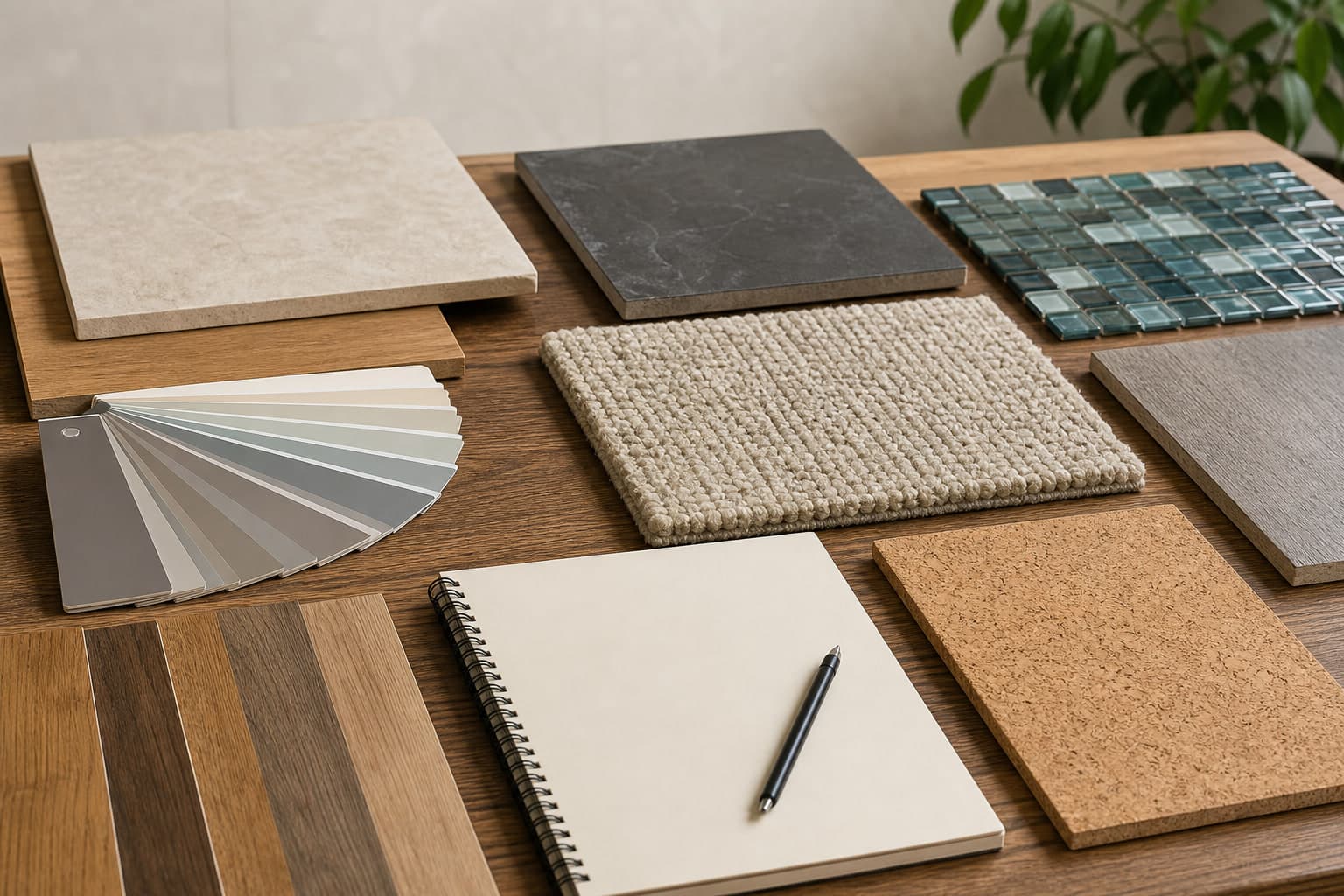
Flooring samples compared together before a project

Room first

Start with how and where the floor will be used.

Conditions next

Account for moisture, traffic, sound, pets, and the subfloor.

Products last

Verify the exact selection and installation system before ordering.

Find your floor

Narrow the choices without skipping the important questions.

There is no universal best floor. This guide ranks practical categories from your answers and keeps the material, preparation, and installation questions connected.

Guided flooring shortlist

Tell us how the room needs to work.

1. Which space are you planning?

Choose the room that controls the most demanding conditions.

2. What does the floor need to handle?

Choose up to three. Deselect one before choosing another.

3. What matters most?

Choose up to two. Deselect one before choosing another.

4. Which look are you drawn to?

Choose a room to build your flooring shortlist.

Your shortlist will appear here

Begin with the room.

The guide will compare your answers and surface three practical material categories to investigate—not declare one product automatically right for the job.

What the guide considers

Room use, moisture, pets, traffic, sound, subfloor, care, material preferences, and visual direction.

Room-by-room flooring guide

Common flooring starting points by room.

These room summaries are visible whether or not you use the interactive guide. They are starting points—not blanket approvals for every product in a category.

Kitchens & entries

Luxury vinyl, porcelain tile, and selected water-resistant laminate products are common places to begin.

What to verify

Water claims, traction, grit, direct sun, appliance and cabinet sequencing, floor height, and subfloor flatness.

Bathrooms & laundry rooms

Rated porcelain or ceramic tile and product-approved luxury vinyl tile are practical starting points.

What to verify

Wet-area approval, slip resistance, waterproofing where required, substrate, transitions, and cleaning.

Basements & lower levels

Luxury vinyl, porcelain tile, carpet tile, rubber, or carpet may work after the concrete and moisture history are understood.

What to verify

Active water sources, concrete moisture, cracks, flatness, adhesive compatibility, and room use.

Bedrooms & quiet rooms

Carpet, hardwood, and cork lead in different ways; hard flooring with an area rug is another flexible direction.

What to verify

Softness, allergies, sound, indoor humidity, sunlight, furniture, cleaning, and pet needs.

Living & family rooms

Hardwood, luxury vinyl, laminate, carpet, and cork can all make sense depending on how the room lives.

What to verify

Real wood versus wood-look, connected rooms, comfort, pets, direct sunlight, acoustics, and maintenance.

Stairs & landings

Carpet or a fitted runner and hardwood are the main starting directions; resilient systems require specific stair approval.

What to verify

Stair geometry, attachment, edges, nosings, pattern alignment, transitions, and code-related conditions.

Commercial & active spaces

Commercially rated carpet, carpet tile, glue-down LVT, rubber, and tile are useful categories to compare.

What to verify

Traffic, rolling loads, maintenance, substrate moisture, adhesive, cure time, phasing, and replacement stock.

The part under the product

A good material can still need a better foundation.

Flatness, moisture, movement, old adhesive, existing layers, floor height, and transitions can change both the suitable product and the installed cost. Those conditions should be part of the choice—not a surprise after ordering.

Explore Room & Style Ideas

Moisture

Surface spills, plumbing leaks, indoor humidity, and moisture through concrete are different problems.

Moisture testing

Flatness & stability

Flooring normally requires a documented flatness tolerance, secure panels, and a sound surface.

Subfloor preparation

Existing flooring

Some floors may remain; others must be removed. Bond, height, hidden layers, and product rules decide.

Flooring removal

Edges & transitions

Doorways, stairs, cabinets, appliances, trim, and adjoining floors shape the complete plan.

Transitions & moldings

Flooring questions customers ask

Frequently asked questions about choosing flooring.

What is the best flooring for my room?

There is no single best material for every room. Start with moisture exposure, traffic, comfort, cleaning, sunlight, substrate, and the look you want. Then verify those needs against the exact product and installation system.

Does waterproof flooring make a room waterproof?

No. A flooring product may resist surface water under defined conditions, but it does not stop leaks, protect every seam or perimeter, waterproof the subfloor, or correct water entering through concrete or the building.

What flooring works over concrete?

Several materials may be approved over concrete, including selected luxury vinyl, tile, carpet systems, rubber, and some engineered hardwood. The slab still needs evaluation for moisture, flatness, cracks, stability, and the selected product's installation requirements.

Can new flooring be installed over my existing floor?

Sometimes. The existing floor must be suitable, securely bonded, sufficiently flat, clean, and permitted by the new flooring manufacturer. Added height, transitions, doors, appliances, cabinets, and hidden layers also need review.

Does my subfloor need to be level?

Flooring generally needs the substrate to meet a specified flatness tolerance; that is not always the same as making it perfectly level. High spots, low spots, movement, damage, and seams can still require preparation.

What flooring is good for pets?

No material is completely pet-proof. Compare scratch visibility, traction, stain and moisture instructions, sound, cleanability, surface texture, and the needs of the specific pet and room.

What is the quietest flooring?

Carpet with suitable cushion is commonly the softest and quietest starting point. Cork and carpet tile can also help with room sound. With hard flooring, acoustic performance depends on the complete floor and underlayment assembly.

Which flooring is least expensive?

Material price alone does not determine installed cost. Removal, floor preparation, moisture work, underlayment, adhesive, layout, waste, stairs, transitions, and trim can change which option provides the best value.

Are the results from this guide a final product approval?

No. The guide creates a practical shortlist. Final suitability depends on the exact product, room, substrate, site conditions, installation instructions, and warranty requirements.

Looking for a backsplash or accent?

Glass and metal tile belong in a different conversation.

They are primarily specialty wall and accent materials, so the room-floor guide does not rank them as general whole-room floor choices.

Bring us the shortlist

Let us confirm what fits your actual room.

Share the room, current floor, moisture or subfloor concerns, preferred look, and the categories this guide surfaced. Our Newington showroom team can help compare products and plan the next practical step.

Step 1 of 4

About 60 seconds

What flooring is involved?
What type of project is it?
Who will handle installation?