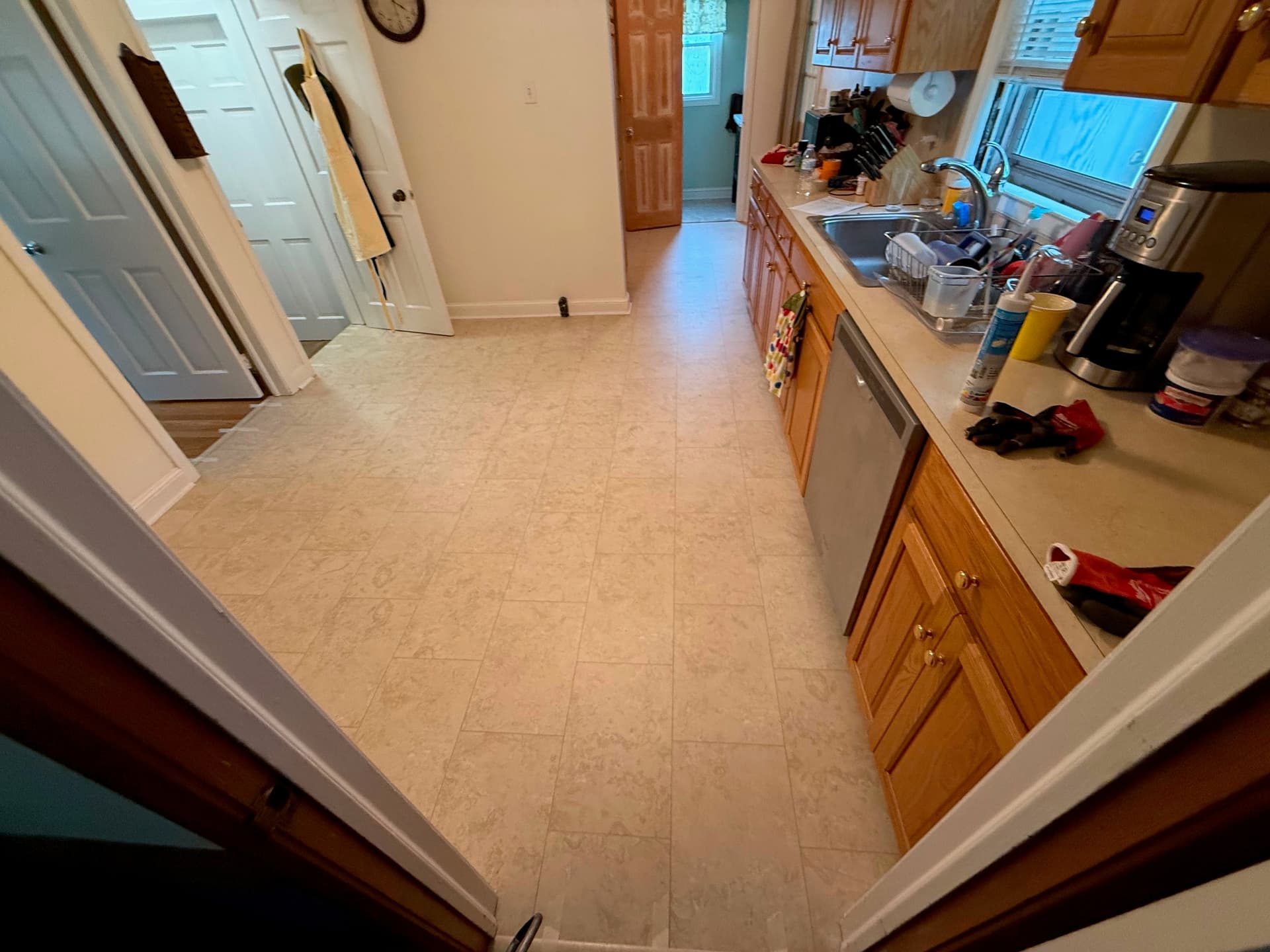
What Can Damage Luxury Vinyl Flooring? Scratches, Dents, Heat, Sunlight, and Heavy Loads
Learn what can scratch, dent, stain, fade, separate, or otherwise damage Luxury Vinyl—and how to protect the exact floor you choose.
Read the answerNewington showroom • Serving Connecticut
Call NowAnswers before assumptions
Clear answers for choosing a floor, planning the installation, caring for it, and recognizing problems. Every guide explains where the answer depends on the exact product or conditions in your room.

Browse by question
5 guides
7 guides
3 guides
6 guides
5 guides
6 guides
Browse by flooring type
These articles answer focused questions. For a complete overview of a material, use the related product guide beside each group.
Understand water claims, underlayment, everyday damage, and the details that make a printed floor look convincing.
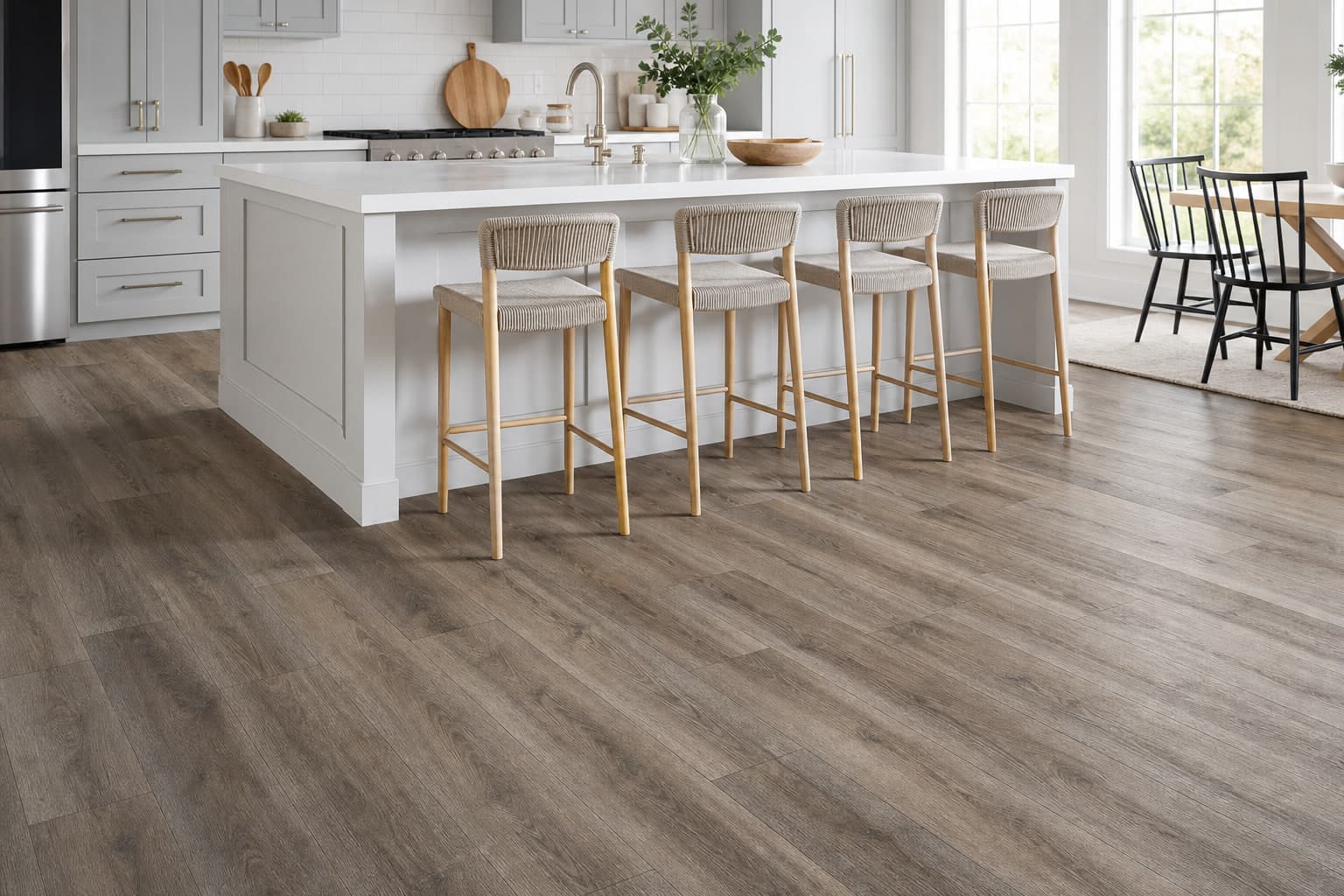
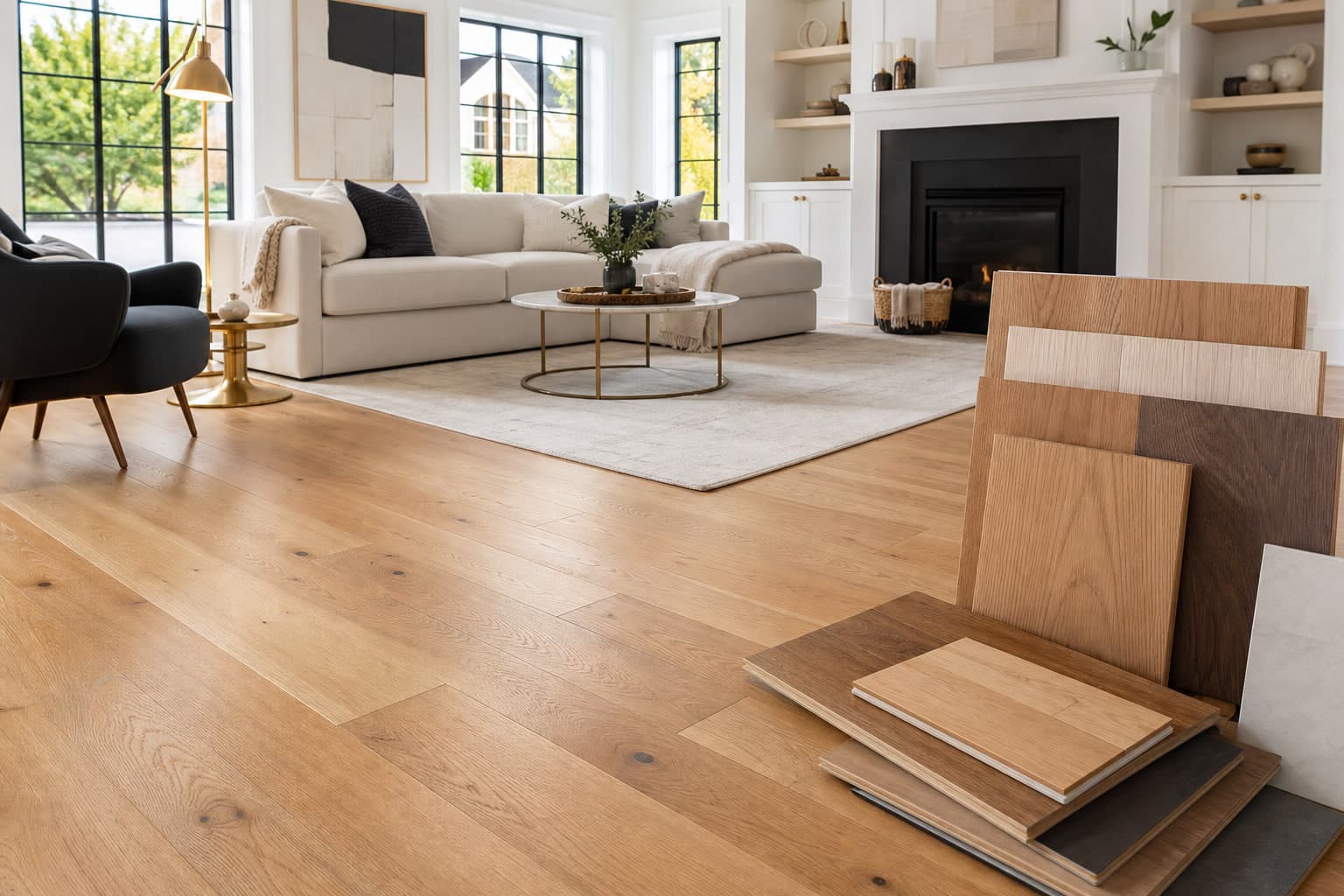
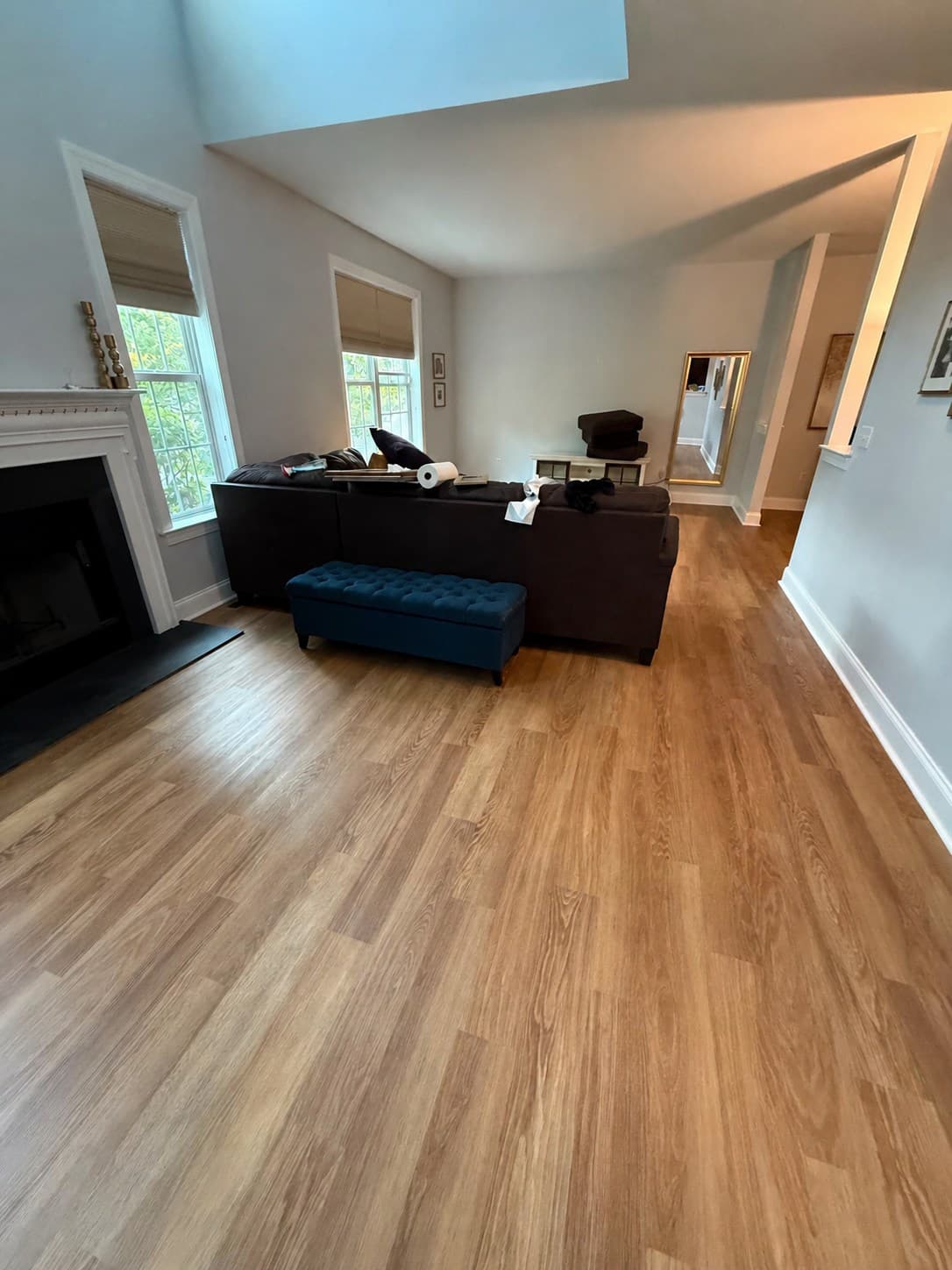
Learn what can scratch, dent, stain, fade, separate, or otherwise damage Luxury Vinyl—and how to protect the exact floor you choose.
Read the answerLearn when Luxury Vinyl uses attached padding, separate underlayment, a moisture layer, adhesive, or no added layer—and why the product instructions decide.
Read the answerCompare Luxury Vinyl visuals by full-board variation, repeated prints, texture, bevels, sheen, plank or tile scale, layout, lighting, and nearby finishes.
Read the answerPlan around real wood, seasonal humidity, finish care, installation, and the point where repair becomes replacement.
Learn what belongs in a Connecticut hardwood flooring quote, why square footage is only the starting point, and how to compare estimates fairly.
Read the answerA finish-aware hardwood care plan for dust, grit, spills, furniture, rugs, sunlight, humidity, cleaning, recoating, and refinishing.
Read the answerChoose hardwood in the right order: construction and room fit first, then species, grade, color, finish, sheen, width, and board variation.
Read the answerPlan hardwood across connected rooms using sightlines, board direction, width, tone, variation, sheen, transitions, daylight, and room conditions.
Read the answerDiagnose hardwood damage before choosing a spot repair, maintenance coat, full sanding and refinishing, or replacement.
Read the answerUnderstand seasonal wood movement, solid versus engineered construction, product humidity ranges, acclimation, moisture testing, and warning signs.
Read the answerCompare DIY and professional hardwood installation, including moisture, subfloor preparation, layout, tools, time, finishing, and warranty rules.
Read the answerProtect a genuine stone surface by matching cleaners and stain care to the stone and its finish.
Identify your stone and finish, remove grit, use an approved neutral cleaner, handle spills, understand sealers, and recognize etching versus staining.
Read the answerChoose and care for carpet around traffic, spills, comfort, basements, padding, and visible ripples.
Use a practical carpet-care routine for vacuuming, spills, traffic lanes, and deep cleaning without risking the carpet or its warranty.
Read the answerChoose carpet for busy rooms by comparing construction, fiber, stain and soil coverage, cushion, color, installation, and care.
Read the answerLearn how carpet and cushion change surface warmth, footsteps, echo, and sound below—and why they are not whole-room insulation or soundproofing.
Read the answerLearn why fitted carpet ripples, what professional power stretching involves, what should be inspected first, and when replacement is safer.
Read the answerDecide whether basement carpet makes sense by checking water history, slab moisture, indoor conditions, cushion, installation, and flood plans.
Read the answerCompare water limits, wear, appearance, installation, multi-room layouts, and common signs of trouble.
Choose laminate for kids, pets, entries, and daily traffic by comparing real performance tests, water limits, joints, texture, care, and warranty terms.
Read the answerJudge wood-look laminate beyond one sample by comparing grain scale, texture alignment, repeated boards, bevels, sheen, color movement, and room light.
Read the answerLearn what can scratch laminate, why abrasion ratings are not scratch guarantees, how to prevent marks, and when repair or plank replacement is realistic.
Read the answerPlan laminate across connected rooms by checking direction, starting lines, expansion space, doorway transitions, floor height, and fixed objects.
Read the answerLearn when laminate can work in a bathroom and what to check: room approval, water claim, perimeter details, leak exclusions, care, and warranty.
Read the answerRaised laminate may be swelling, trapped-floor peaking, subfloor moisture, or surface-layer failure. Learn what to document and why diagnosis comes first.
Read the answerDecide whether to install laminate yourself by assessing subfloor prep, moisture, layout, tools, transitions, stairs, warranty, and error recovery.
Read the answerClean laminate safely with routine grit removal, product-approved damp care, quick spill response, suitable tools, and protection from furniture and wet mats.
Read the answerMake better choices about finish, grout, pattern, room scale, cleaning, traffic, and installation preparation.
Compare matte, polished, textured, and glazed tile finishes by room, cleaning, lighting, visible wear, and real-world slip considerations.
Read the answerUse a simple ceramic tile and grout cleaning routine, choose compatible products, remove residue, and know when a stain needs closer diagnosis.
Read the answerBuild a lasting tile design by coordinating format, finish, pattern, grout, room scale, and application instead of chasing one short-lived trend.
Read the answerCoordinate multiple tile patterns by choosing one focal point, controlling scale and color, planning full layouts, and resolving grout, cuts, and transitions.
Read the answerUse tile boundaries, direction, color, and transitions to define kitchens, entries, dining areas, and living zones without adding walls.
Read the answerChoose tile for busy home areas by checking exact use ratings, finish, grit, water, impact, grout, preparation, transitions, and maintenance.
Read the answerLearn when large-format tile can simplify a small room, when it creates awkward cuts, and why layout, surface flatness, handling, and grout still matter.
Read the answerCompare waterproof hardwood, Luxury Vinyl, laminate, tile, and other water-resistant flooring claims without confusing the floor with a watertight room.
Read the answerBring your room details, questions, and favorite looks. We can compare real samples and the installation requirements together.