How does the room really live?
Count the everyday realities: shoes at the door, pets, rolling chairs, children at play, direct sunlight, and the amount of cleaning you want to do. A floor should support the routine, not fight it.
Newington showroom • Serving Connecticut
Call Now
Flooring ideas & planning guide
Great rooms begin with more than a color. Use this guide to connect the look you love with the traffic, comfort, care, moisture, and installation details your space actually needs.
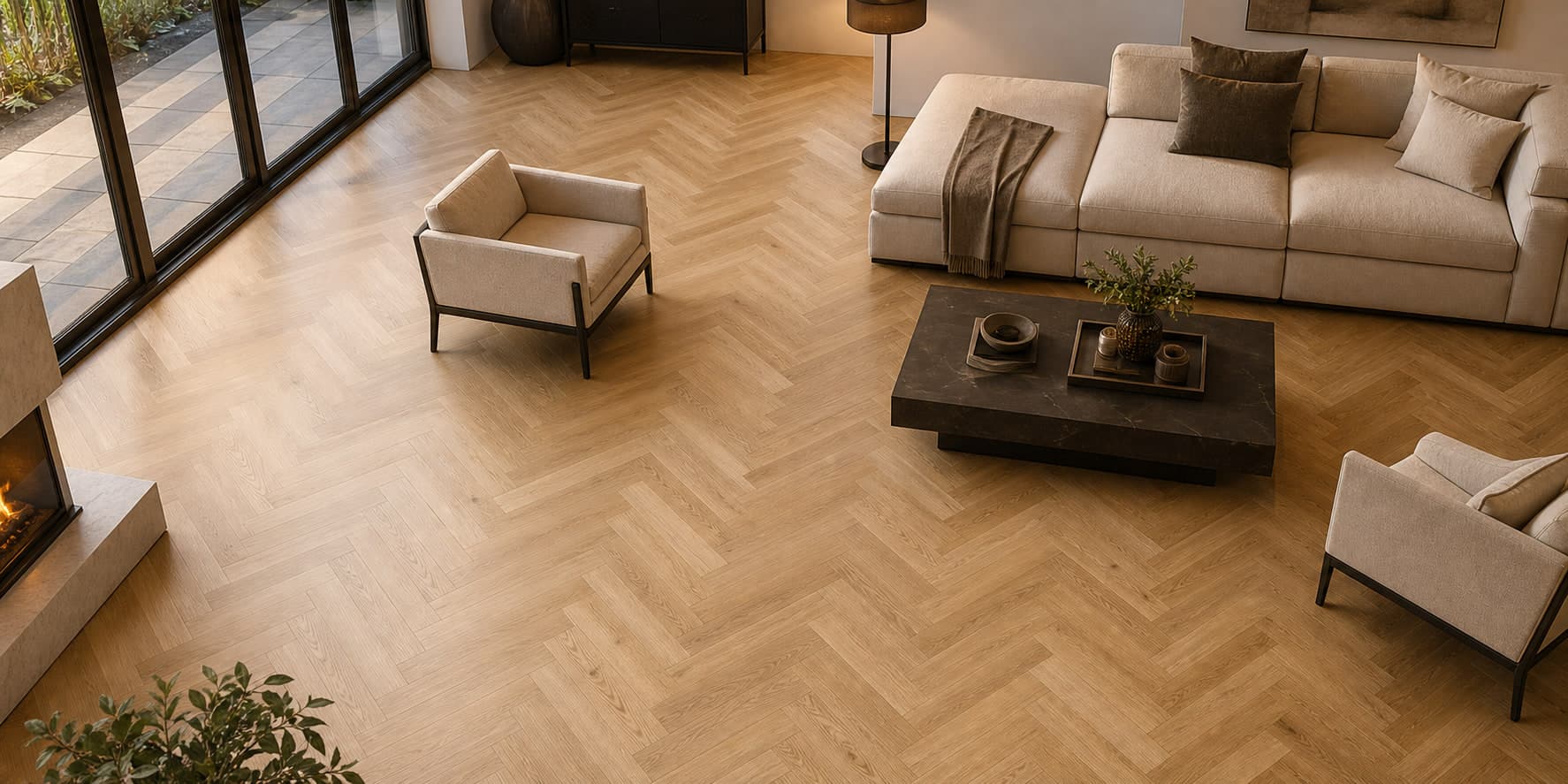
Design from real life
An inspiration photo can reveal a mood, but it cannot tell you whether the floor suits your household or your subfloor. These four questions turn a visual direction into a useful shortlist.
Count the everyday realities: shoes at the door, pets, rolling chairs, children at play, direct sunlight, and the amount of cleaning you want to do. A floor should support the routine, not fight it.
Spills, wet footwear, plumbing, indoor humidity, and moisture moving through concrete are different concerns. Check the exact product rating and the room conditions before treating any floor as moisture-ready.
Carpet, cork, resilient flooring, wood, and tile each change underfoot comfort and room acoustics. Think about bare feet, conversation, footsteps, and how long people stand in the space.
Cabinets, stairs, door clearances, fireplaces, adjoining floors, and fixed finishes influence color, thickness, transitions, and layout. Photograph these details before comparing samples.
Room-by-room flooring ideas
Use these starting points to identify the mood, performance questions, and Product Guides most relevant to each room.
Start with the atmosphere you want, then account for traffic and furniture. Hardwood can bring natural variation; luxury vinyl plank or laminate can create a quieter, more consistent wood look; carpet adds wall-to-wall softness; and an area rug can define a seating group over a hard surface.
These spaces combine frequent cleaning, grit, dropped objects, and occasional water. Tile, luxury vinyl, and selected laminate products can all be considered, but the label matters: water-resistant claims, slip characteristics, joint systems, and cleaning instructions vary by product.
Comfort often leads the decision here. Carpet can soften footsteps and provide warmth across the room. Cork has a naturally resilient feel, while hardwood or laminate paired with an area rug can balance an easy-to-clean perimeter with softness near the bed.
Begin with the wet-area assembly rather than the surface color. Porcelain or ceramic tile and selected luxury vinyl tile products may suit these rooms when the substrate, waterproofing where required, transitions, and installation method are planned as one system.
A basement floor should be selected after the concrete and room conditions are understood. Luxury vinyl, carpet tile, rubber, tile, and other products can be useful in different lower-level spaces, but moisture results, flatness, adhesive, and manufacturer approval determine the right path.
Plan for concentration, video calls, rolling furniture, and possible future uses. Carpet tile and cork can help soften sound; durable hard surfaces simplify chair movement; and a rug can create a visual zone without permanently defining the room.
Find your visual direction
Instead of chasing a single trend, decide how much movement, contrast, warmth, and softness the room needs. That language will make product comparisons much more focused.
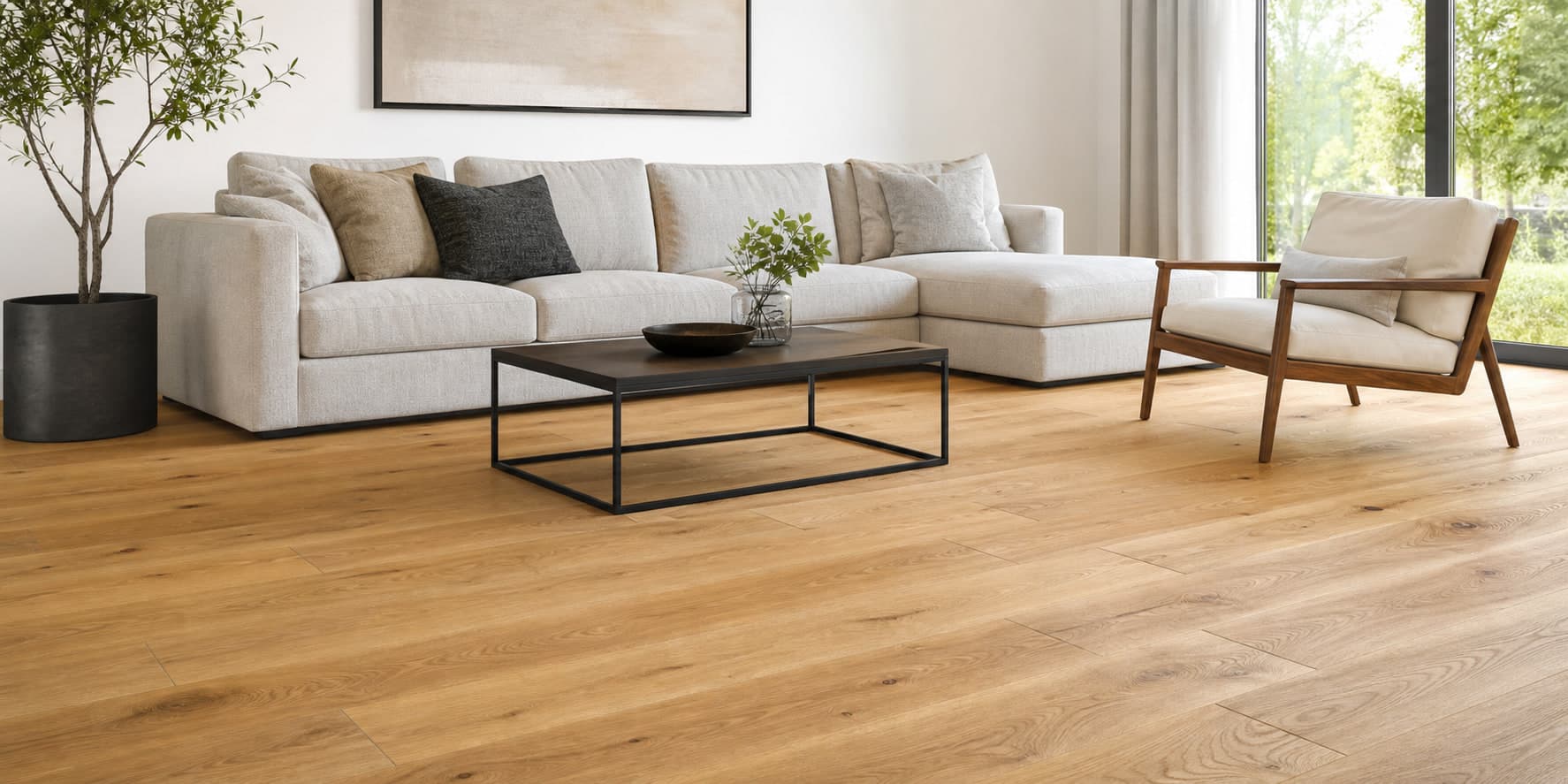
Let grain, knots, and tonal movement become part of the room. Pair an expressive floor with quieter upholstery and wall color, or choose a lower-variation grade when other finishes already carry strong pattern.
See hardwood ideas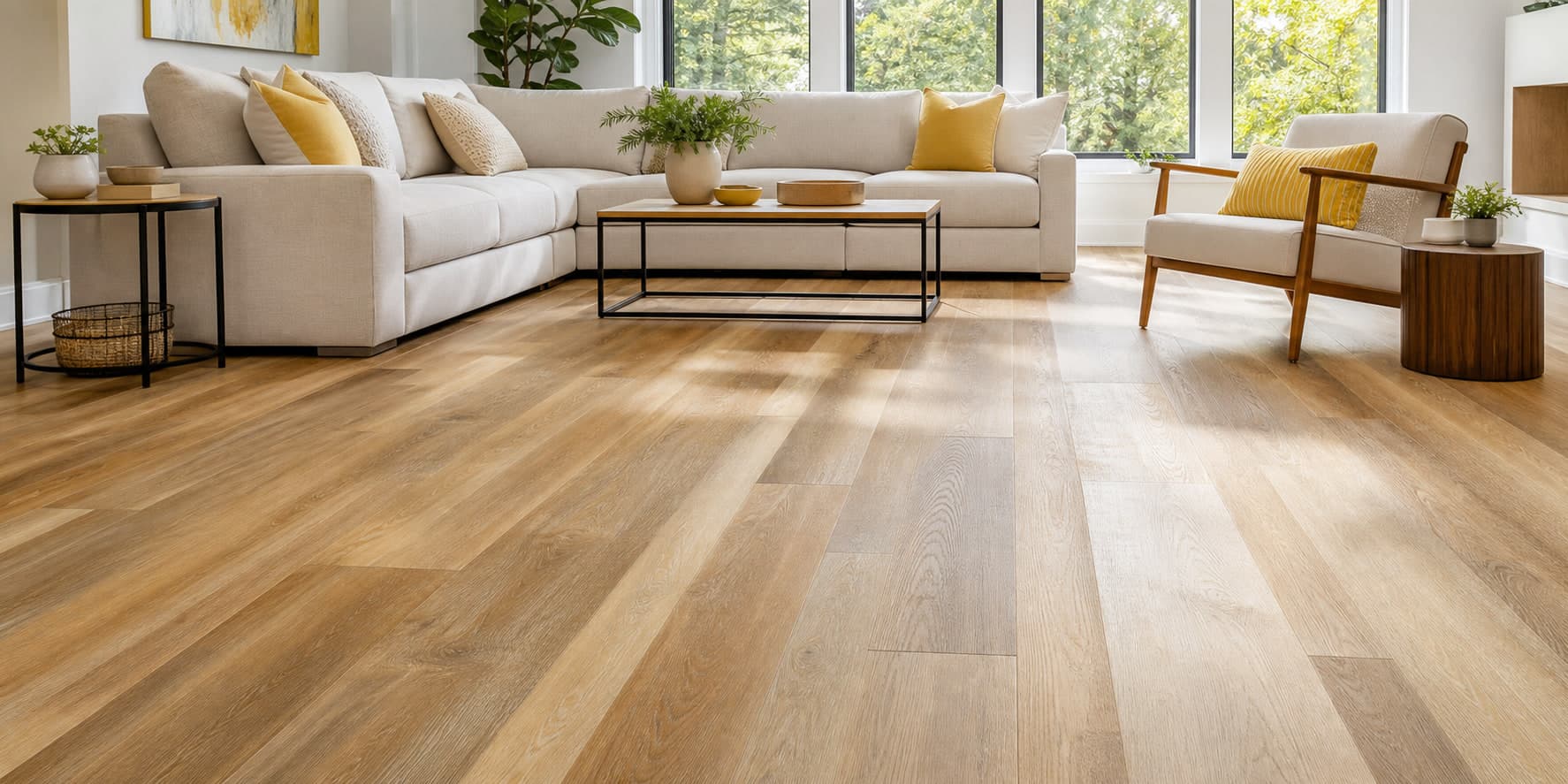
Repeating one restrained plank visual through connected rooms can make the path between spaces feel intentional. Compare plank scale and pattern repeat in a larger sample, especially across an open plan.
See luxury vinyl ideas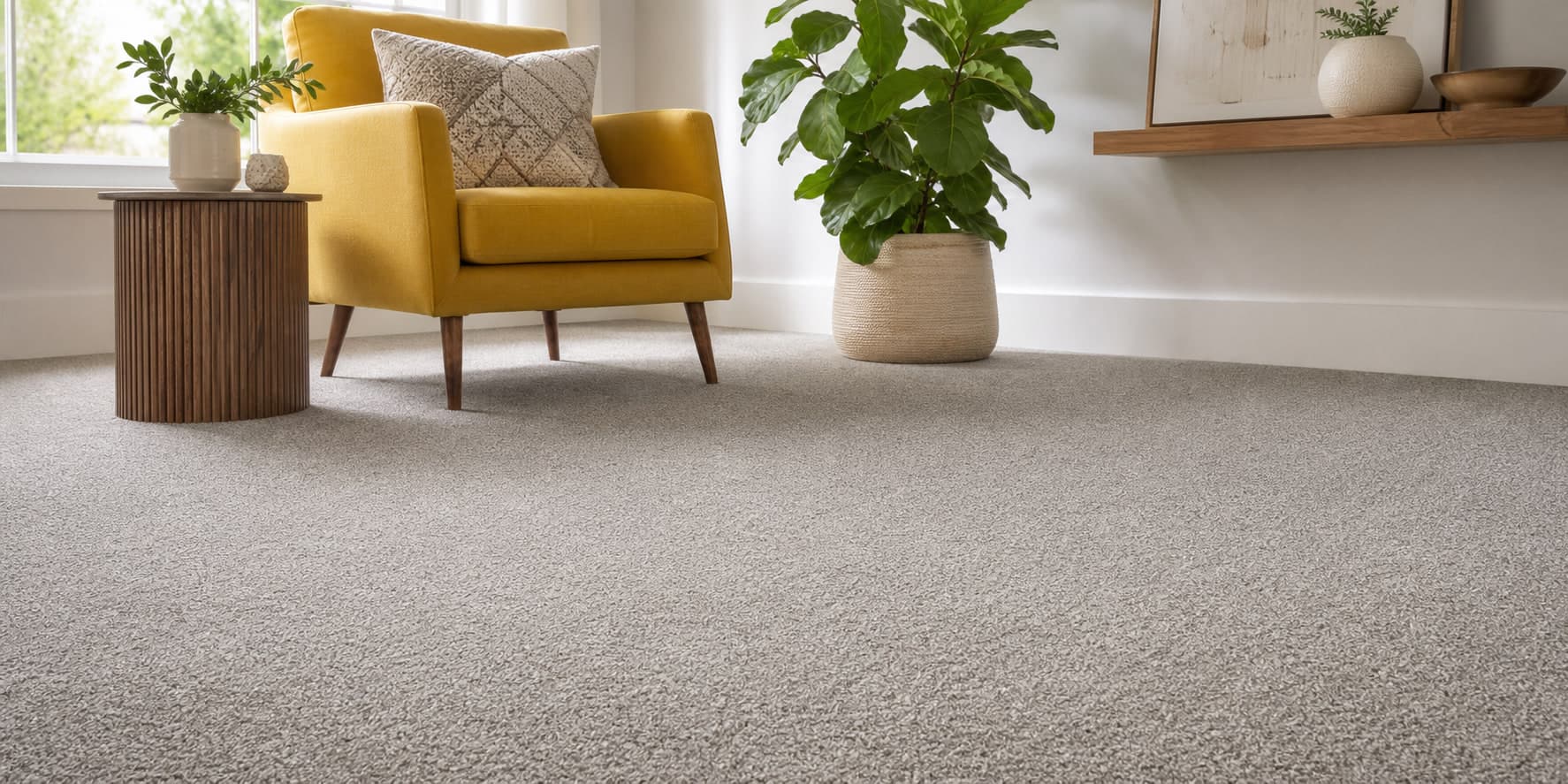
Build comfort with texture instead of relying only on bold color. A subtle carpet, tailored stair runner, or correctly sized area rug can soften sound and add depth without competing with the rest of the room.
See carpet ideasFlooring material comparison
These are useful starting points, not universal room approvals. Always confirm the exact product, application, care instructions, and installation requirements before deciding.
| Material | Design effect | What to verify | Useful starting point |
|---|---|---|---|
| Carpet | Softness, color, pattern, and a visually quieter room. | Fiber, pile construction, traffic level, stain care, seams, and cushion. | Bedrooms, living rooms, stairs, and other comfort-focused areas. |
| Hardwood | Real grain and natural variation that can gain character over time. | Solid versus engineered construction, indoor humidity, finish, species, and sunlight. | Living areas, dining rooms, bedrooms, and connected main-floor spaces. |
| Laminate | Detailed wood visuals with controlled color and pattern. | Wear rating, water-resistance instructions, joint system, underlayment, and subfloor flatness. | Busy living spaces and rooms approved for the selected product. |
| Luxury vinyl | Wood, stone, concrete, or decorative looks in a resilient format. | Wear layer, core, installation method, direct sunlight, floor preparation, and exact water claim. | Kitchens, entries, living spaces, and selected lower-level rooms. |
| Tile & natural stoneCompare natural stone | Crisp geometry or genuine mineral movement with visible grout lines. | Application and slip rating, substrate, grout, sealing, layout, and maintenance. | Kitchens, bathrooms, entries, backsplashes, and other rated applications. |
| Cork | Organic texture with a warm, slightly resilient feel. | Moisture exposure, direct sunlight, finish care, furniture protection, and product approval. | Bedrooms, home offices, and thoughtfully selected living areas. |
| Carpet tile & rubberCompare rubber flooring | Modular pattern or performance-focused color and texture. | Use rating, substrate, adhesive, rolling traffic, maintenance, and replacement stock. | Offices, gyms, flex rooms, and selected commercial or lower-level spaces. |
Looking for an accent or specialty surface? Explore glass tile, metal tile, or the complete flooring Product Guides.
A five-step sample plan
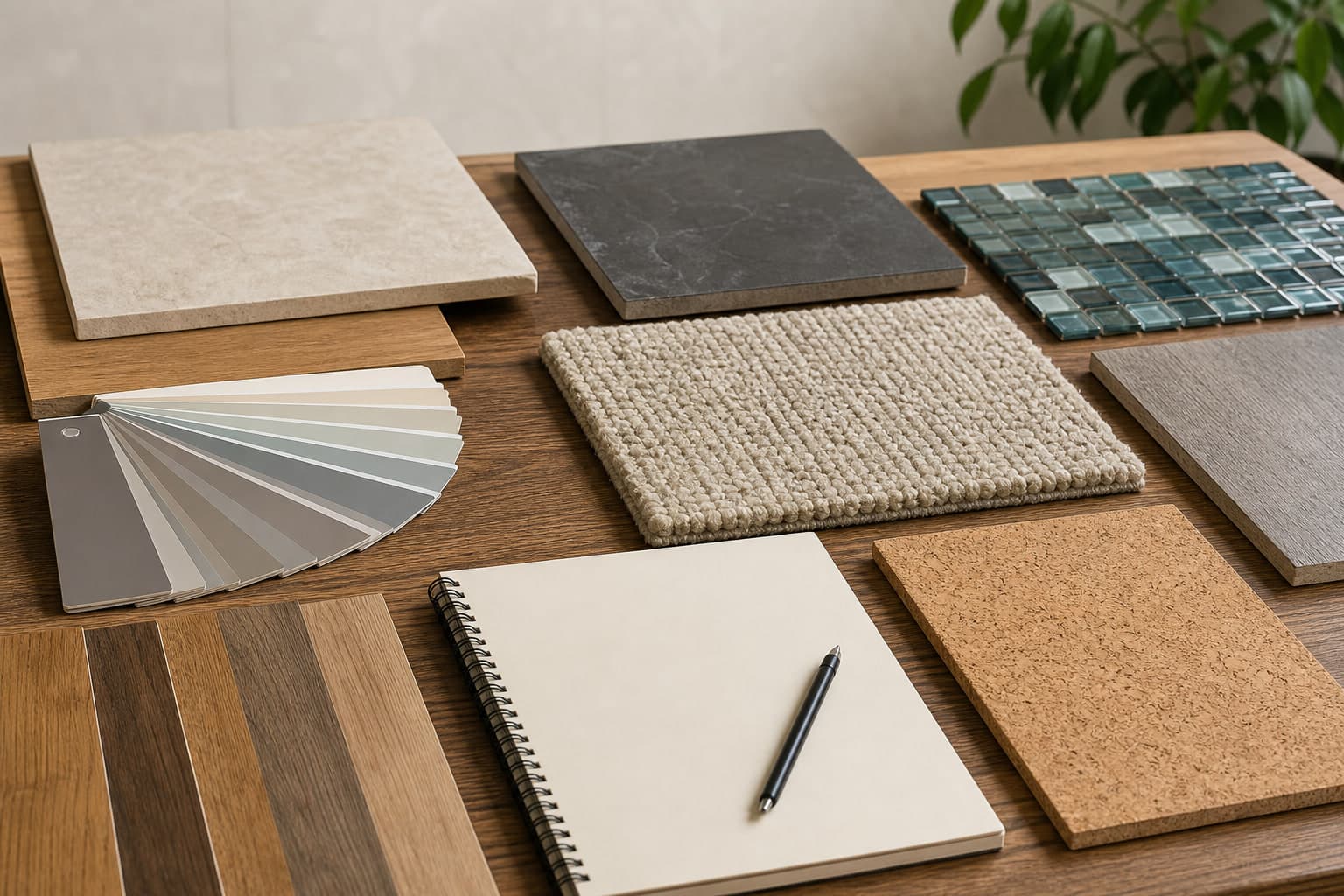
A sample becomes more useful when you compare it deliberately. Follow this process before letting one quick first impression decide the room.
Take wide photos in daylight and after dark, plus close-ups of cabinets, counters, trim, fireplaces, stairs, and adjoining floors. Bring a removable finish sample when possible.
Start with three useful directions: the tone you expect to like, one lighter or quieter option, and one with more contrast or movement. A focused comparison makes the differences easier to see.
Lay samples flat and look from standing height. Move them around the room for morning, afternoon, and evening light. Screens can help narrow ideas, but they cannot show exact color, texture, sheen, or scale.
Place the sample beside the floor it will meet and consider the doorway, stair, baseboard, register, and appliance clearances. A transition is a design detail as well as an installation detail.
Before deciding, review the current sample, room approval, maintenance instructions, product specifications, installation method, and relevant warranty terms. Similar-looking floors can perform very differently.
Common design questions
Not necessarily. One surface across connected rooms can create visual continuity, but a bedroom, bathroom, basement, or entry may have different comfort and moisture needs. When materials change, make the transition deliberate and place it at a sensible architectural break.
Compare undertones with the fixed finishes that will remain, not just with furniture that may move. Notice how the sample responds to daylight and warm evening light. Very light, very dark, low-variation, and highly varied floors each reveal dust, wear, seams, and pattern differently.
There is no single answer for every pet or room. Compare surface texture, scratch visibility, stain and moisture instructions, traction, sound, and cleaning needs. Bring those priorities to the product comparison instead of relying on a broad “pet-proof” label.
Use room photos to discover a direction, then verify it with current physical samples. Camera processing, display settings, room lighting, plank scale, grout width, and natural or manufactured variation can all change how a floor appears in person.
Bring the room, not a perfect plan
Bring photos, fixed-finish samples, and the questions that matter to your household. Our Newington team can help narrow the material, color, performance, and project details.