
Luxury Vinyl · Installation planning
Does Luxury Vinyl Need Underlayment? Click, Glue-Down, Attached Pad, and Moisture Layers
Underlayment is not an automatic upgrade. Depending on the product, an extra layer may help with sound, be required over concrete, be optional, or be specifically prohibited because it makes joints flex too much.
The short answer
Some Luxury Vinyl floors need a separate approved underlayment; some already have padding attached; many glued-down floors bond directly to a properly prepared surface; and some projects need a moisture-control layer that is not padding at all. Match every layer to the exact flooring, installation instructions, surface below, building rules, and warranty.
What matters most
- A click-together or “floating” floor locks to neighboring pieces and rests over the approved surface instead of being glued across the room.
- Attached padding does not automatically satisfy a concrete moisture, sound, or condominium requirement.
- More padding is not always better; an unapproved soft layer can let joints move and fail.
- Underlayment cannot flatten humps, fill moving seams, dry concrete, or repair a weak surface below the flooring.
Name the job first
“Underlayment” can mean several different things
People often use one word for any material below a finished floor. That hides important differences. Padding can change sound or feel. A plastic sheet or other approved product can manage moisture vapor. Plywood or a smoothing material can create a suitable working surface. Adhesive bonds a glued-down floor. These layers do different jobs and are not interchangeable.
Start with the flooring style number and its current installation guide. Then identify the surface below: concrete, plywood, an approved existing hard floor, or something that must be removed. Add only the products and steps permitted for that exact combination.
| Layer or step | Main job | What it cannot be assumed to do |
|---|---|---|
| Attached backing or pad | Part of some click-together products; may change sound and feel | Meet every building sound target or replace a required moisture layer |
| Separate resilient underlayment | May provide approved sound, comfort, or support under selected floors | Work under every locking system or be doubled beneath attached pad |
| Moisture-vapor layer | Helps manage specified vapor conditions in an approved system | Stop plumbing leaks, groundwater, flooding, or all concrete moisture problems |
| Adhesive | Bonds a compatible glued-down product to a prepared surface | Hide dust, contamination, excessive moisture, movement, or poor flatness |
| Patching or smoothing material | Corrects approved surface defects and creates a smooth installation base | Fix structural movement or substitute for the selected floor's instructions |
Click-together floors need the right support—not the softest layer
In a click-together installation, the pieces connect at their edges and the finished floor rests over the approved base. Installers commonly call this a floating floor because it is not fastened everywhere with glue or nails. It still needs the maker's required space at room edges, plus room-size, doorway, cabinet, and transition details so it can respond as designed.
Some products arrive with a pad on the back. Some permit a named separate underlayment. Some allow no additional cushion, because excessive movement beneath a locking edge can stress or break it. Thickness alone cannot prove compatibility; density, compression, seams, moisture behavior, and tested system approval matter. Use the flooring maker's written list rather than a generic roll labeled for vinyl.
Do not double the pad by instinct
If a floor has attached backing, a second soft layer may be unnecessary or prohibited. Ask for the exact flooring and underlayment combination in writing before ordering either one.
Glued-down Luxury Vinyl usually needs preparation more than padding
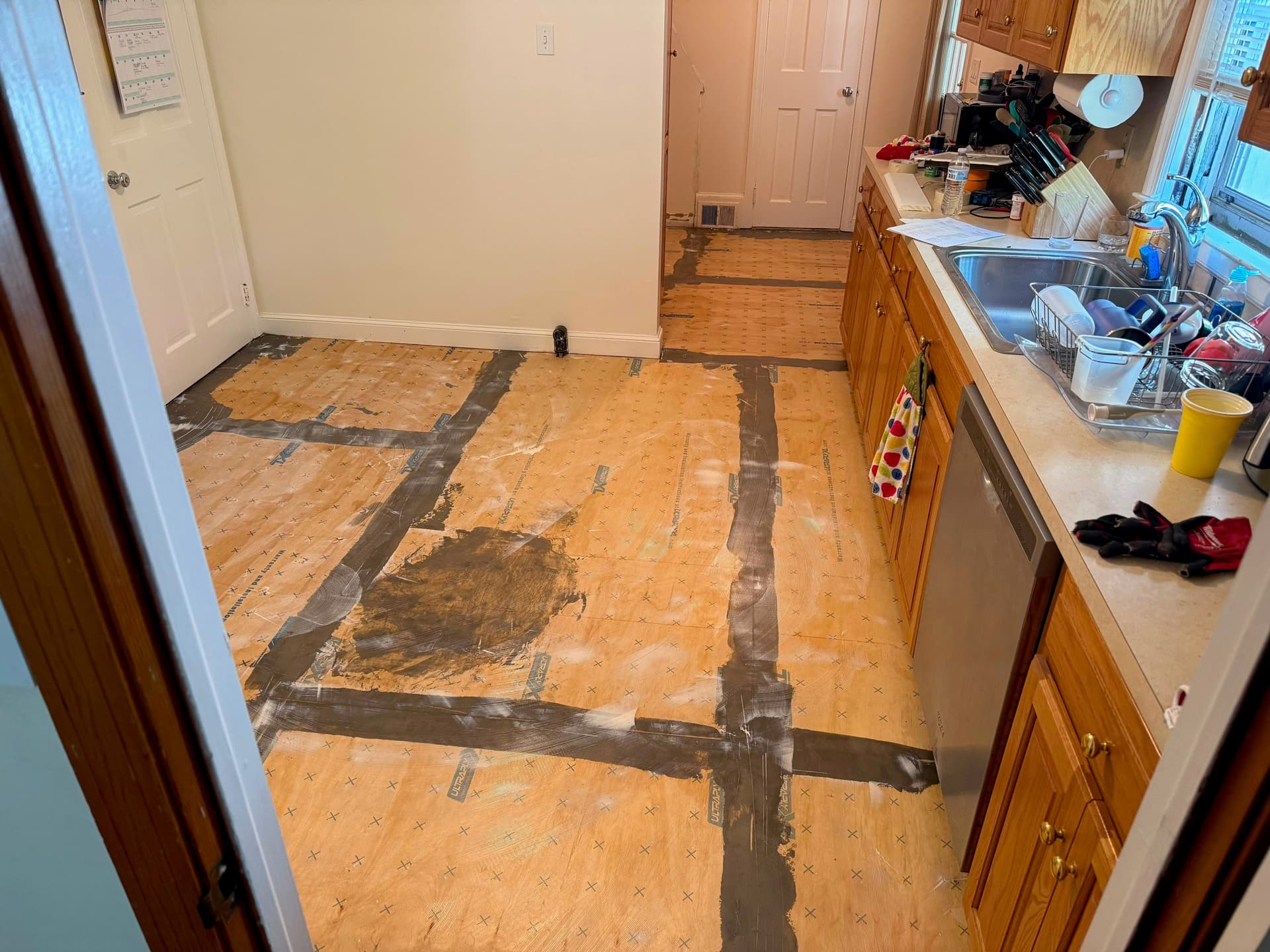
A glued-down plank or tile is bonded to a compatible prepared surface. Because the product follows that surface closely, ridges, old adhesive, patched areas, debris, and seams may show through or affect the bond. The answer is a smooth, sound, clean, dry, compatible base and the specified adhesive—not a loose soft pad inserted underneath.
Special approved systems do exist, including acoustic layers and moisture-control products designed to receive glued flooring. They are complete systems with named primers, adhesives, coverage rates, rolling steps, open times, and testing requirements. They should not be assembled from unrelated products because each layer must remain bonded and compatible.
Moisture control and sound control require different proof
A concrete slab can look dry while still releasing moisture vapor. A basement can also have bulk-water or drainage problems that no flooring underlayment is meant to solve. Testing method, limits, slab condition, product construction, adhesive, and mitigation requirements must be checked as one plan. A thin plastic sheet allowed under one click-together floor may be wrong under another and is not a repair for an active leak.
Condominiums and multi-family buildings may specify tested sound ratings and a particular floor-ceiling assembly. A rating printed on an underlayment package does not prove the same result in a different building. Obtain the association requirement, test report, floor-ceiling details, allowed thickness, and flooring approval before choosing the system.
Over concrete
Confirm moisture testing, any required layer that controls moisture coming from the concrete, flooring-glue requirements, chemical pH limits where applicable, and whether below-ground use is approved.
Over wood
Confirm panel type, fastening, movement, ventilation below, smoothness, and whether seams or fasteners require preparation.
Over an existing floor
Confirm that the old material may remain, is firmly bonded and flat, has no unsuitable cushion or texture, and does not create a height or asbestos-disturbance problem.
Use this five-document check before you buy
Ask for the flooring specification sheet, installation instructions, warranty, care guide, and technical information for every separate layer or adhesive. Record the style number and revision date. Marketing names can cover multiple constructions, and instructions can change between collections.
Then put the documents beside the real project facts: room and grade level, concrete or wood, moisture findings, flatness and repairs, heated floor, strongest sun exposure, expected loads, building sound rules, door clearance, and adjoining floor heights. The right system is the one in which those facts and documents agree.
Plain-language answers
Common questions
What does a floating Luxury Vinyl floor mean?
The pieces usually click together at their edges and rest over the approved base rather than being glued across the room. “Floating” does not mean loose or preparation-free; required space at room edges, flatness, transitions, fixed objects, and room-size rules still matter.
Can I put underlayment under Luxury Vinyl with attached pad?
Only if the flooring maker approves that exact additional product and thickness. An extra soft layer can create too much movement at the joints, while a separately required moisture-vapor layer may be a different type of material.
Does underlayment make an uneven floor level?
No. It may bridge only tiny allowed surface texture, but it does not remove high spots, fill significant low areas, stop panel movement, or make an out-of-flat floor acceptable. Those conditions require the appropriate preparation or repair.
Does waterproof Luxury Vinyl still need moisture testing?
It may. A waterproof claim about the flooring itself does not establish that moisture can be trapped below it without affecting adhesive, alkalinity, odor, mold risk, the surface below, or warranty coverage. Follow the exact system's testing and moisture instructions.
Checked, not guessed
Sources and technical review
Reviewed on September 11, 2026 by Floors Now! flooring team, Connecticut flooring sales and installation team. The sources below support the general guidance. The instructions, room approvals, cleaner list, installation guide, and warranty for the exact product you buy always take priority.
- Resilient Floor Covering Institute: Flexible LVP and LVT
Industry overview distinguishing glued-down, click-together, and loose-lay installation and the possible roles of moisture and sound layers.
- Karndean Designflooring: Luxury Vinyl installation guides
Separate manufacturer instructions for glued-down, rigid click-together, herringbone, and loose-lay products show why the exact format controls the installation plan.
- Karndean Designflooring: Residential warranty information
An example of product-specific coverage, exclusions, installation requirements, and why a broad durability claim is not the same as warranty coverage for every event.
Keep planning
Luxury Vinyl explained
See the plain-language differences between look, construction, and installation method.
serviceSubfloor preparation
Learn why flatness, smoothness, strength, and clean working surfaces matter below the floor.
serviceMoisture testing and mitigation
Plan testing and project-specific moisture control before materials are covered.
projectWest Hartford glued-down kitchen project
See the plywood preparation and finished stone-look Luxury Vinyl tile in a real kitchen.
videoLuxury Vinyl Flooring 101 videos
Watch the beginner series for plain-language help with product types, construction, water claims, and installation choices.