
Hardwood · Choosing a floor
How to Choose Hardwood Species, Color, Grade, and Finish
A hardwood name rarely tells the whole visual story. Species supplies the raw grain and color, grade changes which natural marks appear, stain and finish alter what the eye sees, and full-board variation determines how the room reads.
The short answer
Choose hardwood by separating technical fit from appearance. First confirm whether the exact solid or engineered product, thickness, and installation method suit the room and subfloor. Then compare species and grain, appearance grade, natural color range or stain, finish type and sheen, board width, and the variation shown across multiple full boards. Do not choose on species name, one small sample, or a hardness number alone.
What matters most
- Species describes natural traits; it does not guarantee one uniform color or performance level.
- Grade generally sorts appearance characteristics such as knots and color variation—not a simple good, better, best quality ladder.
- Janka hardness helps compare indentation resistance of solid species, but finish, construction, use, and care still matter.
- View several boards in the actual room at different times of day before approving color and character.
Fit before finish
Confirm where and how the hardwood can be installed
Solid hardwood is one piece of wood. Engineered hardwood has a real-wood surface over a layered structure. Both are genuine wood floors, but approved locations, subfloors, installation methods, thicknesses, and future sanding potential vary by product. Resolve those limits before becoming attached to a color.
Ask for the current installation guide and warranty for the exact collection. Check the room level, moisture exposure, subfloor type, radiant heat if present, finished height, and whether the planned nail, staple, glue, or floating method is approved. An engineered label does not make every product suitable for every basement or slab, and a solid label does not tell you how many future sandings remain.
The wood's natural signature
Read species as a family of traits, not a single color
Oak, maple, hickory, walnut, and other species differ in pore pattern, grain movement, natural color, hardness, and how they accept stain. Even within one species, heartwood and sapwood, mineral streaks, growth patterns, and the way the log was cut can produce visibly different boards.
Hardness can matter in a home with pets, dropped objects, or narrow furniture legs, but it predicts only part of the result. The National Wood Flooring Association notes that the Janka scale is a general indicator for denting in solid wood and does not apply directly to engineered flooring. Surface texture, finish, board construction, maintenance, and the force of an impact still influence what you see.
If you are comparing factory-finished products, judge the complete board rather than imagining how raw lumber of that species usually looks. Stain, reactive treatments, smoking, brushing, scraping, and finish can move two oak floors in very different directions.
How much natural character
Use grade to decide what belongs in the visual mix
Hardwood grades are based on defined physical and appearance characteristics, but names and rules differ by product and grading system. A cleaner-looking grade may limit larger knots and strong color shifts; a character-focused grade may intentionally include more knots, mineral marks, and contrast. Both can be serviceable flooring when properly manufactured and specified.
Ask what the grade permits, then look at a representative set of boards. Marketing names such as select, natural, character, rustic, or coastal should lead to written product information—not assumptions based on the word. Decide whether prominent boards should be spread evenly, featured, or set aside within the applicable product and quality allowances.
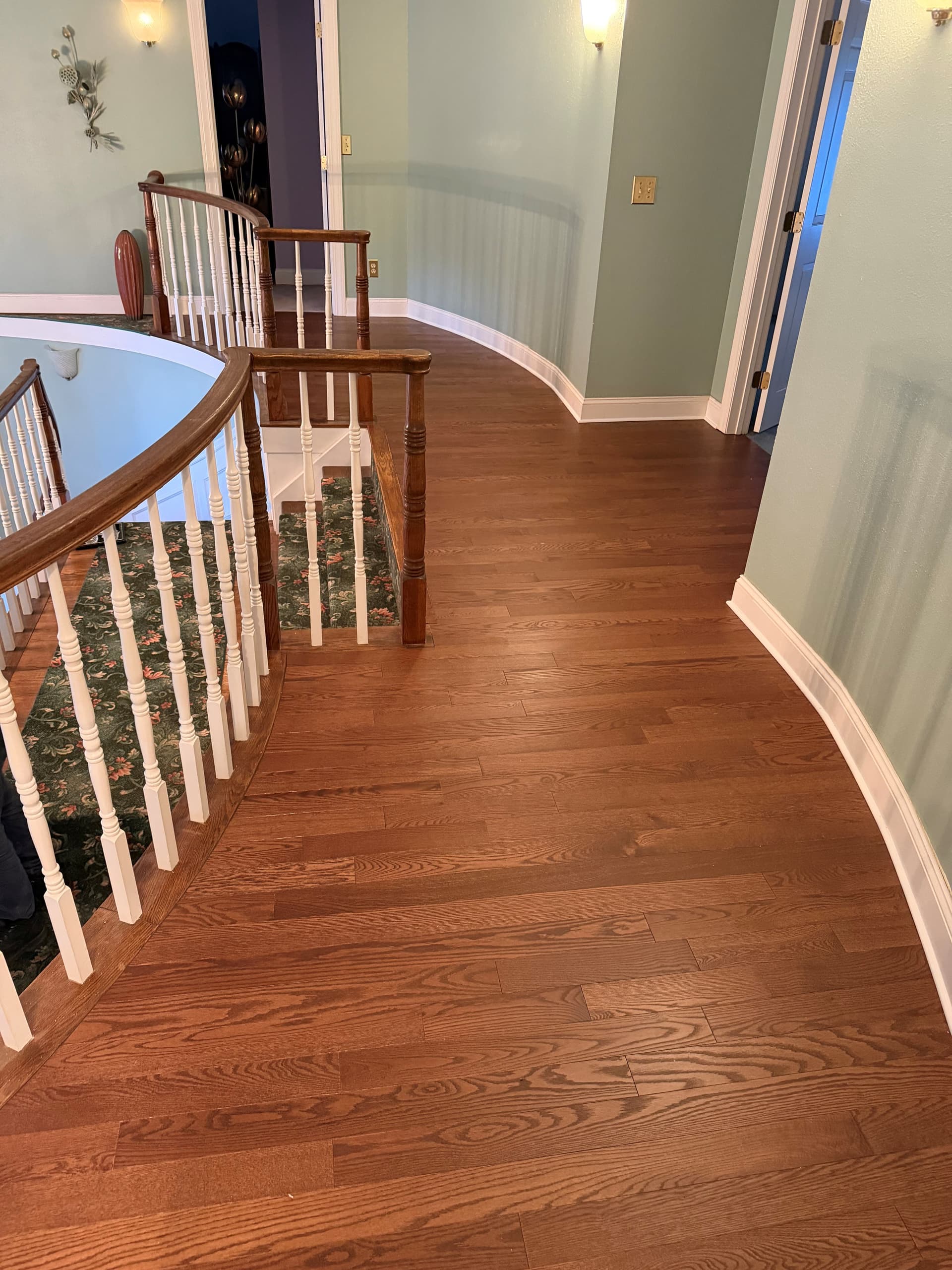
In a verified Southington project, the selected product was Maine Traditions Casco Bay Red Oak Mackworth in Coastal grade with a matte finish. Naming the grade and sheen communicates much more than saying only 'red oak,' and the project photographs show the board-to-board range across a full landing.
Ask to rack out several cartons
A trial layout using boards from multiple cartons reveals color range, board lengths, prominent marks, and the overall blend before permanent installation. Follow the manufacturer's inspection and acceptance rules while doing it.
Samples change with context
Judge color in your room, beside the materials that stay
A floor color is the combined effect of the wood's natural range, any stain or color treatment, the finish, surface texture, sheen, and room lighting. Warm bulbs, cool daylight, wall paint, cabinets, and large textiles can make the same sample read differently. Bring the sample to each adjoining doorway, not just the center of one room.
Lighter floors can show some dark debris while very dark floors can make pale dust, pet hair, and surface marks more obvious. Mid-tones and visible grain may be visually forgiving, but no color eliminates cleaning or damage. Also expect natural wood and some finishes to change color with light and time. Rugs and furniture can create uneven exposure, so ask what the maker says about color change and rotate movable coverings when practical.
The protective surface
Compare finish type, sheen, texture, and future maintenance together
Factory-finished flooring arrives with its color and protective finish applied. Site-finished flooring is sanded and finished after installation, allowing a continuous field and custom finish system. The right choice depends on desired appearance, installation sequence, dust and odor considerations, cure time, maintenance, and the exact products involved.
Gloss reflects more light and can make small scratches, dust, and surface variation more noticeable. Satin, matte, and textured surfaces scatter light differently and may soften the appearance of daily wear, but they are not harder merely because marks are less visible. Finish chemistry and care instructions matter more than the sheen label by itself.
| Choice | What it changes | Question to ask |
|---|---|---|
| Species | Grain, natural color range, and solid-wood hardness | Do I like the normal range, not just one board? |
| Grade | Frequency and size of permitted appearance features | What does this maker's grade actually allow? |
| Stain or color treatment | The color laid over or created within the wood | How does it vary across earlywood, latewood, knots, and sapwood? |
| Finish | Protection, maintenance system, and part of the color | Which cleaners, recoats, and repairs are compatible? |
| Sheen and texture | Light reflection and visibility of surface marks | How does a large sample look in side light? |
| Width and layout | Room rhythm, board count, and how variation is displayed | Does the actual board scale fit the room and site conditions? |
Before ordering
Build a sample review that prevents predictable surprises
View the largest available sample plus several loose boards or installed displays. Photograph them in morning and evening light, but make the decision from the physical material because phone processing and screens alter color. Place the sample beside cabinets, stairs, trim, tile, and existing wood that will remain.
Finally, read the technical documents. Confirm construction, wear-layer details for engineered products, installation method, approved rooms, humidity range, radiant-heat limits, finish care, variation, grade, inspection rules, and warranty exclusions. Record the exact product information instead of relying on a showroom nickname.
Plain-language answers
Common questions
Is one hardwood species always more durable than another?
No single species ranking predicts the entire floor. Solid-species hardness can help compare dent resistance, but finish, cut, construction, texture, installation, household use, grit, pet nails, furniture, and care all influence visible wear.
Does a lower hardwood grade mean weak or defective flooring?
Not as a general rule. Flooring grades commonly sort physical appearance features, so a grade with more knots and color range may be an intentional design choice. Review the actual standard, manufacturer definition, quality allowance, and representative boards for the product.
What sheen hides scratches best?
Lower sheens and texture often make fine surface marks less obvious because they reflect less sharply, but they do not prevent scratching. Finish system, color, cleaning, grit control, furniture protection, and household use still matter.
Will the installed floor match my sample exactly?
Natural wood varies, and a small sample cannot show every board. The installed blend should fit the product's stated species, grade, color, and quality standards, but it should not be expected to repeat one selected sample. Review several boards and the variation policy before installation.
Checked, not guessed
Sources and technical review
Reviewed on September 11, 2026 by Floors Now! flooring team, Connecticut flooring sales and installation team. The sources below support the general guidance. The instructions, room approvals, cleaner list, installation guide, and warranty for the exact product you buy always take priority.
- National Wood Flooring Association: Types of Wood Floors
Explains solid and engineered construction, board formats, species, grade, and saw cut in consumer-friendly terms.
- National Wood Flooring Association: Wood Floor Durability
Explains what the Janka hardness scale can and cannot tell a buyer about a wood floor.
- National Wood Flooring Association: Wood Floor Finishes
Introduces common finish families and why finish choice should reflect the household's use.
- Somerset Hardwood Flooring: Solid Hardwood Installation Guidelines
A manufacturer example showing how jobsite conditions, moisture records, acclimation, subfloor work, layout, and exact instructions affect an installation.
Keep planning
Hardwood Product Guide
Compare construction, species, grade, finish, width, layout, installation, and care.
productBrowse Hardwood
Use current products to narrow your visual direction before verifying each specification.
articleHardwood for Open-Concept Homes
Apply color, width, direction, sheen, and variation across connected spaces.
projectSouthington Coastal-Grade Red Oak Project
See a named species, grade, color, finish, and board size across an actual upstairs landing.