
Tile · Choosing a floor
How to Choose the Right Tile Finish for Kitchens and Bathrooms
Finish is more than shine. It changes how a tile reacts to light, how quickly it shows spots and scuffs, how its texture feels underfoot, and which cleaning method the maker allows. The right starting point is the room and its likely conditions—not a finish name by itself.
The short answer
Choose a tile finish only after confirming that the exact tile is approved for the location. Matte and lightly textured finishes often hide everyday marks better than highly reflective surfaces, while polished tile can brighten a room and make color look deeper. Neither description proves slip safety, floor suitability, shower approval, or easy care. Compare the product's stated use, wet-test information when relevant, texture, grout, lighting, and written cleaning instructions together.
What matters most
- A finish name describes appearance or surface treatment; it does not replace the exact product's floor, wall, wet-area, or exterior rating.
- Slip risk depends on the tile, water or contaminants, footwear, slope, grout joints, maintenance, and the person using the space—not one number alone.
- Glossy surfaces tend to show water spots, fingerprints, haze, and fine scratches more readily, while deep texture can hold soil and require more detailed cleaning.
- View a full sample in the room's daylight and evening light, then test its feel and cleaning requirements before ordering.
Start with the surface
What tile finish means in plain language
The finish is the look and feel of the tile's exposed face. Matte tile reflects less light. Polished tile has a shinier, more mirror-like face. Textured tile has noticeable ridges, grain, or relief. A glazed tile has a factory-applied surface over the clay body; that glaze can itself be matte, glossy, or textured. The terms can overlap, which is why the actual sample and product sheet matter more than a category label.
Finish is separate from material. Porcelain and ceramic describe types of tile bodies, while finish describes the face you see and touch. Two porcelain tiles can have completely different sheen, texture, application ratings, and care rules. A wall tile that looks sturdy may still be unsuitable for foot traffic, and an approved floor tile may not be intended for a shower floor or outdoor freeze-and-thaw exposure.
One label cannot answer the whole question
Ask for the exact style number and written use information. 'Matte,' 'porcelain,' or 'bathroom tile' alone does not confirm every floor, wet, shower, or traction requirement.
Compare appearance, upkeep, and room conditions
Shine can make a small sample look dramatic, but an installed floor is viewed across many pieces, grout joints, windows, and light sources. A polished surface may reflect windows and fixtures and make darker colors feel richer. It may also reveal dried droplets, cleaner residue, dust, and uneven lighting. Matte surfaces usually spread light more softly and may disguise ordinary smudges, although pale grout and heavily textured faces can still show soil.
Texture deserves a hands-on review. Fine texture may add visual depth without changing routine cleaning much. Deep grooves or a cleft-like face can trap cooking film, hair, or entry grit and may be uncomfortable for bare feet. Before choosing it for a kitchen or bathroom floor, clean a sample with the method the maker recommends and decide whether that routine is realistic for your household.
| Finish direction | Often chosen for | Look closely at |
|---|---|---|
| Matte or low-sheen | Soft light, quieter visuals, and rooms where hiding everyday marks matters | Actual floor and wet-use approval, surface feel, grout color, and residue after cleaning |
| Polished or high-sheen | Strong reflection, deeper-looking color, and feature walls or approved dry floors | Water spots, fine scratches, glare, wet-location limits, and the maker's care rules |
| Lightly textured | Visual depth in entries, kitchens, baths, or other approved locations | Whether texture catches grit, mop fibers, cooking residue, or bare feet |
| Deeply textured or relief | Feature surfaces and specific performance-led applications | Cleanability, furniture stability, edge height, exact floor rating, and maintenance tools |
Let the kitchen or bathroom set the questions
In a kitchen, think about cooking film, tracked grit, dropped objects, chair movement, appliance access, and repeated cleaning. A visually forgiving finish and grout color can make daily upkeep easier, but the installation underneath still needs a stable, sufficiently flat base. The substrate—the concrete, plywood, or approved prepared surface below the tile—must meet the complete system's requirements.
In a bathroom, separate the main dry floor, the shower floor, shower walls, and other walls. They do not automatically share the same requirements. A shower floor adds water, slope, bare feet, drainage, and many changes of direction. Smaller pieces may follow the slope more easily and add grout joints, but neither small size nor extra grout makes a surface universally slip-safe. The entire shower also needs an approved water-management system behind the visible tile.
Kitchen floor
Confirm floor-traffic approval, stain and cleaner guidance, likely grit, chair protection, grout care, and transition height at neighboring floors.
Main bathroom floor
Discuss wet-test information, bath mats, cleaning residue, heating compatibility if planned, and who will use the room.
Shower floor
Verify the exact tile's shower-floor approval, size and slope needs, drain details, grout, and the complete waterproofing assembly.
Walls and backsplashes
Traction is usually not the decision, but cleanability, glare, grout, outlets, cut edges, and wet-area approval can be important.
Use traction information without treating it as a guarantee
Manufacturers may publish wet dynamic coefficient of friction information, often shortened to DCOF. It is a laboratory measurement of a moving sensor on a tested surface under stated conditions. It can help classify an intended use, but it cannot reproduce every spill, shoe, cleaning residue, slope, walking pace, mobility need, or maintenance condition in a home.
Ask what test and use classification apply to the exact tile—not a similar collection or showroom board. Then reduce avoidable risks through prompt spill cleanup, suitable mats, complete rinsing, reasonable lighting, handholds where appropriate, and a cleaning routine that does not leave a film. A more heavily textured tile is not automatically safer if soil or soap accumulates in the texture.
A five-minute sample check before you order
Place several pieces together rather than judging one tile. Look across the faces from standing height and from the doorway. Check how much the printed pattern or natural shading varies, whether the edge is straight or intentionally irregular, and whether the planned grout width supports that edge. Shine a light from the same direction as the room's windows to expose reflection and texture.
Finally, compare the product sheet with the project: floor or wall, indoor or outdoor, dry or wet, residential or commercial, and any special shower or freeze-and-thaw approval. Record the style, size, color, shade lot, grout choice, and written care instructions. Those facts make future ordering, cleaning, and repairs much easier than remembering a color name alone.
Local project example
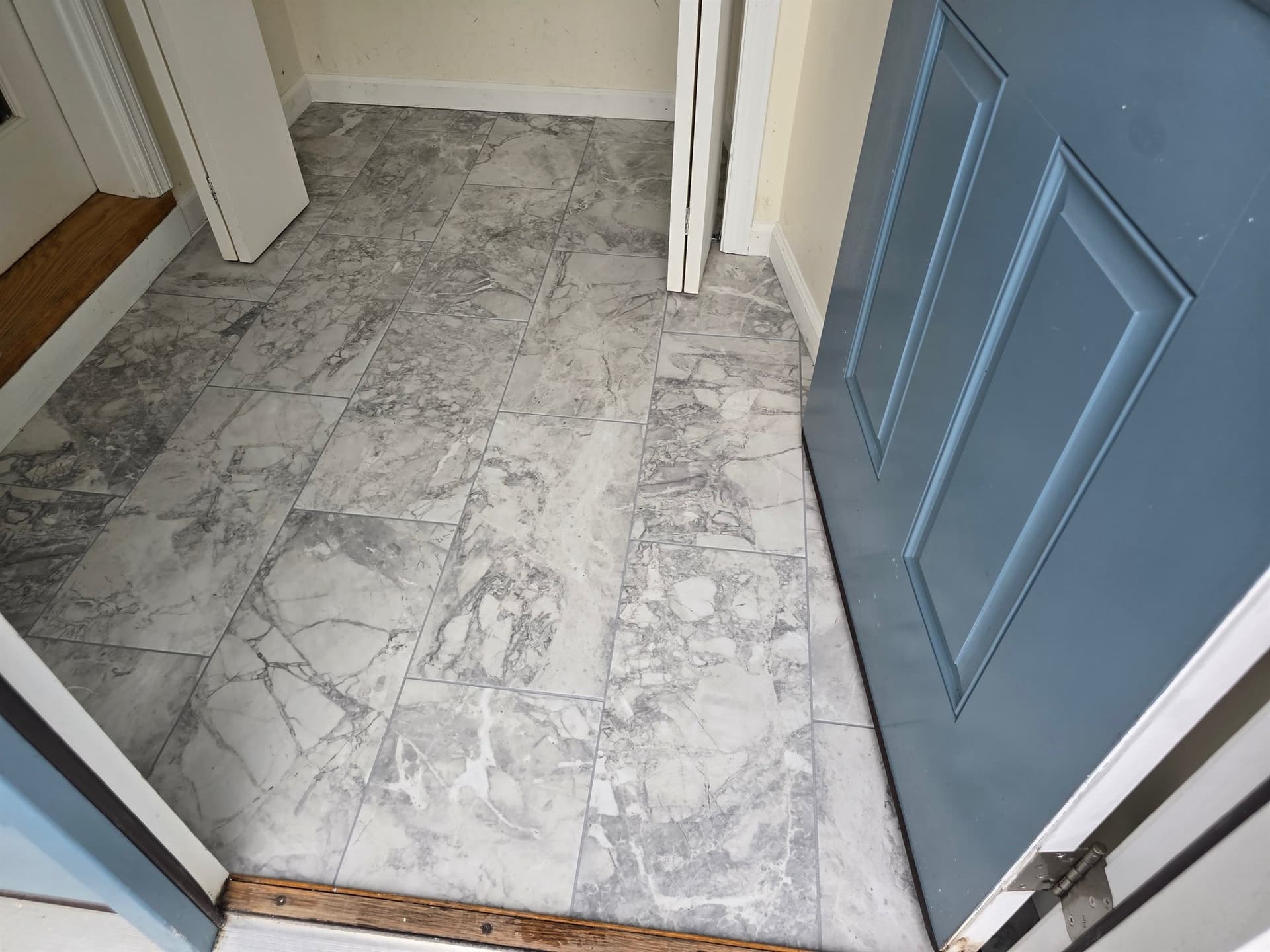
For a West Hartford entry, our team removed the existing tile from concrete and installed 12-by-24-inch glazed porcelain tile with a matte-looking gray visual. The two-day scope also included mortar, non-epoxy grout, and removing and resetting baseboard—useful evidence that finish is only one part of the finished floor.
Plain-language answers
Common questions
Is matte tile always less slippery than polished tile?
No. Finish words alone do not establish slip performance. Compare the exact product's intended-use classification and available wet-test information, then consider water, contaminants, slope, grout, cleaning, footwear, and the people using the room.
Can polished tile be used on a bathroom floor?
Only when that exact tile is approved for the intended bathroom-floor use and the real room conditions are considered. Some polished products have location limits, and a main bath floor is not the same application as a shower floor.
Does textured tile require more cleaning?
It can. Deep texture may hold grit, soap, grease, or mop fibers more readily than a smoother face. Test a sample and follow the product maker's tools and cleaner instructions.
Do all tile and grout need sealer?
No. Requirements vary by tile surface and grout formulation. Some surfaces or joints may benefit from or require a compatible sealer; others may not accept one. Use the written instructions for the exact tile and grout.
Checked, not guessed
Sources and technical review
Reviewed on September 11, 2026 by Floors Now! flooring team, Connecticut flooring sales and installation team. The sources below support the general guidance. The instructions, room approvals, cleaner list, installation guide, and warranty for the exact product you buy always take priority.
- Tile Council of North America: Dynamic coefficient of friction frequently asked questions
Explains tile-use classifications, how wet-test results are used, and why one laboratory number cannot predict whether a person will slip in every real condition.
- Tile Council of North America: Ceramic tile frequently asked questions
Industry guidance on tile selection, grout joints, layout, mortar coverage, surface flatness, movement joints, and other installation fundamentals.
- Daltile: Ceramic and porcelain tile care and maintenance
Manufacturer instructions showing that cleaner and sealer choices depend on the tile surface, grout, finish, and exact care document.
- Schluter Systems: Waterproof shower systems
System-manufacturer guidance showing that visible tile and grout are not the shower's waterproofing layer; the approved assembly behind them manages water.
Keep planning
Tile buyer's guide
Compare porcelain, ceramic, wood-look, and decorative tile by application, finish, layout, grout, and preparation.
serviceTile installation
Plan the tile, prepared surface, layout, setting materials, grout, movement details, and transitions as one system.
projectWest Hartford porcelain entry project
See a documented 12-by-24-inch glazed porcelain tile replacement completed over concrete.
productFind Your Floor
Compare tile with other flooring choices around room conditions, feel, care, moisture, and design priorities.