
Carpet · Choosing a floor
Best Carpet for High-Traffic and Stain-Prone Rooms
The toughest carpet is not simply the one with the biggest face-weight number or the longest stain promise. It is the complete product and installation system that matches the room's traffic, soil, spills, pets, and maintenance routine.
The short answer
For a high-traffic or stain-prone room, begin with carpet specifically approved for that use, then compare pile construction, yarn twist and density, fiber, texture-retention coverage, stain and soil coverage, color, cushion requirements, and stair or pet exclusions. Dense, lower-profile constructions often hold their appearance better in busy paths, but no fiber or treatment is stain-proof, and even a durable carpet needs correct cushion, installation, vacuuming, and spill care.
What matters most
- Match the carpet to the exact room and traffic path, not a broad 'durable' label.
- Stain resistance, soil resistance, wear, and texture retention describe different problems.
- Construction and density matter alongside fiber; face weight alone cannot rank every carpet.
- Color and pattern can hide ordinary soil but do not reduce the need to remove it.
- The approved cushion and professional installation are part of the performance system.
Start with use
Describe what the carpet must survive
High traffic is not the same in every home. A bedroom doorway gets repeated footfalls in a narrow lane. A family room may add food, pets, toys, reclining furniture, and a route to an exterior door. Stairs combine concentrated wear with a bend over each tread edge. Write down how people move through the space, where soil enters, what commonly spills, whether pets scratch or have accidents, and how often you can realistically clean.
That room description is more useful than asking for the single 'best' fiber. Carpet products within the same fiber family can have different pile heights, yarn twist, tuft density, backings, treatments, warranties, and use ratings. A sample that feels soft in your hand still needs documents showing where the finished product is approved and how its appearance is covered.
Traffic
Count the narrow paths, stairs, exterior connections, rolling chairs, and furniture positions that concentrate use.
Mess
Separate dry grit, oily soil, food and drink, pet accidents, moisture, and chemical risks such as bleach.
Maintenance
Be honest about vacuum frequency, prompt spill response, and whether required professional cleaning will be documented.
Product performance
Construction and fiber answer different questions
Carpet can be cut pile, loop pile, or a combination. Within those broad groups, pile height, yarn twist, the amount and spacing of yarn, and backing construction affect how the surface responds to repeated use. Highly twisted textured cut piles can help disguise footprints; dense, lower-profile loop constructions can perform well in busy areas. Loop carpet also needs a household-specific check when pets may catch claws or when a pulled loop could run.
Nylon, polyester, triexta, polypropylene, and wool do not have identical strengths, but the fiber name does not replace the product specification. Resilience, abrasion resistance, stain response, soil release, colorfastness, cleanability, and price vary by fiber and by the engineering of the particular carpet. Compare actual samples and written performance information instead of treating every nylon, polyester, or triexta carpet as interchangeable.
Do not rank carpet by face weight alone
Face weight describes the amount of surface yarn in a measured area. It does not by itself reveal pile height, density, twist, fiber quality, backing, treatment, or how the product is rated for your room.
Read the promise
A stain warranty may not cover the problem you picture
A stain is color left by a substance. Soil is dirt or oily material that makes the carpet look dingy. Abrasive wear concerns fiber loss, while texture retention concerns matting, crushing, or a changed surface appearance. A carpet can resist one of these and still show another. That is why warranty charts often list separate columns and time periods.
Read the full warranty before choosing. Check which spills are included, whether pet urine is treated differently from other pet damage, whether stairs or rental use are excluded, what counts as an unacceptable appearance change, and what maintenance proof is required. 'Pet-friendly,' 'lifetime,' and 'stain-resistant' are starting points for questions, not complete explanations. Bleach, dyes, burns, tracked asphalt, or repeated contamination may fall outside even generous coverage.
| Claim | What it means to the shopper | What to verify |
|---|---|---|
| Stain resistance | How covered substances release or discolor the yarn | Excluded substances, required response, remedies, and time period |
| Soil resistance | How readily tracked dirt and oily residue change appearance | Cleaning method, resoiling limits, and maintenance proof |
| Texture retention | How the pile holds its original surface character | Rating method, traffic class, stairs, and what level of change qualifies |
| Abrasive wear | Loss of pile fiber from ordinary foot traffic | How wear is measured and which areas or uses are excluded |
| Pet coverage | Protection for specifically named pet accidents or stains | Species, number of events, odor, cushion, and repeated-area exclusions |
Appearance
Make ordinary use less visually obvious
Very light, very dark, and perfectly solid colors can show different kinds of lint, soil, shading, or footprints. Mid-tone colors, flecks, tweeds, and small-scale patterns often disguise day-to-day variation more effectively. That does not make them cleaner; it gives you a more forgiving appearance between routine cleanings.
Take the sample home and view it flat on the floor in daylight and at night. Brush the pile in opposite directions to see how light changes it. Compare a larger sample if the pattern repeat or color mix matters. A plush surface may create the smooth, quiet bedroom look you want while showing footprints; a textured surface may look more casual while making those marks less obvious. Neither is automatically better—the right choice depends on the room and your expectations.
Below the surface
The unseen parts can shorten or support carpet life
A cushion should be firm and resilient enough for the carpet and room. Thicker and softer is not automatically better: a carpet maker may set maximum thickness and minimum density, and low-profile or loop products often call for a firmer, thinner cushion. The wrong pad can allow too much movement, affect seams, change the way the pile receives traffic, and jeopardize warranty coverage.
Professional layout, seam planning, edge sealing where required, tack-strip placement, and power stretching help the installed carpet stay secure. Afterward, entry mats, a suitable vacuum, prompt spill treatment, and required deep cleaning protect the selection you made. Durability is the result of product, cushion, installation, room conditions, and care—not one feature printed on the sample.
Project example
Sometimes the strongest plan uses two materials
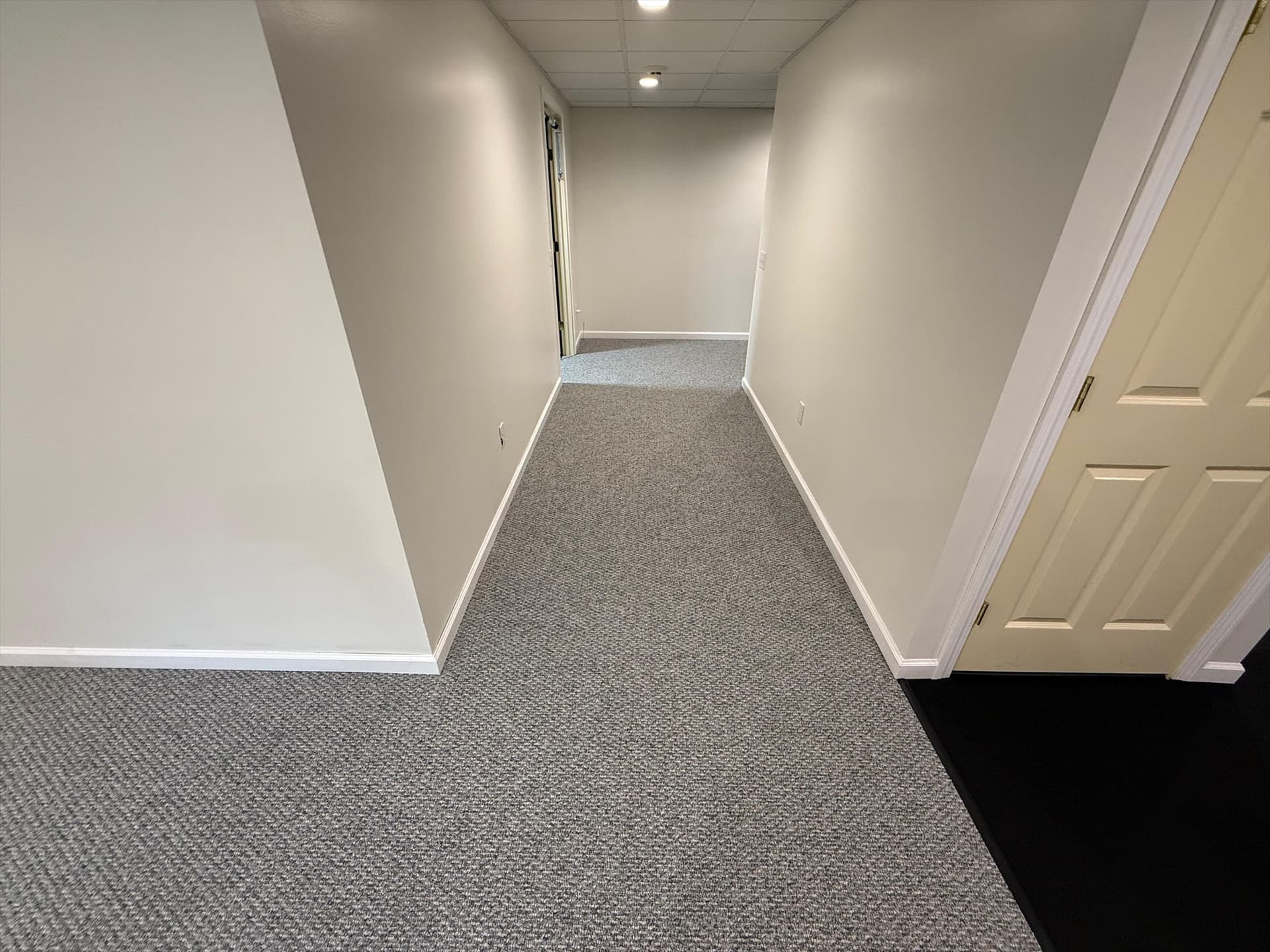
In a documented Colchester basement restoration, Floors Now installed Madoc carpet with new pad in the carpeted areas and across two staircases, while an interlocking rubber floor was used in the home-gym zone. The project did not force one material to serve every activity. Carpet provided the intended finish for passage and living areas; the gym received a surface selected for its different use.
That same reasoning helps in high-traffic homes. You can use carpet in the comfort-focused rooms, a runner or purpose-rated product on stairs, and another approved flooring where wet shoes, exercise equipment, or repeated moisture makes carpet a poor fit. Choosing boundaries deliberately is more useful than expecting the word 'durable' to erase every risk.
Plain-language answers
Common questions
What carpet construction is best for high traffic?
Dense, lower-profile constructions and highly twisted textured yarns are often worth comparing, but the exact product must be rated for the room. Fiber, density, twist, backing, cushion, installation, and warranty all matter together.
Is nylon always more durable than polyester or triexta?
No fiber name can rank every finished carpet. Fiber families have different tendencies, but construction, treatment, product testing, traffic rating, warranty, and care requirements can change the decision. Compare exact products for the intended room.
Is stain-resistant carpet stain-proof?
No. Coverage applies to specified substances and conditions, and exclusions are common. Prompt care is still required. Soil, texture change, bleach damage, odor, or damage below the carpet may be separate from a stain claim.
What carpet color hides dirt best?
Mid-tone colors, mixed yarns, flecks, and small patterns often disguise ordinary soil and visual variation better than very light, very dark, or solid colors. Choose in your home's lighting and remember that hidden soil still needs removal.
Does better carpet need better padding?
It needs the correct cushion, which is not always the thickest or softest. Follow the carpet manufacturer's limits for type, thickness, and density and match firmness to the traffic and construction.
Checked, not guessed
Sources and technical review
Reviewed on September 11, 2026 by Floors Now! flooring team, Connecticut flooring sales and installation team. The sources below support the general guidance. The instructions, room approvals, cleaner list, installation guide, and warranty for the exact product you buy always take priority.
- The Carpet and Rug Institute: Selecting the Right Carpet
Primary carpet-industry guidance on room use, pile construction, fiber differences, color, cushion, and high-traffic considerations.
- The Carpet and Rug Institute: Carpet Maintenance and Troubleshooting Technical Bulletin
Technical distinctions among soiling, shading, appearance change, entry protection, and routine maintenance.
- The Carpet and Rug Institute: CRI 105 Standard for Installation of Residential Carpet
Industry installation standard covering planning, substrates, cushion, seams, stretch-in work, and manufacturer instructions.
- Shaw Floors: Carpet Warranty Information
Manufacturer warranty library illustrating why coverage must be checked for the exact carpet collection rather than assumed from a headline claim.
Keep planning
Carpet Product Guide
Compare plush, loop, frieze, and patterned carpet around the way your room will be used.
productWhere Carpet Works Best
Use the room-by-room guide to weigh traffic, comfort, moisture, pets, and spills.
serviceCarpet Installation
Plan cushion, seams, stretching, transitions, and finishing with the carpet itself.
projectColchester Carpet and Home-Gym Project
See how one basement used carpet and rubber flooring in zones with different demands.
articleCarpet Care Guide
Build a routine for dry soil, spills, traffic lanes, and professional cleaning.