
Tile · Choosing a floor
How to Choose Tile for High-Traffic Kitchens, Mudrooms, and Entries
Busy floors face more than footsteps. Connecticut entries bring grit, salt, wet shoes, temperature changes, dropped objects, and repeated cleaning. The best choice is the complete rated tile system that fits those conditions—not simply the hardest-looking sample.
The short answer
For a high-traffic kitchen, mudroom, or entry, start with tile that the maker approves for that exact floor use and traffic level. Then compare wet and dry surface conditions, texture and cleanability, visible wear, size and edge strength, grout, setting materials, the prepared surface, movement joints, and transitions. Porcelain is a common place to begin because many porcelain collections are made for demanding floors, but the word porcelain does not guarantee traction, stain resistance, impact resistance, exterior use, or suitability for every home.
What matters most
- Verify the exact tile's floor and traffic classification; do not transfer a rating from another color, finish, or size without documentation.
- Grit control and prompt water cleanup are central to both appearance and slip-risk management.
- A durable tile face can still fail over an unstable, cracked, contaminated, or insufficiently flat base.
- Grout color, joint width, flexible movement details, transitions, mats, and replacement stock affect long-term service as much as the sample face.
Describe the actual use
High traffic is not one condition
A kitchen has chair movement, cooking spills, dropped utensils, appliance access, and long periods of standing. A mudroom adds wet footwear, grit, bags, pet activity, and seasonal storage. An entry concentrates outdoor soil and turning traffic into a small area. Count occupants, pets, exterior doors, footwear habits, mobility equipment, furniture, and cleaning frequency before comparing products.
Also identify rare but important loads. A delivery route for a refrigerator, a narrow bench leg, a rolling walker, or a heavy planter can concentrate force at an edge or joint. Tile is firm and can serve busy areas well when correctly selected and installed, but it is not immune to chipping, cracking, scratching, staining, or surface wear.
Ask for evidence tied to the exact tile
Look for documented floor use, traffic classification, wet-use information when relevant, care instructions, variation, size and caliber details, and installation documents for the selected style—not a broad statement about all porcelain or ceramic tile.
Balance traction questions with cleanability
Entries and mudrooms can be wet, gritty, or coated with winter deicer residue. A textured face may feel more reassuring than a highly polished face, but texture can also hold grit and residue. Published wet-test information is useful for classification, not a guarantee against falls. Real slip risk also changes with contaminants, slope, maintenance, lighting, footwear, walking speed, and the user.
Choose a surface you can clean consistently. Deep grooves may require a brush or more careful soil pickup. Highly reflective surfaces may reveal salt film, scratches, or water spots. Test a sample with clean water and the maker-approved care method, then inspect it in side light after drying. A surface that stays coated with cleaner or deicer residue can become both unattractive and harder to evaluate underfoot.
| Area | Frequent stress | Questions to settle |
|---|---|---|
| Kitchen | Cooking film, spills, chairs, dropped items, appliances | Floor-use rating, stain and cleaner guidance, grout, chair protection, appliance path, comfort expectations |
| Mudroom | Wet shoes, grit, pets, bags, seasonal salt or deicer | Wet-use information, cleanable texture, suitable mats, grout color, drainage or leak risks, adjoining floors |
| Exterior entry | Concentrated grit, turning traffic, water, floor-height change | Walk-off area, exact use rating, transition, cleaning access, surface preparation, movement details |
| Interior hall | Repeated foot traffic and long sightlines | Pattern repeat, straight layout, edge cuts, joint visibility, door clearances, and floor flatness |
Compare the whole tile—not just porcelain versus ceramic
Porcelain tile is defined by low water absorption, and many porcelain products are made for demanding interior or exterior uses. Ceramic tile covers a wider range of bodies and products, including durable floor tile and wall-only tile. The exact classification, finish, edge, thickness, size, and intended application are what make a product suitable or unsuitable for your room.
Size changes the installation plan. Larger tile creates fewer grout joints but requires a sufficiently flat base and careful mortar coverage. Smaller tile creates more joints and can adapt around some details, but sheet boundaries and grout maintenance become more visible. Rectified tile—tile whose edges are precisely cut after firing—may support narrower planned joints, but it still needs a grout joint and cannot be installed with the edges touching.
The floor underneath determines whether the tile has support
The substrate is the concrete, plywood, or other approved prepared surface beneath the tile assembly. It must be stable, clean, and within the flatness limits for the tile and setting system. Wood-framed floors also need suitable structure and an approved tile underlayment or membrane where called for. Tile does not strengthen a moving floor; movement below can show up as cracked tile or grout.
Concrete cracks, old adhesive, paint, contamination, high and low areas, and moisture conditions should be evaluated before setting begins. Some cracks may be handled with an approved crack-isolation approach, while active movement or structural concerns need a different solution. A membrane is not a promise that every crack or movement condition can be ignored.
Flatness
A sufficiently even plane helps tiles receive proper support and reduces uneven adjacent edges; flat does not necessarily mean perfectly level.
Mortar coverage
The setting material must contact the tile and prepared surface as the application requires; unsupported voids can leave vulnerable areas.
Movement joints
Flexible details at required locations help accommodate normal building movement and should not be filled rigidly for visual convenience.
Cure and return to use
Mortar, grout, sealers, and other materials need their full product-specific waiting time before foot traffic, cleaning, or heavy loads.
Choose grout for the traffic you will actually clean
A mid-tone grout that relates to the tile may hide ordinary soil more evenly than a very pale or very dark joint, but appearance is only one factor. Compare grout type, joint width, stain and chemical guidance, sealer requirements if any, and cleaning products. Do not assume every grout is maintenance-free or that sealing turns it into a waterproof barrier.
At exterior doors, use tile-compatible walk-off mats and clean underneath them. Vacuum or sweep grit before damp cleaning, follow dilution instructions, and rinse away residue when required. Salt and deicer film can reappear as the floor dries; changing clean water and picking up dirty solution is often more useful than adding extra detergent.
What a real entry project shows
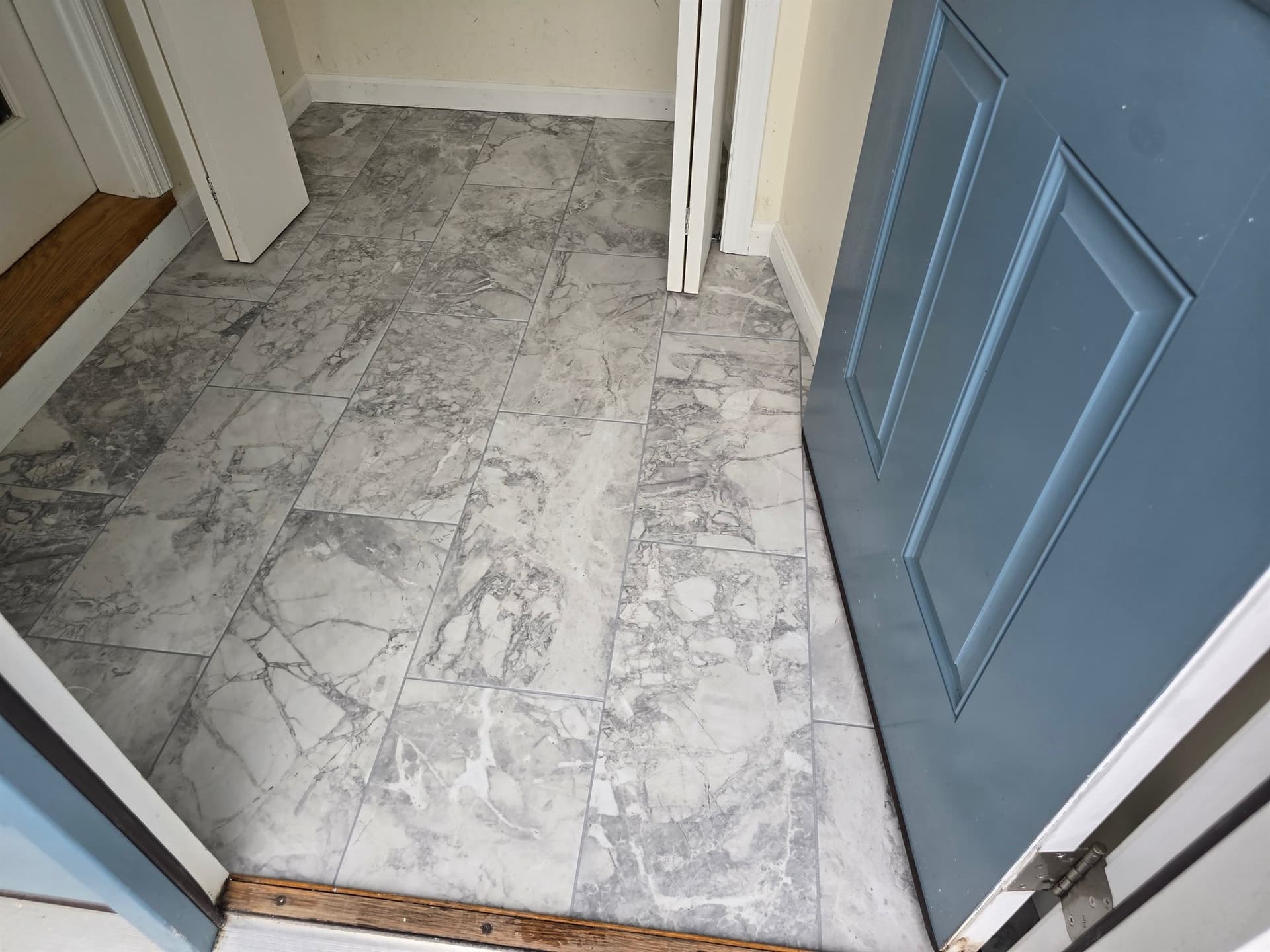
In a West Hartford home, Floors Now removed 46 square feet of existing tile from a concrete entry before installing Anatolia Lumino Grigio 12-by-24-inch glazed porcelain tile. Fifty-three square feet of material was supplied to cover the field, cuts, and planned waste. The crew used rapid-setting mortar, finished the joints with non-epoxy grout, removed and reset 20 linear feet of baseboard, and completed the entry in two workdays.
The useful lesson is the scope, not a claim that one product fits every entry. Removal, the revealed concrete, tile size, mortar, grout, trim, cure sequence, and supplied waste all affected a relatively small room. Busy-area durability starts with that complete plan and continues with mats, grit control, compatible cleaning, and prompt attention to damaged joints or tile.
Plain-language answers
Common questions
Is porcelain always the best tile for a busy entry?
No single category is always best. Many porcelain products are strong starting points, but the exact floor and traffic rating, finish, wet-use information, size, installation system, cleaning, and room conditions decide.
Does more texture make entry tile safer?
Not automatically. Texture can affect underfoot feel and may help in some conditions, but it can also trap grit or residue. Published testing, maintenance, contaminants, slope, lighting, footwear, and users all matter.
Will a crack-isolation membrane stop every tile crack?
No. Approved systems can manage certain in-plane cracks or movement within stated limits, but active structural movement and other conditions can exceed them. Diagnose the base and follow the complete system instructions.
What grout color is easiest for a mudroom?
A middle color related to the tile may disguise ordinary soil, but cleaner residue, deicer, and actual dirt color vary. Select the grout type and color with a realistic cleaning plan rather than relying on color alone.
How much extra tile should I keep?
Waste and spare quantity depend on tile size, room shape, pattern, cuts, breakage risk, lot variation, and future repair needs. Have the installer calculate the project rather than applying one universal percentage.
Checked, not guessed
Sources and technical review
Reviewed on September 11, 2026 by Floors Now! flooring team, Connecticut flooring sales and installation team. The sources below support the general guidance. The instructions, room approvals, cleaner list, installation guide, and warranty for the exact product you buy always take priority.
- Tile Council of North America: Ceramic tile frequently asked questions
Industry guidance on tile selection, grout joints, layout, mortar coverage, surface flatness, movement joints, and other installation fundamentals.
- Tile Council of North America: Dynamic coefficient of friction frequently asked questions
Explains tile-use classifications, how wet-test results are used, and why one laboratory number cannot predict whether a person will slip in every real condition.
- Daltile: Ceramic and porcelain tile care and maintenance
Manufacturer instructions showing that cleaner and sealer choices depend on the tile surface, grout, finish, and exact care document.
- MAPEI: Tile leveling and lippage systems
Technical explanation of preparation, large-format tile flatness requirements, lippage, and the limits of clip-and-wedge systems.
Keep planning
West Hartford porcelain entry case study
See the verified removal, material, setting, grouting, trim, and schedule details from a two-day project.
productTile buyer's guide
Compare exact tile types, uses, finish, layout, grout, preparation, and maintenance.
serviceTile installation
Plan surface preparation, setting, grout, movement details, edges, cure time, and transitions.
serviceFlooring removal
Understand what old-floor removal can reveal before the new tile assembly is finalized.
articleClean ceramic tile and grout
Build a simple routine for grit, spills, residue, joints, and product-compatible cleaners.