
Carpet · Rooms and moisture
Does Carpet Make a Room Warmer and Quieter? What Carpet and Padding Actually Do
Carpet can make a hard, echoing room feel noticeably softer and warmer underfoot, but its useful comfort benefits should not be confused with fixing a cold building or fully blocking sound between rooms.
The short answer
Yes. Carpet and compatible cushion add resistance to heat flow, make the walking surface feel warmer than many hard floors, absorb some sound within the room, soften footsteps, and reduce some impact sound traveling to the room below. Results depend on the exact carpet, cushion, floor assembly, room, and frequencies involved. Carpet is not a substitute for building insulation, air sealing, heating repairs, or a tested soundproof floor-and-ceiling assembly.
What matters most
- Carpet changes what your feet touch even when the thermostat stays the same.
- Carpet and cushion add some insulation, but walls, ceilings, drafts, windows, and the structure usually dominate whole-room heat loss.
- It can reduce echo, surface noise, and footfall impact; it cannot promise silence or block every voice, television, or bass note.
- Cushion affects feel, sound, and thermal performance but must stay within the carpet maker's specifications.
- Compare complete carpet-and-cushion combinations for the actual room rather than shopping by softness alone.
Thermal comfort
A warmer-feeling floor is not the same as a warmer building
A bare foot loses heat quickly against a cold, hard surface. Carpet holds air within its pile, and cushion adds another layer between you and the subfloor, so the surface can feel less cold. That contact comfort is real and often makes a bedroom, play area, or basement living space feel more inviting without changing the air temperature.
Carpet and cushion also have an R-value, which describes resistance to heat flow. Their values add to the rest of the floor assembly, and thicker assemblies tend to provide more resistance. But a room that is cold because of air leaks, missing wall or rim-joist insulation, poorly performing windows, an uninsulated floor, or an undersized heating system needs those causes addressed. Carpet may improve the surface experience while leaving the larger heat-loss problem in place.
Use the right claim
Carpet can add thermal resistance and feel warmer underfoot. It should not be sold as a replacement for code-appropriate insulation or repairs to the building envelope and heating system.
Acoustic comfort
Carpet affects sound in more than one way
First, a soft surface creates less sharp noise when shoes, toys, pet nails, or dropped objects meet the floor. Second, the carpet surface absorbs some airborne sound instead of reflecting all of it back into the room, which can reduce the hard echo people notice after removing furnishings or hard flooring. Third, carpet and cushion can reduce some impact energy transmitted into the structure and heard as footfall in the room below.
Those benefits are not the same as soundproofing. Voices and television can travel through doors, walls, ducts, and gaps. Low-frequency music and mechanical vibration behave differently from high-frequency surface noise. A serious privacy, home-theater, music-room, or multifamily problem may require an acoustical professional to evaluate the whole floor-ceiling and wall assembly. Carpet is one helpful layer, not a universal sound barrier.
| Goal | What carpet may improve | What may still be needed |
|---|---|---|
| Warmer bare feet | Less direct contact with a cold hard surface | Approved cushion and a dry, suitable subfloor |
| Less echo in the room | More sound absorption at the floor | Curtains, furniture, wall treatment, or professional acoustic design |
| Quieter footsteps below | Reduced impact from walking and dropped objects | A tested floor-ceiling assembly if a specific rating is required |
| Lower heating bills | A modest additional resistance layer | Air sealing, building insulation, and properly working heating equipment |
The layer underneath
Cushion changes comfort, but softer is not always better
The pad beneath stretch-in carpet contributes resilience, sound reduction, thermal resistance, and the way the floor feels. It also supports the carpet as people walk over it. An overly thick or soft pad can allow too much flex for some carpets, stress seams and backing, or fall outside the warranty. Loop, low-profile, stair, and other constructions may call for a thinner, firmer cushion.
Ask for the cushion type, thickness, density, and product approval in writing. Compare samples as an assembly when possible: the same carpet can feel different over two approved cushions. If sound control is important, look for tested information for the exact carpet-and-cushion or floor-ceiling system. A marketing word such as 'acoustic' without a test method, assembly, and rating is not enough for a code or association requirement.
Room fit
Choose carpet where softness changes daily life
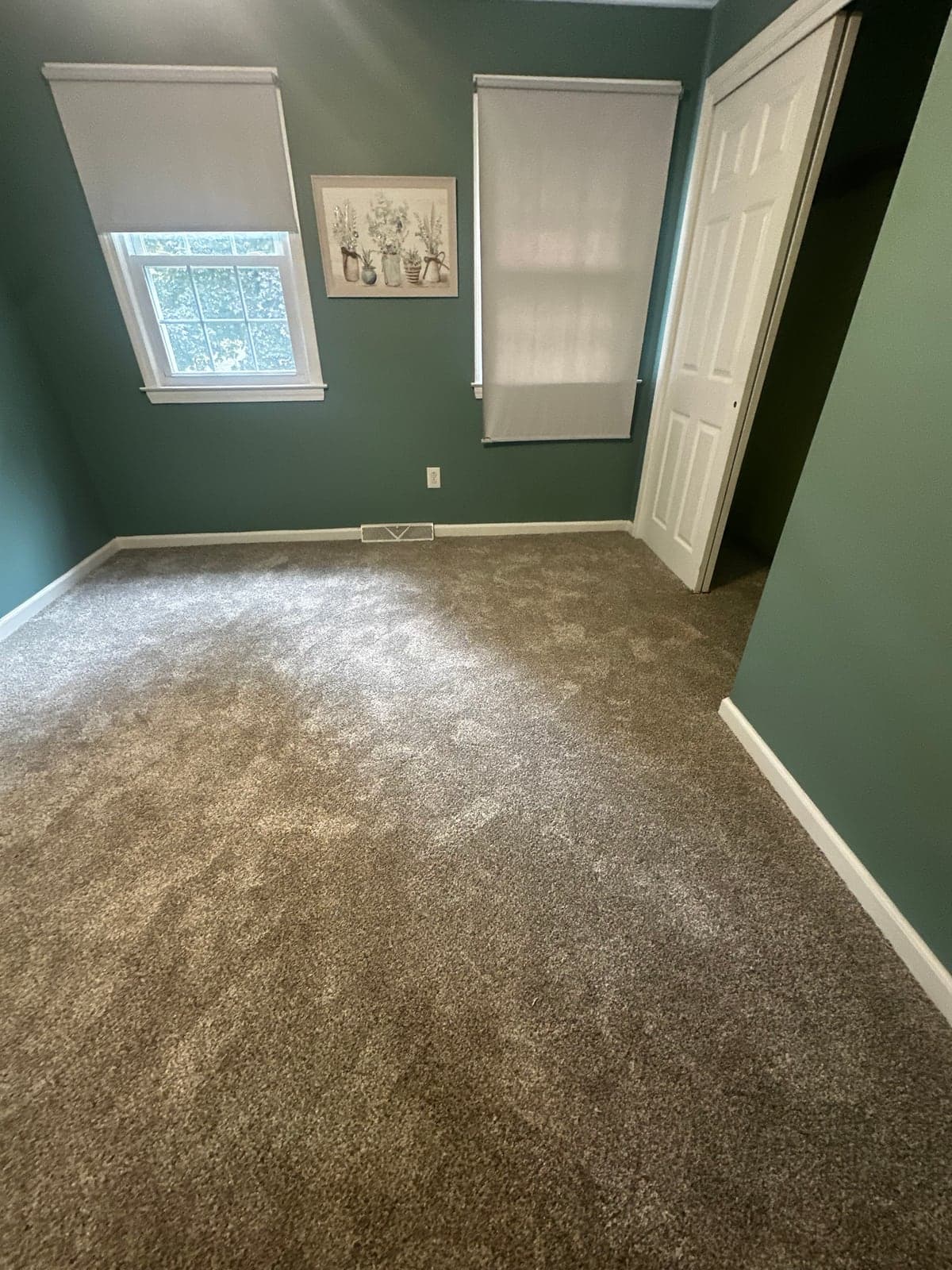
Bedrooms, upstairs rooms, family spaces, playrooms, stairs, and finished basements with controlled moisture are common places to value warmth underfoot and quieter movement. In a documented Vernon project, Floors Now replaced guest-bedroom carpet and installed coordinated stair and hallway runners during the same visit. Those are areas where the softer surface supports different comfort goals: a calm bedroom and quieter, cushioned walking paths.
Carpet is usually a poor answer for a room with frequent water, a chronic leak, recurring condensation, or a slab whose moisture condition is not understood. It also may be the wrong surface under certain rolling equipment or where infection-control, chemical, or intensive-cleaning requirements call for another material. Comfort only helps when the flooring is appropriate for the room.
Shopping checklist
Bring the problem you want to solve
Tell the flooring team whether your priority is warm feet, a softer play surface, less echo, quieter stairs, reduced sound below, easier movement, or a combination. Bring photos, note whether the floor is over a basement or another living space, and identify any moisture, radiant-heat, door-clearance, stair, or mobility concerns. That context narrows the carpet and cushion choices more effectively than asking for the softest sample.
Compare complete systems
Feel the carpet over approved cushion choices and verify that the combination is allowed by the carpet maker.
Ask for measured evidence when it matters
For a condo rule, rental specification, or serious acoustic goal, request the test rating and full assembly it applies to.
Inspect the room first
A cold or musty floor may signal insulation, air-leak, or moisture conditions that flooring alone cannot correct.
Plain-language answers
Common questions
Will carpet make the room's air temperature higher?
Not necessarily. Carpet can feel warmer underfoot and add some resistance to heat flow, but it does not generate heat. The thermostat, heating system, drafts, insulation, and outdoor conditions determine room temperature.
Does thicker carpet always insulate better?
Total thickness influences thermal resistance, but product construction and the approved cushion matter. Do not choose a thicker pad than the carpet maker allows just to chase more insulation.
Does carpet soundproof a room?
No. It can absorb some sound in the room and reduce surface and impact noise, especially with cushion. It cannot seal sound paths or guarantee privacy between rooms.
Can carpet reduce footsteps from an upstairs room?
It can reduce some impact sound compared with a hard surface. The result depends on the carpet, cushion, subfloor, framing, ceiling, and other parts of the assembly. Use tested assembly data when a formal rating is required.
Is the softest cushion the best cushion?
No. Cushion must support the selected carpet and remain within its thickness and density limits. Busy areas, stairs, and lower-profile carpets often need a firmer cushion than a lightly used comfort-focused room.
Checked, not guessed
Sources and technical review
Reviewed on September 11, 2026 by Floors Now! flooring team, Connecticut flooring sales and installation team. The sources below support the general guidance. The instructions, room approvals, cleaner list, installation guide, and warranty for the exact product you buy always take priority.
- The Carpet and Rug Institute: Acoustical Characteristics of Carpet
Technical overview of carpet's effects on airborne sound absorption, surface noise, and impact-sound transmission.
- The Carpet and Rug Institute: Selecting the Right Carpet
Guidance on carpet-and-cushion comfort, acoustics, thermal resistance, and manufacturer-specific cushion limits.
- The Carpet and Rug Institute: Understanding Thermal Values of Carpet and Cushion
Industry explanation of R-value, total thickness, and additive thermal resistance for carpet and cushion.
- U.S. Department of Energy: High-R Floors
Building-science context for why proper floor insulation and the building assembly—not finish flooring alone—control major heat flow.
Keep planning
Benefits of Carpet by Room
Compare bedrooms, family rooms, stairs, playrooms, basements, and wet areas.
productCarpet Product Guide
Explore texture, construction, cushion, color, and room fit in plain language.
serviceStairs and Runners
Plan runner construction, cushion, width, pattern, attachment, and stair details.
projectVernon Bedroom and Runner Project
See coordinated guest-room carpet plus stair and hallway runners in a documented home project.