01
Measure how you use the room
Include furniture legs, dining chairs pulled out, doors, and walking paths. A standard size is a starting point, not a guarantee of fit.
Newington showroom • Serving Connecticut

Area rug product guide
Find the size, feel, and construction that fit your room and daily life. Compare materials, plan around furniture, and choose a compatible pad.
Ask about area rug options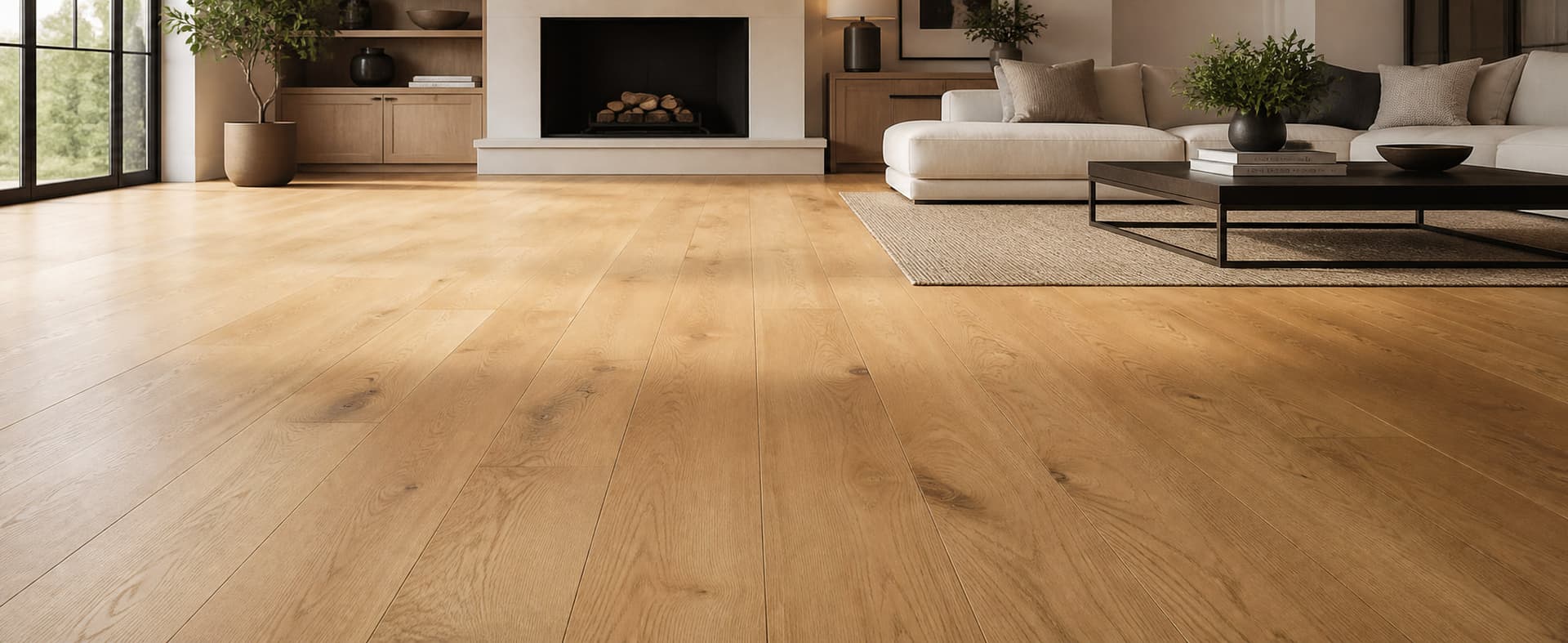
An area rug can bring a seating group together, add a soft landing beside the bed, or warm up a hard floor. The right choice combines a useful size, suitable fiber and construction, a compatible pad, and a care routine that fits your life. Color and pattern become easier to choose once those pieces are settled.
01
Include furniture legs, dining chairs pulled out, doors, and walking paths. A standard size is a starting point, not a guarantee of fit.
02
Compare the fiber, construction, pile height, backing, and cleaning instructions around traffic, pets, spills, and the softness you want.
03
Identify the exact floor underneath. Grip, cushioning, finished height, and floor compatibility all belong in the same decision.
A finished piece over your floor
An area rug is a movable textile floor covering with finished, exposed edges. Broadloom and carpet tile usually become installed flooring. Similar-looking yarn does not make these products interchangeable.
Scroll across the table to compare every column.
| Decision | Area rug | Broadloom | Carpet tile |
|---|---|---|---|
| Placement | Loose over a compatible floor and pad; sized around furniture or an activity zone. | Typically fitted wall to wall with an approved stretch-in or glued installation. | Individual modules held in place with the specified adhesive or connector system. |
| Edges and movement | Finished edges remain visible. Grip, flatness, and clearance matter. | Most cut edges finish at walls, seams, or transitions. | Factory edges form the modular field; orientation and fit affect the result. |
| Comfort | Fiber, pile, backing, and rug pad work together. | Carpet and approved cushion can create continuous softness. | Hardback or integrated cushion changes the underfoot feel. |
| Future changes | Move, rotate, repair, or replace the finished rug as appropriate. | Changes can involve a patch or a larger installed area. | Compatible spare modules can allow selective replacement. |
A rug can cover a useful part of the floor without covering the whole room. It still needs to remain stable and suit the surface below it. For installed options, compare our Carpet guide and Carpet Tile guide.
How the rug is made
Knotted, tufted, woven, and braided describe different ways of building a rug. Construction influences texture, variation, care, repair options, and labor cost, but it is not a universal quality ranking.
Scroll across the table to compare every column.
| Construction | How it is made | Useful strengths | What to consider |
|---|---|---|---|
| Hand-knotted | Individual knots are tied around foundation yarns to build the pile and pattern, row by row. | Detailed craftsmanship and repair potential can support long ownership when the rug is well made and cared for. | Labor raises the price. Expect some handmade variation; knot count alone does not establish quality, age, or value. |
| Hand-tufted | Yarn is inserted through a foundation with a hand tool and secured by an adhesive and backing system. | Offers rich cut-pile textures, carved designs, and handmade character, often below the cost of comparable hand-knotted rugs. | Shedding may be noticeable. Backing quality, aging, and approved cleaning matter as much as the surface fiber. |
| Hand-hooked | Yarn is inserted through a foundation and left in loops, creating a visibly textured surface. | The loop texture suits graphic patterns and casual spaces while retaining the character of a handmade rug. | Exposed loops can catch claws or aggressive vacuum brushes. Consider your pets and cleaning equipment before choosing. |
| Hand-loomed pile | A hand-operated loom creates a rug with cut pile, loops, or a combination of surface textures. | Works well for textured solids and subtle patterns that add depth without a busy design. | Raised textures affect furniture movement and vacuuming. Some surfaces show noticeable shading as the pile changes direction. |
| Hand-woven flatweave | Interlaced foundation yarns form a flat surface without conventional plush pile, as in many kilim and dhurrie styles. | A low profile helps with dining chairs and door clearance. Some styles are reversible and easy to move. | There is less cushioning, and loose weaves may snag. A suitable pad helps control sliding and improves comfort. |
| Machine-woven | A power loom weaves the rug in a repeatable pattern, producing consistent designs and dimensions. | Offers broad style choices and good value. Suitable synthetic constructions can work well in busy rooms. | Traffic performance and shedding still depend on fiber and construction. A machine-made label alone tells little about durability. |
| Machine-tufted | Automated equipment inserts tufts into a foundation, with a backing system securing the finished surface. | Efficient production makes many textures and price points possible, including rugs fabricated from suitable broadloom carpet. | Compare the complete product: pile, backing, edge finish, intended traffic, and care requirements all affect everyday performance. |
| Braided | Braids of yarn or fabric are sewn or laced together to create the rug's shape. | Provides a relaxed, tactile look in rectangles, ovals, and other shapes. Some products can be used on both sides. | Check thickness and edge stability near doors. Inspect stitching during use because loosened joins need attention before damage spreads. |
Hand-tufted, hand-hooked, and hand-loomed rugs can also involve skilled handwork. Ask which construction you are buying. In a hand-knotted rug, individual knots form the pile around foundation yarns; in a tufted rug, yarn is inserted through a foundation and commonly secured with backing materials.
A new rug can be hand-knotted, and an older rug may have repairs or altered edges. Origin, condition, fiber, craftsmanship, and documented history are separate considerations. Choose for your taste and ownership plans rather than assuming construction guarantees collectible or investment value.
Material and maintenance
The softest or shiniest sample may have demanding care needs. Compare resilience, spills, sunlight, shedding, and cleaning before choosing a fiber for a busy room.
Scroll across the table to compare every column.
| Fiber | Useful strengths | Tradeoffs | What to check |
|---|---|---|---|
| Wool | Natural resilience, warmth, and rich color make wool a useful starting point for living rooms and long-term ownership. | Often costs more, and new rugs may shed. Cleaning needs to suit both wool and the rug's dyes and backing. | Review shedding expectations and spill care. For blends, read every fiber percentage; a wool-and-viscose rug needs different care from all-wool. |
| Nylon | A resilient synthetic option for rugs intended to handle repeated foot traffic and retain their appearance. | Often costs more than value synthetics and may be less common among decorative rug choices. | Look for the exact rug's intended use and cleaning guidance. Fiber resilience does not establish stain protection or approval for rolling chairs. |
| Polyester / PET | Offers softness, strong color choices, and value. Selected products are designed for easy cleaning or a specified washing system. | Texture retention varies; less substantial constructions may flatten in concentrated walking paths or beneath furniture. | Confirm traffic suitability and care for the complete rug. Recycled content and the PET name do not establish washability or outdoor suitability. |
| Polypropylene / olefin | A value-oriented synthetic with low moisture absorption, often used in casual rugs and products rated for outdoor use. | Can be less resilient under concentrated traffic. The backing, foundation, and floor beneath it still need protection from trapped moisture. | Verify any outdoor or hose-cleaning claim for the exact product. Compare the drying space and care demands before buying. |
| Viscose / rayon / lyocell | These regenerated-cellulose fibers create silky softness, sheen, and striking changes in appearance with the light. | Many are sensitive to traffic and liquid cleaning. Water can mark or distort some products, including blends with wool. | Best considered for carefully maintained decorative spaces. Specialist cleaning may be required. |
| Cotton | A soft, casual fiber that works well in lightweight rugs and relaxed interiors. Some small cotton rugs are washable. | May shrink, fade, stain, or wear faster than more resilient choices, depending on construction and care. | Read the wash-and-dry instructions for the actual rug. Cotton content does not mean the backing, dyes, and edges can tolerate machine washing. |
| Jute / sisal / seagrass | Provide natural texture for dry interiors: jute tends to feel softer, while sisal and seagrass offer a firmer surface. | Repeated spills and dampness are poor matches. Moisture can stain or distort these rugs, and liquid stains can be difficult to remove. | Choose for feel and texture, then confirm the approved cleaning method. Specialist care can affect the cost of ownership. |
| Silk | Offers fine detail and a distinctive sheen in specialty rugs, particularly where appearance and craftsmanship are priorities. | Typically expensive and delicate, making busy walkways, frequent spills, and experimental home cleaning poor fits. | Verify the actual fiber label; a silk-look description may refer to a different material. Discuss professional care before committing to long-term ownership. |
A wool-and-viscose rug may need more delicate care than an all-wool rug. The most expensive ingredient does not determine the behavior of every other component. Compare the full fiber composition, foundation, backing, and care guide together.
Recycled PET describes a material source. Performance, stain-resistant, outdoor, and washable describe different promises, each with its own conditions. Ask what the exact rug is designed to handle, how it must be cleaned, and which exclusions apply.
Further reading: Jaipur Living material-specific care, including delicate viscose and silk-like fibers.
Softness, clearance, and quality
Flatweave and low pile can make chair movement and cleaning easier. Deep pile adds softness and dimension, with more to consider around debris, furniture, doors, and vacuum settings.
A lower profile can be useful beneath dining chairs, near doors, and along busy routes. Flatweave has no conventional plush pile, so it usually feels firmer. Flexible or lightweight rugs still need appropriate support and grip; thin does not mean they cannot move or bunch.
These can balance underfoot comfort with everyday practicality. Loops, raised patterns, and carved details change how the rug catches light and collects soil. Check how the texture behaves under chair legs, pet claws, and your vacuum.
High pile can feel inviting beside a bed or in a quiet seating area. It can also retain small debris, obstruct robot vacuums, and make rolling or furniture movement harder. Hides, patchwork, and other specialty pieces have their own cleaning and edge requirements.
Weight includes material that may be in the foundation or backing, and total thickness does not tell you pile density. Knot count can indicate the potential for fine design detail in a hand-knotted rug. None of those numbers alone establishes durability, workmanship, condition, or suitability.
Feel a sample, bend it gently if the construction allows, and inspect both sides. Ask about the expected variation, whether the rug is reversible, and how its foundation supports the surface. Compare products within similar construction and fiber categories instead of treating the heaviest rug as automatically best.
Turn it over and inspect the perimeter
Foundation, backing, and edge finishing hold a rug together and affect how it interacts with the pad and floor. Fringe may be part of the structure, even when it looks decorative.
Lengthwise warp and crosswise weft yarns form the supporting structure in woven rugs. In many hand-knotted rugs, the warp continues into the fringe. A visible woven reverse can help explain construction, but it does not establish age, origin, or a safe direct contact with every floor finish.
Some tufted rugs use adhesive or latex to hold the yarn and a secondary fabric to cover and stabilize the back. Felt, mesh, coatings, and grip treatments have different properties. A soft-feeling or nonskid underside still needs a floor-compatibility check.
Binding wraps a cut edge with a fabric or tape finish. Serging wraps yarn around the edge. Woven side edges, called selvedges, help protect the structure. Review the finish, corner treatment, color, and condition because these details remain visible in the room.
Some fringe is attached decoration; some is the foundation continuing beyond the pile. Its construction affects repair options and whether the exposed ends suit your room and traffic.
Measure the furniture footprint
The name of the room is not a measurement. Start with the furniture, open doors, chair travel, and walking routes, then decide how much exposed floor you want around the rug.
Use the room layouts below to plan placement, then compare compatible rug pads.
Record sofa and chair dimensions, the bed frame rather than only the mattress, and the dining table with any frequently used extensions. Pull dining chairs back as if someone were sitting down.
Use a floor-safe temporary marker or paper outline to compare sizes in the room. If using tape, first confirm that the flooring finish permits it. Walk around the outline and operate doors and furniture.
Add rug and pad thickness. Include door sweeps, cabinets, appliance openings, furniture stability, and any walker or wheelchair routes.
A size name may be approximate, especially for handmade rugs. Ask whether dimensions include fringe and what tolerance applies. For custom work, confirm the outside finished size in writing.
Scroll across the table to compare every column.
| Shape or scale | Examples in feet | What decides the fit |
|---|---|---|
| Accent rectangle | 2 × 3 or 3 × 5 | The landing area, door swing, exposed edges, and grip. |
| Medium rectangle | 4 × 6, 5 × 8, or 6 × 9 | The furniture group and the amount of useful rug beyond it. |
| Large rectangle | 8 × 10, 9 × 12, or 10 × 14 | Seating, bed, or pulled-out dining-chair footprint and available floor space. |
| Runner | Widths around 2–3 feet; lengths vary | Hall or cabinet width, door openings, turns, and an even visible border. |
| Round, square, or custom | Collection-specific dimensions | Table shape, room geometry, pattern, and clear walking routes. |
These are common market examples, not a stock list or a size prescription. A nominal 8 × 10 can suit one furniture arrangement and be too small for another. Compare the actual dimensions before ordering, including oversize delivery access.
Connect the seating
Two useful starting points are placing the front legs on the rug or placing the whole seating group on it. Choose around the actual room, not a fixed rule that every living room needs the same size.
The rug reaches beneath the front of the sofa and chairs, connecting the group while leaving the rear legs on the floor.
A larger rug supports the full seating group with a visible margin beyond the furniture. This can work well with floating furniture in an open room.
Illustrative top-down layouts. Terracotta shows the rug; dark dots show seating legs. Furniture and room dimensions determine the final size.
A smaller rug centered beneath a coffee table can work in a compact room when the proportions are deliberate. Keep the table fully supported and compare the rug's width with the sofa. A large sectional, an angled chair, or a walkway across the group can change the outline that works best.
Further reading: Surya rug sizing and furniture placement examples.
Allow for chairs and bare feet
Dining chairs need room to move without catching an edge. A bedroom rug should provide softness beside and beyond the bed, rather than disappear entirely beneath it.
Measure with chairs pulled back for sitting and standing. Keep their supporting legs on the rug throughout that movement, including at the ends of the table.
A rug beneath the lower part of the bed leaves usable surface at the sides and foot. Include the frame, nightstands, bench, and the places your feet land.
A round table can work with a round or square rug, and a rectangular table often works with a rectangular rug. Size for the extensions you use regularly. Lower pile and a stable pad can make chair movement easier, but you still need enough surface beyond the table.
A larger rug may include both bed and nightstands. Side runners can provide targeted comfort where a large rug does not fit the room or budget. They also introduce more loose edges, so check grip, flatness, symmetry, and clear walking routes.
Small rugs face concentrated use
Entries, hallways, and kitchens put repeated footsteps and frequent spills into a narrow area. The right dimensions are only useful if the rug stays in place and the room still functions normally.
Measure doors, openings, and turns as well as the long straight section. Choose an appropriate low profile, durable construction, and compatible full-length pad. In an entry, plan for tracked-in grit and wet shoes, including a way to dry the rug and floor when needed.
Check cabinet doors, appliance clearances, frequent standing spots, and spill exposure. Easy-clean or washable products can be useful when the exact care system works for your household.
A rug that catches a walker, wheelchair, chair caster, or door needs a different placement or construction. In some routes, leaving the floor clear is the better choice.
A movable hallway runner is not automatically suitable for stairs. Stair work needs a product and installation method chosen for that application, with secure fitting and finished edges. Discuss stairs separately rather than extending a loose rug up them.
For fitted stair runners, review our Stairs & Runners service.
See the rug in your room
View a sample or the actual rug alongside your furniture and floor, in daylight and evening light. Full-rug photographs help show borders and motifs that a small swatch cannot reveal.
A large medallion may disappear beneath a coffee table, and a border may sit partly beneath a sofa. Stripes can emphasize a room's direction. Decide which elements should remain visible before approving a size, orientation, or custom cut.
Pile direction and sheen can make the same rug look light from one side and dark from the other. Abrash describes variation associated with yarn or dye batches, often valued in handmade styles. Ask what range is expected and whether you are seeing the exact piece being sold.
A dyeing or printing method affects how the original color holds up under specified conditions. It does not determine whether every spill can be removed. Solution-dyed fiber still has product-specific cleaning and exposure limits.
Fade-resistant does not mean fade-proof. The floor covered by the rug may age differently from exposed flooring, so moving the rug later can reveal a color difference.
Support, grip, and comfort
A rug pad can reduce movement, separate a rough backing from the floor, and add cushioning. The correct pad must suit the rug, the exact flooring below it, and the finished height you can accommodate.
Scroll across the table to compare every column.
| Pad type | Useful benefit | What to confirm |
|---|---|---|
| Felt | Adds cushioning and separates rough rug backing from the floor. Can suit larger, heavier rugs where comfort is the priority. | Felt alone may provide limited grip. Confirm approval for the underlying floor or carpet, and check the combined rug-and-pad height at doors. |
| Felt with a grip layer | Combines cushioning with help controlling movement, making it a useful option for many hard-floor settings. | Identify the grip material and verify compatibility with your exact floor manufacturer. Rubber, latex, and synthetic coatings are not interchangeable or universally approved. |
| Thin grip / open-grid pad | Provides a lower profile beneath runners or flat rugs where clearance matters more than added softness. | Material chemistry varies. Check written floor compatibility, especially for vinyl and sensitive finishes; a nonslip label does not establish that it is non-staining. |
| Outdoor pad | Supports an outdoor-rated rug with materials intended for exterior conditions, drainage, and airflow. | Match the pad to the rug and patio or deck surface. Lift and dry affected layers after wet conditions; an outdoor rating does not prevent trapped moisture. |
Ask for a pad intended for the actual application, including rug-over-carpet or outdoor use where relevant. A material name such as rubber, latex, felt, or PVC does not prove compatibility with every floor. More thickness can also make edges, dining chairs, and door clearances harder to manage.
The pad normally sits slightly inside the finished rug perimeter so it stays hidden and allows the edges to meet the floor. Follow the pad maker's sizing directions and allow for any irregular shape.
Protect what is underneath
Rugs can soften traffic and reduce abrasion in a chosen zone. An incompatible backing, trapped moisture, or grit under the pad can instead affect the finish below.
Scroll across the table to compare every column.
| Floor below | What to watch | What to ask before buying |
|---|---|---|
| Hardwood | Finish abrasion, trapped moisture, and different light exposure under the rug. | Is the backing and pad approved for this finish, and has a newly finished floor completed the required curing period? |
| Luxury vinyl or sheet vinyl | Discoloration from incompatible backing compounds; trapped moisture or localized heat. | Which non-staining rug and pad materials does this flooring manufacturer permit? Do not assume every rubber, latex, or synthetic grip backing is acceptable. |
| Laminate | Moisture remaining against the floor and grit abrading the surface. | Is this pad approved for the product, and how will wet rugs and the surface beneath be cleaned and dried? |
| Tile and natural stone | Sliding on smooth finishes, grout texture, and moisture or staining on sensitive stone. | Does the pad provide appropriate grip while remaining compatible with the tile or stone and any sealer? |
| Wall-to-wall carpet | Creeping, ripples, uneven compression, or color transfer. | Is the pad specifically designed for rug-over-carpet use, and does the rug remain stable on this carpet and cushion? |
Bring the flooring brand, product name, finish information, or leftover carton label when discussing pads. For heated floors, confirm whether the rug and pad are permitted and how they affect heat flow. A pad underneath an incompatible rug backing should not be assumed to make the combination safe.
Further reading: Karndean floor-care guidance, including non-rubber-backed doorway mats for its vinyl flooring.
If you are also choosing the floor, our Hardwood, Luxury Vinyl, and Laminate guides explain construction and room suitability.
Traffic is more than a room name
A formal living room and the family's everyday route to the kitchen can place very different demands on a rug. Include shoes, turning, rolling chairs, food, pets, and the cleaning time you have.
Scroll across the table to compare every column.
| Room or use | Useful direction | What to check |
|---|---|---|
| Living and family rooms | Start with a low-to-medium pile and a construction suited to your busiest walking paths. Size the rug to connect the sofa and chairs. | Compare everyday vacuuming, spill care, and furniture placement. A sample's softness alone will not show how it handles concentrated traffic. |
| Dining rooms | Low pile or flatweave helps chairs move more easily. Measure with chairs pulled back so their legs remain on the rug. | Include table extensions you regularly use, chair movement, and a firm compatible pad. Choose a fiber with realistic food-and-drink cleanup requirements. |
| Bedrooms | Prioritize softness where your feet land beside the bed. A larger rug, partial under-bed layout, or side runners can all work. | Include nightstands and benches in the plan. Shag adds comfort but needs suitable vacuuming and clearance around doors and furniture. |
| Hallways and entries | Choose a low-profile, cleanable rug that suits concentrated traffic, outdoor grit, and the moisture tracked in on shoes. | Use a compatible pad, keep edges flat, and test door clearance. A small rug that shifts or curls needs attention before regular use. |
| Kitchens and spill-prone areas | Look for a stable low-profile rug with clear spot-cleaning instructions, or a specified washable system that fits your cleaning routine. | Check cabinets and appliances can open. Dry the underside, pad, and floor after spills; avoid delicate fibers where drips are frequent. |
| Pets and play spaces | Dense cut pile or a suitable flatweave can reduce exposed-loop snag concerns. Balance cleanability, secure placement, and the cost of eventual replacement. | Consider claws, hair, running, and accidents separately. A pet-friendly claim is not a promise against stains, snags, or liquid reaching the floor. |
| Patios and outdoor spaces | Use an expressly outdoor-rated rug and compatible exterior pad, with a placement that allows water to drain and every layer to dry. | Confirm care and sunlight exposure limits. Consider whether the location provides suitable drainage and seasonal storage. |
A rug and pad can soften footfall and reduce some reflected sound inside a room. That does not establish sound isolation between floors or compliance with a building's acoustic requirement. Bring any building or business specifications into the selection before settling on a product.
Understand the exact care promise
These features can make ownership easier when they fit your routine. Neither describes every part of a rug, its backing, or the surface beneath it.
Some systems have a washable top layer and a separate base; others allow the whole rug to be washed. Compare the required washer capacity and drying space for the exact size. A rug can be labeled washable and still be too large for your household machine.
The drying requirements can make a large washable rug impractical in a small home. Include the pad, available space, and effort of moving furniture when comparing ownership costs.
A moisture-resistant synthetic fiber does not automatically make the complete rug outdoor-rated. Check sun exposure, weather, backing, pad, and placement requirements. An outdoor rug may also suit some indoor spaces, subject to the floor and intended use.
Choose for the real household
Claws, hair, spills, running feet, and repeated accidents ask different things of a rug. A practical choice balances cleanability, stable placement, comfort, and the cost of future repair or replacement.
Large exposed loops or an open weave may be vulnerable to scratching or digging. Dense cut pile can reduce some snag opportunities, but no rug is pet-proof. Compare the exact weave, vacuum method, and how visible your pet's hair will be against the color.
Stain resistance does not stop moisture or odor from reaching the pad and floor. Repeated accidents can therefore create more work than the rug label suggests.
Compare softness with grip, edge height, and how readily small debris can be removed. A light rug that slides or wrinkles during play may need a different pad or construction. Deep pile can make small toys and crumbs harder to find.
For frequent accidents, a suitable washable or cleanable product may be more practical than a delicate decorative fiber. Include the actual effort of moving furniture, laundering or professional cleaning, and drying. A marketing label should be supported by written care and warranty terms.
Cleaning, protection, and upkeep guidance is in our dedicated Area Rug Care & Maintenance guide.
When standard sizes do not fit
Suitable broadloom carpet can be cut to a selected size and professionally finished as a rug or runner. Made-to-measure rugs are another possibility. Ask about current options and fabrication suitability before assuming every carpet can become any shape.
Confirm the construction, backing, roll width, pattern repeat, and intended use. A stripe, border, or large motif may need extra material to be centered. If the desired width requires a seam, ask whether the fabricator approves it and how visible it may be.
Binding creates a fabric or tape band; serging wraps yarn around the perimeter. A wider decorative border changes the look and fabrication scope. Review edge color, corners, and a finish sample alongside the carpet, since these details will remain exposed.
Distinguish the carpet cut size from the finished rug dimensions, including borders and any fringe. Record shape, corner radius, pattern direction, and fabrication tolerances. Include a pad sized for the finished piece and approved for the floor.
Special-order and custom pieces may have different cancellation or return restrictions. Confirm them before cutting or fabrication starts. Include delivery access and furniture handling in the plan, especially for large or heavy rugs.
For a simple rectangular rug, area is width × length, while the edge length is 2 × (width + length). An 8 × 10-foot rectangle has 80 square feet of finished area and 36 linear feet of perimeter. Those figures explain different parts of a quote; roll-width waste, pattern work, borders, minimum charges, and pad can add to the actual order.
Explore broadloom construction in the Carpet guide, then ask about current rug and custom-size options for your room.
Know what you are ordering
Price reflects more than size. Fiber, construction, craftsmanship, backing, finishing, pad, freight, and future cleaning all shape the cost of owning the rug.
Scroll across the table to compare every column.
| Part of the purchase | What to confirm | Why it matters |
|---|---|---|
| Product identity | Exact style, color, construction, fiber percentages, origin information, backing, and actual dimensions. | A design name or the word handmade does not describe the full product. |
| Pad and delivery | Pad material, floor compatibility, fit, thickness, freight, access, and any placement or furniture handling. | A rug-only price may omit what you need to use it properly. |
| Custom fabrication | Material quantity, pattern allowance, edge length, corners, seams, finish, lead time, and written tolerances. | Two custom quotes can use the same finished dimensions and still describe different work. |
| Returns and claims | Return window, special-order restrictions, restocking or freight costs, inspection process, and what to do if the delivery is damaged. | Confirm the terms before committing to a custom, oversized, or one-of-a-kind item. |
| Warranty and care | Covered wear, stains, fading, shedding, backing issues, permitted use, cleaning duties, and remedy. | A warranty does not promise that normal appearance changes or every accidental stain will qualify. |
Confirm the exact rug, size, pad, custom drawing, and claim terms in the purchase documents. Do not assume an outdoor, washable, or stain claim applies to every size and construction in a collection.
For a business or a building with specific requirements, request the relevant product documentation, including fire-performance information where required. A flammability standard addresses defined test conditions; it does not make a rug fireproof or suitable for every application.
Further reading: CPSC information on flammability standards for textile products, including carpets and rugs.
Take this to the showroom
A sketch of the furniture layout and a photo of your existing floor or product label help narrow the right rug, size, and pad. Include the colors you like and the amount of care you want to take on.
Discuss your area rugCommon buying questions
Open a question for a quick answer. Confirm the exact rug, pad, floor, and care requirements before making your final selection.
Measure the furniture footprint, walkways, and door clearances before choosing a standard size. For living rooms, decide whether all furniture legs or just the front legs will sit on the rug. For dining, measure with chairs pulled out. Check actual finished dimensions because handmade rugs can vary from their nominal size.
A suitable pad can add grip, support, cushioning, and separation from rough backing. Choose it for both the rug and the exact floor below, then follow sizing instructions so it stays concealed. More thickness is not always better: check doors, furniture stability, and any mobility-device paths.
Use the underlying flooring manufacturer's requirements and the pad's written compatibility information. Some finishes and vinyl products restrict particular rubber, latex, or synthetic materials. For newly finished hardwood, also confirm when rugs may be placed. Keep grit and moisture out from under any approved pad.
Yes, when the combination stays stable and the rug, pad, and carpet are compatible. Choose a pad intended for rug-over-carpet use. Soft carpet can allow creeping and bunching, so check placement regularly. A pad designed to grip a hard floor is not automatically suitable over carpet.
They offer different benefits. Hand-knotted rugs involve more labor and can offer strong repair potential; hand-tufted rugs provide many rich textures at a more accessible price. Compare fiber, craftsmanship, backing, care, and expected use. Handmade does not necessarily mean hand-knotted, and neither label guarantees a particular lifespan.
No single number captures rug quality. Thickness mainly affects feel and clearance; knot count can indicate the detail possible in hand-knotted designs. Compare similar constructions and consider fiber, density, foundation, edge finish, condition, and care. A low-profile rug may be the more practical choice for chairs or heavy traffic.
Prioritize straightforward care, stable edges, a compatible pad, and a pile you can vacuum easily. Consider dense cut pile or a suitable flatweave if claws snag loops. Read accident-cleaning instructions before buying; pet-friendly and stain-resistant descriptions do not guarantee that liquids cannot reach the pad or floor.
Suitable broadloom can be cut and professionally finished with binding, serging, or a decorative border. Confirm material suitability and fabrication availability before ordering. The total depends on finished size, roll-width and pattern waste, edge treatment, pad, handling, and delivery. Document pattern direction, tolerances, lead time, and custom-order return terms.
Confirm the finished dimensions, fiber content, construction, care instructions, floor-compatible pad, intended room use, and warranty coverage. Ask about variation from the sample, delivery, and return restrictions for special or custom orders. Keep the product information and receipt so future cleaning and any warranty questions refer to the exact rug.
Your next step
Bring your layout, floor details, and inspiration to Floors Now in Newington. We can discuss current area rug options, useful sizes, pad compatibility, and the care questions that matter to your household.
Reviewed by Floors Now
This customer guide draws on Floors Now area rug product material, with supporting references from Surya, Jaipur Living, Karndean, the Carpet and Rug Institute, and the U.S. Consumer Product Safety Commission linked beside the relevant topics. Manufacturer references illustrate considerations to check; they do not establish current showroom inventory.
The hero photograph is room inspiration. Placement diagrams are simplified illustrations, and example sizes do not replace furniture measurements. The exact rug label, care guide, warranty, fabrication terms, and flooring and pad instructions determine the final selection.
Back to topYour area rug
Share your room and furniture dimensions, preferred colors, existing flooring, and how you use the space. We can help you explore rug and pad options. You can also visit our Newington showroom.