Two full onsite workdays, separated by an approximately one-week pause for a separate abatement scope
The problem
What happens when old kitchen tile hides an unexpected layer?
This approximately 300-square-foot Farmington kitchen project started with tile removal — and the removal exposed an underlying layer requiring professional asbestos abatement. Floors Now's flooring crew stopped there: abatement is a specialized scope that flooring crews don't perform, so a separate asbestos-abatement contractor completed that work while the flooring project paused for about a week.
When the crew returned, the exposed substrate needed rebuilding before the new floor could go down. They installed and prepared plywood underlayment, then used PROMA Pro Patch for localized surface correction — the kind of step-by-step substrate work older kitchens often need once the original tile is gone and the surface underneath is revealed.
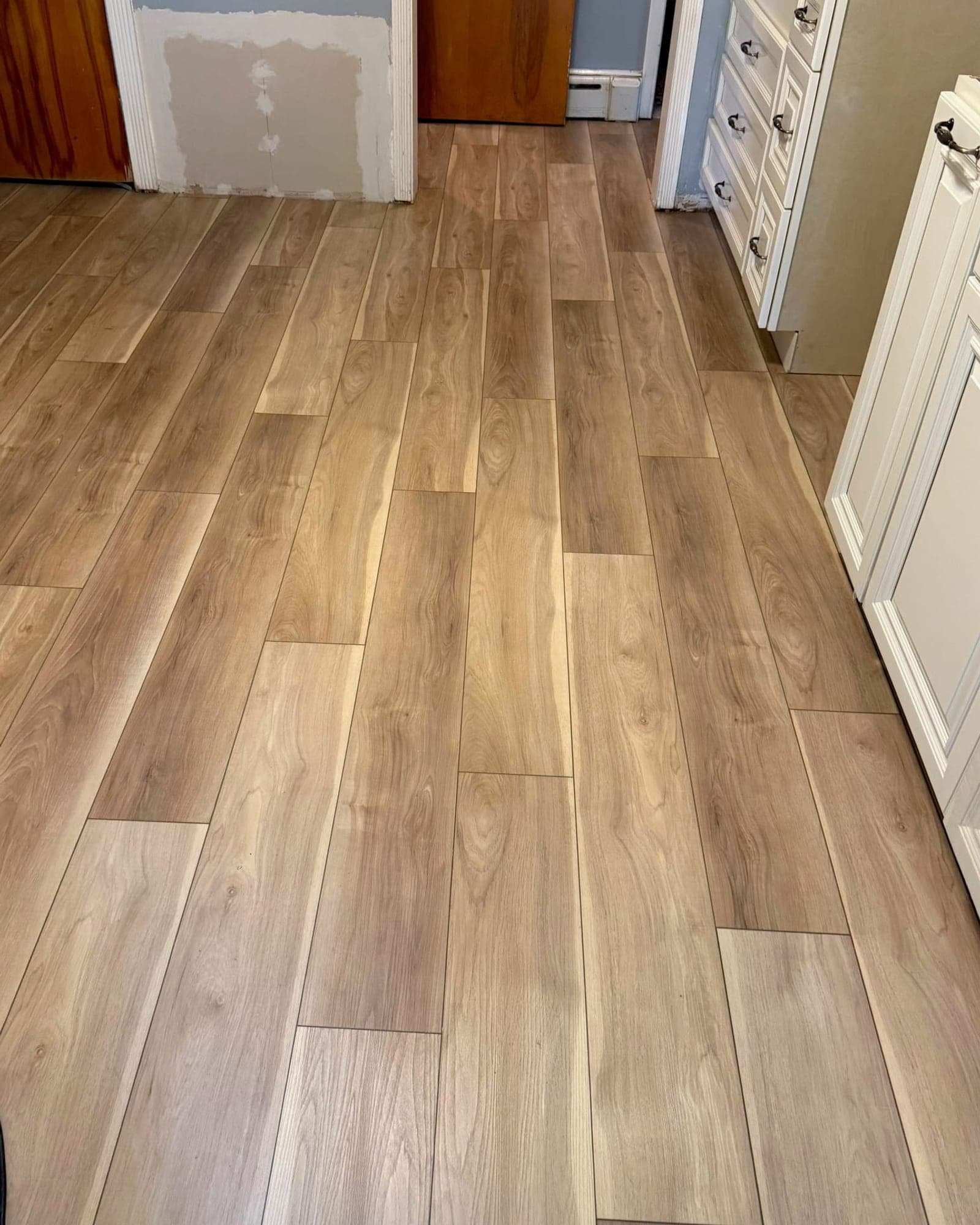
With the plywood and patch preparation complete, approximately 300 square feet of warm wood-look rigid-core LVP was installed. Floors Now's flooring work took two full onsite days across the two visits. The project shows how an unexpected discovery mid-project is handled: pause the flooring, let the right specialists finish their scope, then come back and complete the floor properly.
Project overview
The goal, materials, and finished scope.
In June 2026, Floors Now began this approximately 300-square-foot Farmington kitchen project by removing the old tile. When removal exposed an underlying layer requiring professional asbestos abatement, the flooring crew paused and a separate asbestos-abatement contractor completed that specialized scope. About one week later, Floors Now returned, installed and prepared plywood underlayment, used PROMA Pro Patch for localized surface correction, and completed the warm wood-look rigid-core LVP installation. Floors Now's flooring work required two full onsite days across the two visits.
Project facts
Completed
June 2026
Documented scope
Residential kitchen rigid-core LVP replacement
Property type
Residential Home
Rooms
Kitchen
Flooring
Warm wood-look rigid-core LVP
Project goal
Replace the old kitchen tile with a warm wood-look floor
Project photography
The finished result.
Each image and caption identifies the portion of the verified project that is actually shown.
View 1.Completed warm wood-look rigid-core flooring through the approximately 300-square-foot Farmington kitchen.
Scope of work
What we did, step by step.
After a specialized abatement pause, plywood and patch preparation readied the kitchen for rigid-core LVP.
1Removed the existing kitchen tile as part of the flooring replacement
2Paused flooring work after removal exposed an underlying layer requiring professional asbestos abatement
3Resumed about one week later after a separate asbestos-abatement contractor completed that specialized scope
4Installed and prepared plywood underlayment
5Applied PROMA Pro Patch for localized surface correction
6Installed approximately 300 square feet of warm wood-look rigid-core LVP
Common questions
Questions homeowners ask about this kind of project.
Does Floors Now perform asbestos abatement?
No. Floors Now's flooring crew does not perform asbestos abatement. On this project, when tile removal exposed a layer requiring professional asbestos abatement, a separate asbestos-abatement contractor completed that specialized scope, and our flooring work resumed about a week later.
How much of the project was Floors Now's flooring work?
Our flooring work on this kitchen took two full onsite days, spread across two visits: the initial tile removal, then the return visit about a week later for the plywood underlayment, patch preparation, and the LVP installation. The separate abatement work was performed by a different contractor in between.
Why was there a one-week pause in the flooring work?
The pause happened because tile removal exposed an underlying layer requiring professional asbestos abatement — work that can only be handled by a qualified abatement contractor. Flooring work resumed about a week later, after that separate scope was properly completed.
What is a patch product used for in floor preparation?
On this kitchen we used PROMA Pro Patch for localized surface correction after installing and preparing plywood underlayment. A patch product fills and smooths specific low spots, seams, or imperfections in the prepared substrate so the rigid-core LVP sits on an even surface.
Products and planning
Planning a similar flooring project?
Use these resources to compare the materials, preparation, and installation services involved in this project.
Learn when Luxury Vinyl uses attached padding, separate underlayment, a moisture layer, adhesive, or no added layer—and why the product instructions decide.
Compare waterproof hardwood, Luxury Vinyl, laminate, tile, and other water-resistant flooring claims without confusing the floor with a watertight room.
Tell us about your rooms, flooring, and project goals.
Share the location, rooms, existing floors, materials you are considering, known preparation needs, and timing. Floors Now will review the details and follow up about the most practical next step.